Tag: dharma

Home dharma
Scholarship and Sacred Truth
Post

Scholarship and Sacred Truth

Can a civilization survive if all its sacred truths are judged solely by external academic standards? This essay argues that while historical inquiry has its place, Hindu Dharma must remain rooted in its own sacred framework of shraddha, sampradaya, and parampara. A living tradition cannot endure if its foundational beliefs are endlessly relativized. History may study a civilization from the outside, but only its sacred truths sustain it from within.

Rāmo Vigrahavān Dharmaḥ: The Sixteen Lakṣaṇas as a Complete Condition-Set of Dharma
Post

Rāmo Vigrahavān Dharmaḥ: The Sixteen Lakṣaṇas as a Complete Condition-Set of Dharma

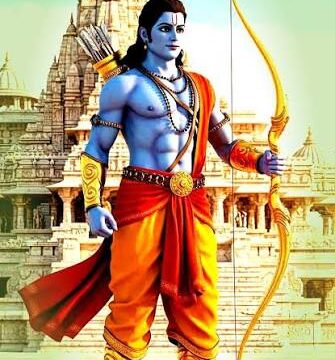
What does it truly mean to call Rāma "Vigrahavān Dharmaḥ" - the embodiment of Dharma? Drawing on the opening verses of the Vālmīki Rāmāyaṇa, this essay argues that the sixteen lakṣaṇas are not merely admirable virtues but a complete and indispensable condition-set for the embodiment of Dharma. Through a rigorous śāstric analysis of pramāṇa, lakṣaṇa, and embodiment, it presents a compelling philosophical framework that reveals why Rāma is not simply a follower of Dharma, but its fullest living manifestation.

Ikigai: A Modern Simplification That Sacrificed Ancient Depth
Post

Ikigai: A Modern Simplification That Sacrificed Ancient Depth

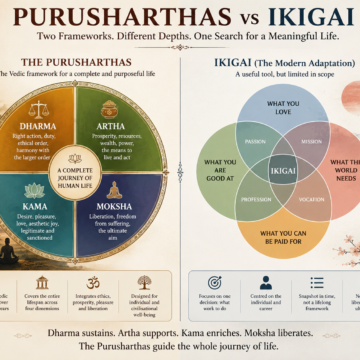
Has the world mistaken a simplified self-help framework for the ultimate philosophy of purpose? This essay argues that while Ikigai offers valuable insights into meaningful living, it pales beside the Vedic framework of the Purusharthas -Dharma, Artha, Kama, and Moksha. By comparing the two, it reveals why the Purusharthas remain one of humanity's most comprehensive and enduring blueprints for a meaningful life.

Dharma Beyond Religion: From Human Ethics to Cosmic Order
Post

Dharma Beyond Religion: From Human Ethics to Cosmic Order

What does Dharma truly mean beyond morality, religion, or social duty? This thought-provoking essay by Astha Mishra explores the classical understanding of Dharma as "that which sustains" - a principle that extends from ethical human conduct to the laws of nature and the cosmos itself. Drawing on Vedic thought, the author argues that dharma is the sustaining force that aligns with Rta, the cosmic order, offering a profound framework that bridges philosophy, science, and civilizational wisdom.

From Silence to Rain-Washed Grace: A Sacred Pilgrimage
Post

From Silence to Rain-Washed Grace: A Sacred Pilgrimage

This travelogue by Pradeep Krishnan traces a deeply spiritual pilgrimage through the sacred landscapes of northern Karnataka and Maharashtra, where temples, ashrams, and saintly traditions transform travel into an inward journey. From the serene ashrams of Vijayapura and the powerful presence of Akkalkot Maharaj to the rain-soaked grace of Siddharoodha Swami Math, the author reflects on moments of devotion, silence, and unexpected blessings. Rich with encounters that reveal Bharat’s living spiritual heritage, the journey becomes a meditation on faith, continuity, and the enduring power of dharma.

The Mahabharata as an Indic Civilizational Framework: Dharma, Power, and Human Consciousness
Post

The Mahabharata as an Indic Civilizational Framework: Dharma, Power, and Human Consciousness

The Mahabharata is not merely an epic or religious text but a civilizational framework through which Indian society has long understood power, morality, and human conflict. Rather than offering rigid moral binaries, it presents dharma as contextual and relational, shaped by responsibility and awareness. Through complex characters and difficult choices, the epic explores the burdens of power, the psychology of action, and the consequences of ethical failure. In doing so, it functions as a living guide to navigating moral ambiguity within society.

S. L. Bhyrappa: A Tribute to The Man, His Life, and His Stories that Keep Flowing…
Post

S. L. Bhyrappa: A Tribute to The Man, His Life, and His Stories that Keep Flowing…

S.L. Bhyrappa’s life was a dialogue between art and existence, where suffering became insight and truth found voice through story. From a childhood scarred by loss to a literary career of rare depth, he turned pain into philosophy and realism into revelation. Even in his final words, he taught us that death too can be an act of grace, and meaning, the highest form of art.

Dharma and Development : A Civilizational Balance
Post

Dharma and Development : A Civilizational Balance

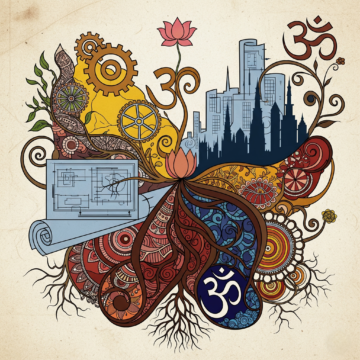
When development is not rooted in culture, a nation is reduced to just a geographical landmass. Development and culture are not mutually exclusive in the Indian civilizational context. Sanatana Dharma doesn’t ask us to choose between development and devotion to faith — it asks us to integrate them. Its Purushartha framework enables human fulfillment in every aspect of life, with Dharma as the guiding principle. From the Ram Mandir to the Kumbh Mela, what critics dismiss as distractions are often engines of economy, culture, identity, and belonging.

The Limits of Equality: A Dharmic Appraisal of Modern Political Theology
Post

The Limits of Equality: A Dharmic Appraisal of Modern Political Theology

Modernity universalizes Enlightenment ideals of equality, recasting Dharmic order as moral failure. But in Dharma, justice lies not in sameness, but in harmony—each being acting in accordance with its Svabhāva and Svadharma. The caste system, far from being a hierarchy of worth, was a framework of reciprocal duty, now misunderstood and maligned through colonial and liberal lenses. True reform lies not in dismantling tradition, but in reclaiming its wisdom with renewed understanding.