This essay examines how British colonial rule reshaped not just India's institutions, but also its everyday habits, aspirations, and cultural imagination. From club culture and hill stations to vacations and leisure travel, it argues that colonial-era practices continue to influence Indian society long after independence. By contrasting these with pre-colonial civilisational patterns, the article invites readers to reflect on whether India can rediscover a balance rooted in its own timeless traditions while navigating modernity.
Author: Manisha Chitale
Unseen Temples of India – Legacy and Narrative – Part 2
Building a separate structure to house murtis, carriers of divinity, for personal and public worship of deities is an old tradition prevalent in India.
Manisha Chitale takes us through the history and evolution of temple architecture in the country and how temples have shaped the Sanatana dharmik civilisation.
Unseen Temples of India – Legacy and Narrative – Part 1
Building a separate structure to house murtis, carriers of divinity, for personal and public worship of deities is an old tradition prevalent in India.
Manisha Chitale takes us through the history and evolution of temple architecture in the country and how temples have shaped the Sanatana dharmik civilisation.
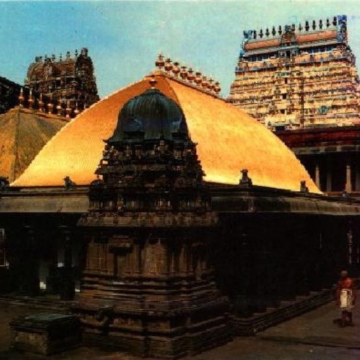
Back to the Elements – Objects, places, and symbols of worship
The essence of worship in Hinduism lies in recognizing the significance of the archetypical elements that define our world.
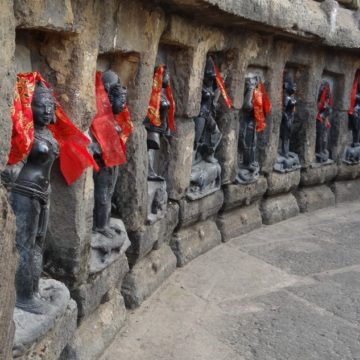
Circle of Yoginis
A Yogini is one who is possessed of magical powers and takes on different divine energies to maintain harmony in the Universe.
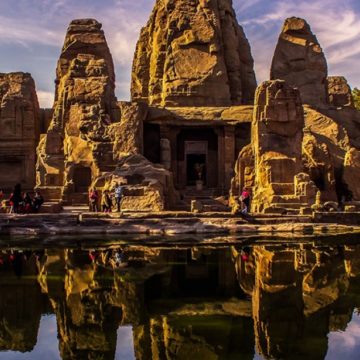
Rock Temple of Himalaya – Masroor
The Dhauladhar range is home to one of the few monolithic temples carved in India.
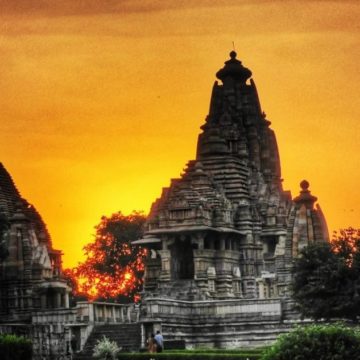
Khajuraho – Poetry in Stone
A close look at the magnificent temples located all around Khajuraho.