
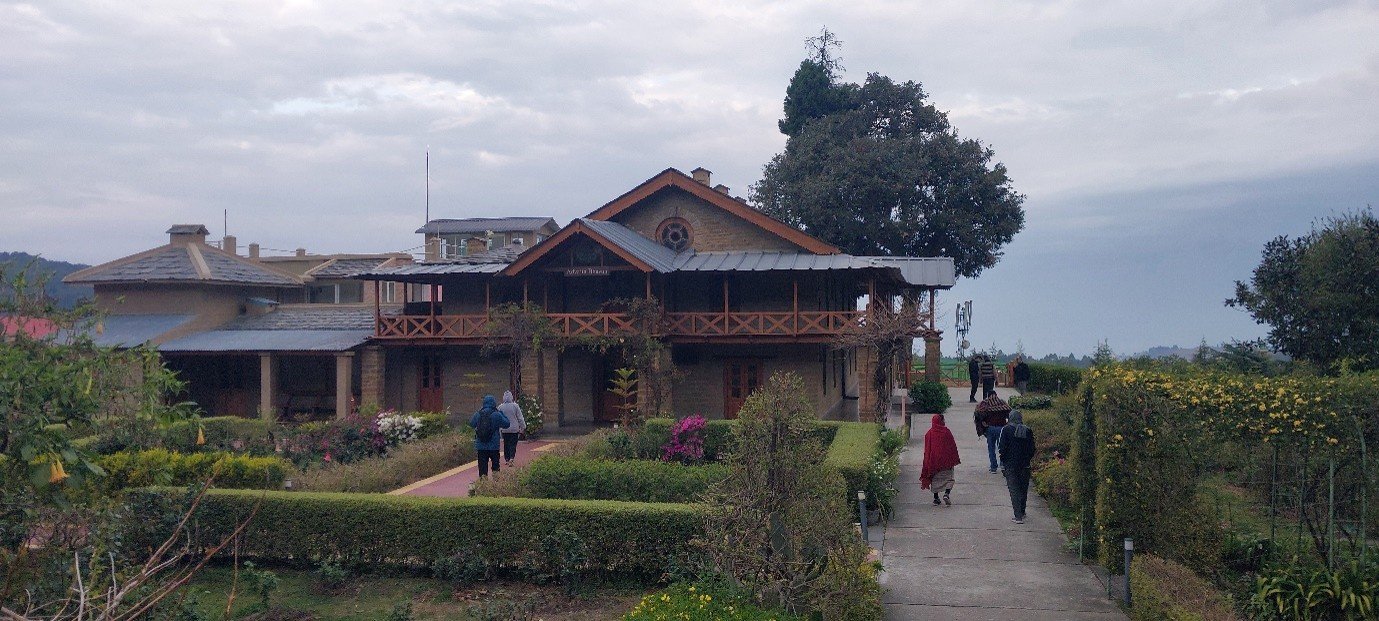
There are pilgrimages that are planned months in advance. There are others that arise spontaneously when circumstances unexpectedly fall into place. But there is yet another category of pilgrimage—one that quietly grows within the heart over decades, nourished by longing and imagination. My pilgrimage to Advaita Ashrama, Mayavati, belonged to the first category.
For more than forty years, I carried within me an unfulfilled desire to visit this remote Himalayan monastery associated with Swami Vivekananda. The desire had accompanied me through youth, middle age, and finally into my senior years. It remained dormant at times, yet never disappeared.
My first introduction to Mayavati took place in the early 1980s. During those years, I had the privilege of frequently meeting the late Padmavibhushan Sri P. Parameswarji (1927-2020), senior RSS pracharak, one of modern India’s foremost cultural thinkers and nationalist intellectuals. His office was simple and unpretentious. Yet for young seekers like me, it was a veritable university. Books, journals, newspapers, and manuscripts occupied every available corner. Conversations ranged from Indian philosophy and history to spirituality and national reconstruction.
One day, while waiting to meet him, my attention was drawn to a magazine lying on his study table. It was Prabuddha Bharata—the prestigious English monthly journal inspired by Swami Vivekananda. Curious, I picked it up and began browsing through its pages. Noticing my interest, Parameswarji spoke about an extraordinary Ashram hidden deep within the Himalayas. He explained that the magazine was being published from a place called Mayavati, a remote monastery established under the inspiration of Swami Vivekananda and nurtured by his devoted Western disciples, Captain and Mrs. Sevier. The name, Mayavati, itself fascinated me.
I had never heard of it before. Unlike Belur Math, Dakshineswar, Kanyakumari, or Rishikesh, it was not a place frequently mentioned in pilgrimage literature. Yet the little that I heard that day was enough to kindle a deep interest. Parameswarji briefly narrated how Swami Vivekananda had envisioned a centre dedicated exclusively to the practice and propagation of Advaita Vedanta. He spoke about the Himalayan location, the solitude, the forests, and the publication of Prabuddha Bharata. Listening to him, I found myself mentally transported to a world far removed from the bustle of everyday life. That evening, after returning home, I continued thinking about Mayavati.
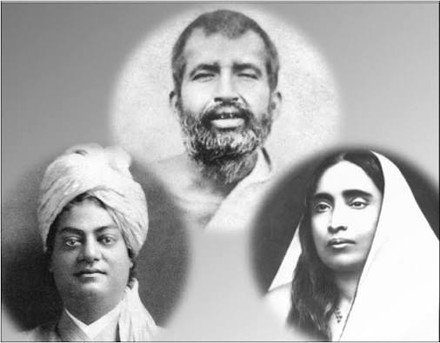
The holy trio, Sri Ramakrishna Sri Saradadevi and Swami Vivekananda
I imagined a monastery nestled amidst pine forests, surrounded by snow-clad peaks, where monks spent their days in meditation, study, and contemplation. The image remained etched in my mind. At that stage of my life, my acquaintance with the lives and teachings of Bhagavan Sri Ramakrishna, Holy Mother Sri Sarada Devi, and Swami Vivekananda was steadily deepening. I was reading whatever literature I could obtain. Every book opened new dimensions of India’s unique spiritual heritage. Among the institutions associated with Swami Vivekananda, Mayavati appeared uniquely mysterious and attractive.
Decades passed. Life took me through many responsibilities and countless journeys. I was fortunate to visit numerous sacred destinations across Bharat, travelling from Kanyakumari in the south to Kashmir in the north, and offering my prayers at many temples, Ashrams, and centres of spiritual learning. Yet one dream remained unfulfilled—the dream of visiting Advaita Ashrama, Mayavati.
Years passed, but Mayavati never faded from my consciousness. Every issue of Prabuddha Bharata that came into my hands revived memories of my first conversation with Parameswarji about the remote Himalayan Ashram from where the journal was published. Whenever I read about Swami Vivekananda’s life and mission, my thoughts invariably turned to Mayavati, where he had spent some memorable days shaping ideas that would influence generations. References to Captain and Mrs. Sevier in books and articles would similarly remind me of the remarkable monastery they had established amidst the solitude of the Kumaon Himalayas.
At times, the dream remained dormant for months, even years. Yet an article, a book, or a passing conversation would invariably bring Mayavati back into focus. As the years turned into decades, the aspiration only grew stronger. Visiting Mayavati, I felt, would be akin to stepping into a living chapter of Swami Vivekananda’s life.
For me, Mayavati offered an opportunity to connect with a living legacy of Swami Vivekananda, to visit the Himalayan retreat envisioned by him, and to see firsthand the Ashram established through the dedication of Captain and Mrs. Sevier. It was also a chance to visit the historic home of Prabuddha Bharata, a journal that has influenced generations of spiritual seekers and thinkers. Above all, Mayavati promised an experience of the rare spiritual atmosphere of an Ashram dedicated exclusively to the ideals of Advaita Vedanta.
Four decades is a long time to nurture a pilgrimage dream. Yet the years of waiting seemed only to strengthen the aspiration. When the opportunity finally arrived, the journey felt less like a carefully planned trip and more like the fulfilment of a long-cherished spiritual quest.
The Call Finally Comes
My retirement from government service in July 2022 marked the beginning of a new phase in life. I found greater opportunities to pursue long-cherished spiritual interests, including pilgrimages that required extended travel. Taking advantage of this newfound freedom, my wife Sreelakshmi and I undertook visits to several sacred destinations across the country. Each pilgrimage proved spiritually enriching and further deepened our desire to explore the rich and diverse spiritual heritage of Bharat.
Yet the long-cherished dream of visiting Advaita Ashrama, Mayavati, remained alive through the years, patiently awaiting the right moment for its fulfilment. During one of our discussions about future pilgrimages, the subject resurfaced. The question naturally arose: why postpone it any longer? After all, if not now, when? The decision was soon made.
I wrote to Advaita Ashrama, Mayavati, requesting permission to stay there for a few days. Unlike many tourist destinations, Mayavati is not a place where one simply arrives and checks into accommodation. Visitors are expected to seek prior permission. The Ashram receives genuine spiritual aspirants who wish to spend time in contemplation and silence.
To my delight, a positive response arrived without much delay. The Swamiji in charge graciously permitted my wife and me to stay at the Ashram guest house for three days. Receiving that communication was a moment of immense happiness. A quest that had been nurtured for more than four decades was finally on the verge of fulfilment.
The weeks leading up to the journey were filled with anticipation. I found myself reading once again about the history of Mayavati, Swami Vivekananda’s visit there, the role of Captain and Mrs. Sevier, and the publication of Prabuddha Bharata.
Each new detail about Mayavati only heightened my anticipation. This was no ordinary journey. I was preparing to visit a place that had occupied a special place in my heart for nearly four decades. While most pilgrimages begin with a physical journey, this one had commenced long ago in the mind. The time had finally come to translate that long-cherished aspiration into reality.
Towards the Himalayan Foothills
We travelled from Thiruvananthapuram to New Delhi to commence our pilgrimage to Mayavati. As with several of our earlier journeys to the sacred destinations of North India, we chose to travel onwards by train. Our destination was Tanakpur, a town at the foothills of the Kumaon Himalayas in Uttarakhand and the gateway to Advaita Ashrama, Mayavati. From there, the ascent into the mountains would begin.
Train journeys have always held a special charm for me. Unlike air travel, which compresses distance into a matter of hours, train travel allows one to gradually experience the changing landscape. The transition from bustling cities to quiet countryside becomes part of the pilgrimage itself.
Throughout the train journey, my thoughts frequently turned to Mayavati. I found myself wondering about the countless devotees, monks, scholars, and spiritual seekers who had travelled along similar routes over the past century, inspired by the life and message of Swami Vivekananda. The thought that I was following, in a small way, a path trodden by generations of pilgrims added a special significance to the journey.
As the train moved northwards, the landscape gradually changed. The plains stretched endlessly under the open sky. Villages appeared and disappeared. Fields of wheat and sugarcane extended towards the horizon. Farmers worked patiently in their fields, continuing rhythms that had remained unchanged for generations.
As the train moved closer to Uttarakhand, a sense of anticipation steadily grew within me. There is something uniquely inspiring about a pilgrimage to the Himalayas. Even before the mountains come into view, one begins to feel their presence. The atmosphere seems to change, the air becomes fresher, and an unusual calm gradually descends upon the mind.
Ancient India’s sages regarded the Himalayas not merely as a geographical formation but as a sacred realm. For thousands of years, seekers have travelled there in search of spiritual illumination. Simply knowing that one is approaching those mountains creates an inner excitement that is difficult to explain. By the time we reached Tanakpur, we felt that the real pilgrimage was about to begin.
Into the Kumaon Himalayas
At Tanakpur railway station, we were received by Sri Ashok Bhat, a cheerful and affable Kumaoni gentleman deputed by the Ashram. His warm smile and friendly demeanour made us feel instantly comfortable. Before commencing the drive to Mayavati, he took us to Hotel Akshaya Palace for breakfast, which was particularly welcome after the overnight train journey. Soon thereafter, we set off towards the Kumaon Himalayas. Almost immediately, the landscape began to change, signalling the start of the mountain journey.
The flat plains began giving way to rolling hills. The road started winding upwards through increasingly rugged terrain. Every few kilometres revealed a new panorama. For someone who loves the Himalayas, such journeys never become monotonous.
With every kilometre gained in altitude, the journey became increasingly captivating. Each turn of the winding mountain road revealed a new panorama—at one point a deep valley stretching far below, and at another a ridge commanding sweeping views of the surrounding hills and forests. Throughout the journey, Ashok Bhat proved to be an excellent guide, readily sharing information about the region, its people, and its landscape.
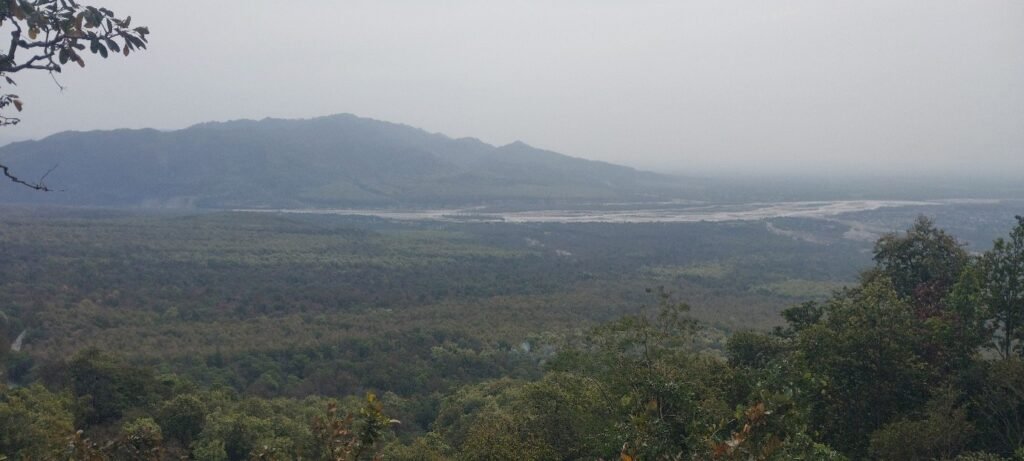
Quiet flowing Sarada river on the way to Mayawati
As we climbed higher, he pointed towards the sparkling waters of the Sarada River flowing below. On the opposite bank lay Nepal. The international border seemed almost incidental amidst such natural beauty. The river flowed calmly through the valley, reflecting the sunlight like molten silver.
The scenery became increasingly enchanting. We passed through dense forests of sal trees. Gradually pine forests began appearing. Soon magnificent deodar trees joined them, their stately forms adding grandeur to the landscape.
The fragrance of pine needles drifted through the cool mountain air. Tiny villages appeared at intervals, clinging to mountain slopes. Their houses seemed perfectly adapted to the terrain. Terraced fields carved into the hillsides testified to generations of patient labour by the mountain people.
Life in the Himalayas is not easy. Every field, every path, every dwelling reflects extraordinary perseverance. Yet the faces of the villagers revealed a quiet contentment. Women carrying bundles of grass climbed steep slopes with remarkable ease. Elderly men sat outside their homes exchanging greetings. Children waved enthusiastically as our vehicle passed.
In contrast to the fast-paced rhythm of urban life, the mountain communities appeared to move in harmony with nature and the seasons. As we ascended higher into the Kumaon hills, the scenery became increasingly breathtaking. Ashok Bhat occasionally stopped the vehicle at vantage points, allowing us to savour the magnificent views. Through openings in the surrounding hills, distant Himalayan ranges could be seen on the horizon, heightening our anticipation. It was a clear indication that we were gradually entering the majestic world of the Himalayas.
After passing through Lohaghat, the town located about nine kilometres from Mayavati and the principal gateway to the Ashram, the journey assumed an even more enchanting character. The final stretch wound through dense forests of towering deodar trees, creating an atmosphere of serenity and seclusion befitting a Himalayan monastery. This picturesque hill town, with its quiet charm, provides the last link between the outside world and the peaceful solitude of Mayavati.
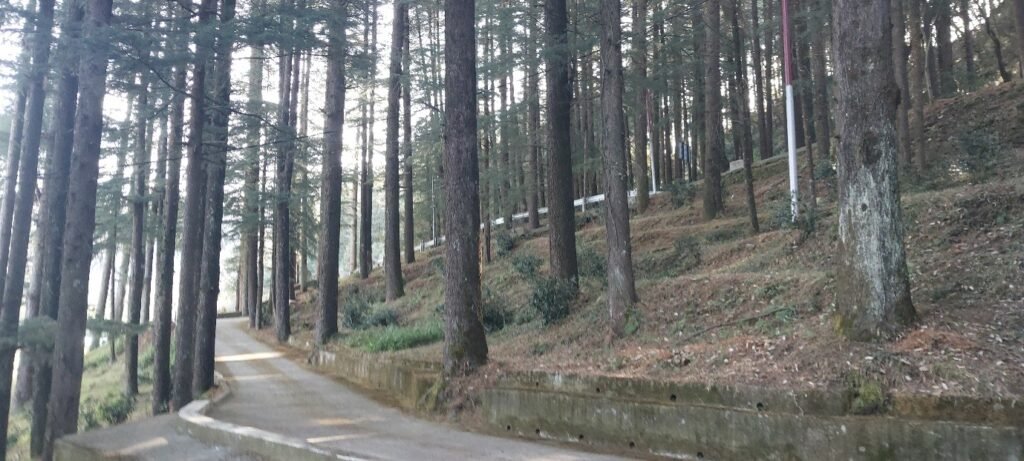
On the way to Advaita Ashrama through the deodars
The road now seemed to lead us into a different world altogether. Traffic became nil, the silence more profound, and towering deodar trees lined both sides of the narrow mountain road. Sunlight filtered through the dense canopy, casting shifting patterns of light and shadow on the forest floor. With every passing kilometre, the atmosphere grew increasingly serene and contemplative. Surrounded by such natural beauty and solitude, it was easy to understand why Swami Vivekananda and his devoted disciples, Captain and Mrs. Sevier, had chosen this remote Himalayan region as the site for an Ashram dedicated to meditation and the ideals of Advaita Vedanta.
Then, at around two o’clock in the afternoon, after a day of travel through the Himalayan foothills and a pilgrimage cherished for four decades, we finally arrived at Advaita Ashrama, Mayavati—a long-cherished aspiration fulfilled.
Arrival at the Ashram of My Dreams
There are occasions in life when a long-cherished aspiration, nurtured over many years, finally culminates in a single memorable moment. My arrival at Advaita Ashrama, Mayavati, was one such occasion. As our vehicle rounded a sharp bend and entered the Ashram campus, I was filled with a deep sense of joy and gratitude. The pilgrimage dream that had accompanied me for more than four decades had finally fulfilled. I realized that I was finally standing at Mayavati, the revered Himalayan Ashram sanctified by the presence and memories of Swami Vivekananda
Many places become familiar through photographs, books, and descriptions long before we actually visit them. Yet reality often possesses a power that no photograph can adequately capture. Mayavati was one such place.
The first impression that struck me was the sheer beauty of the surroundings. Nestled amidst the Himalayan hills, the Ashram was enveloped by towering deodar trees, while its meticulously maintained gardens added colour and charm to the serene landscape. The entire setting radiated a sense of peace, harmony, and natural grandeur.
Equally striking was the profound stillness that enveloped the Ashram. It was the silence of the Himalayas—deep and soothing. Unlike the fleeting silence of urban settings, which is often interrupted by traffic and human activity, this was a living silence, gently punctuated only by birdsong and the rustle of leaves.
The Ashram campus appeared remarkably simple and harmonious. The buildings blended naturally with their surroundings. Carefully maintained pathways wound through gardens and wooded areas. Flowering plants added colour to the landscape without disturbing its serenity.
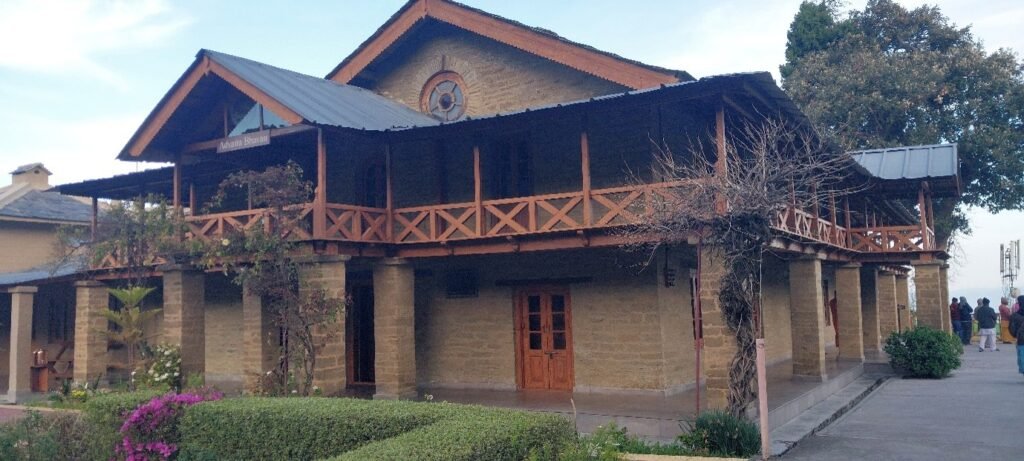
Advaita Ashram, Mayawati
A monk received us warmly and guided us through the formalities, perfectly reflecting the spirit of the Ramakrishna Order. One immediately sensed that this was not a place intended for tourism. It was a centre for spiritual life. We were allotted accommodation in the guest house situated a short distance below the main Ashram complex. The walk between the guest house and the main campus itself turned out to be one of the delights of our stay.
The guest house reflected the simplicity and the elegance characteristic of the Ramakrishna Order. Clean, comfortable, and modest, it provided all that a pilgrim could wish for. Its windows overlooked forest-clad hills and groves of majestic deodar trees, offering soothing views of the Himalayan landscape. After settling into our room, I spent some time by the window, quietly taking in the beauty and serenity of the scene before me.
The figure kept recurring in my mind—forty years. Four decades of reading about Mayavati, imagining its serene surroundings, and hoping that one day I would make the pilgrimage. What had remained a distant aspiration through all those years was now unfolding before my eyes. And now, by the grace of Sri Ramakrishna, Holy Mother, and Swami Vivekananda, I was finally there.
After a brief rest, we set out to explore the Ashram campus. Every pathway seemed to invite a leisurely walk. Towering pine and deodar trees stood majestically across the grounds, while well-maintained gardens adorned with colourful flowers enhanced the beauty of the surroundings. The entire campus reflected an appealing blend of simplicity, order, and tranquillity. What impressed me most was the unhurried atmosphere. There were no crowds, no noise, and no sense of bustle—only a pervasive calm that seemed perfectly in harmony with the spirit of the place.
As evening descended over Mayavati, the mountain air grew progressively cooler, prompting us to put on our heavy woollen sweaters. Gradually, lights began appearing in the Ashram buildings. Later that night, before retiring, I stepped outside once again to admire the magnificent Himalayan sky, studded with countless stars.
Swami Vivekananda’s Himalayan Dream
To understand Mayavati properly, one must understand the extraordinary vision that gave birth to it. Advaita Ashrama emerged directly from Swami Vivekananda’s spiritual insight and his unique understanding of India’s future.
Advaita Ashram Mayawati, another view
During his travels in the West, Swamiji spent considerable time in Switzerland along with Captain James Henry Sevier and his wife Charlotte Sevier, two of his most devoted Western disciples. While travelling through the Alps, discussions frequently arose regarding the establishment of a monastery in the Himalayas dedicated exclusively to Advaita Vedanta.
The snow-covered Alpine peaks reminded Swamiji of the Himalayas. As they walked amidst the mountains, he spoke of his desire to create a centre where sincere seekers from both East and West could live together, study Vedanta, practise meditation, and pursue the highest spiritual ideals.
Swamiji’s vision for the proposed monastery was clear and well-defined. He envisaged a retreat away from crowded pilgrimage centres, nestled amidst forests and surrounded by the grandeur of the Himalayas. Above all, he sought a place of solitude and serenity where seekers could devote themselves to contemplation, meditation, and the realization of the highest truths of Advaita Vedanta.
In several letters written during this period, Swamiji described his dream in vivid language. He spoke of an entire hill covered with forests, flowers, springs, and commanding views of the Himalayas. He wished to establish a monastery where the ideal of non-duality could be lived and experienced.
Acting on their Guru’s instructions, the Seviers searched the Kumaon Himalayas for a site that matched Swami Vivekananda’s vision of a secluded yet accessible retreat amidst natural beauty and conducive to spiritual life. Their search eventually led them to a former tea estate at Mayavati, which fulfilled these requirements and was subsequently chosen as the site of Advaita Ashrama.
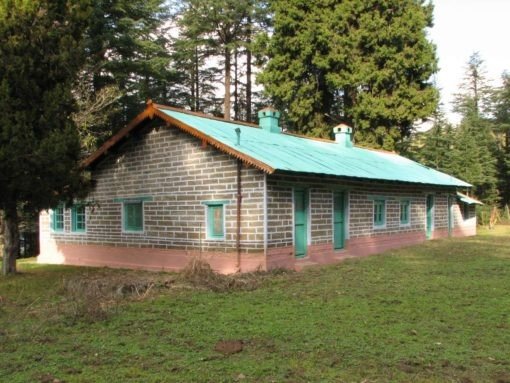
Mother Seviers Bungalow
The estate offered everything that Swami Vivekananda had envisaged—dense forests, magnificent views of snow-clad Himalayan peaks, a healthy climate, and an atmosphere of profound serenity. In March 1899, the property was acquired and Advaita Ashrama was established.
Standing in the Ashram grounds more than a century later, I could not help admiring Swami Vivekananda’s foresight. His choice of location was remarkably apt. Even today, the forests, the contemplative atmosphere, the mountains, and the contemplative atmosphere remain largely unchanged, continuing to inspire spiritual seekers from India and abroad.
Walking Through History
One of the great privileges of visiting Mayavati is the opportunity to walk through living history. Unlike many historic sites that survive only as monuments, Mayavati continues to function as a vibrant spiritual centre. Yet at every step one encounters reminders of its remarkable past.
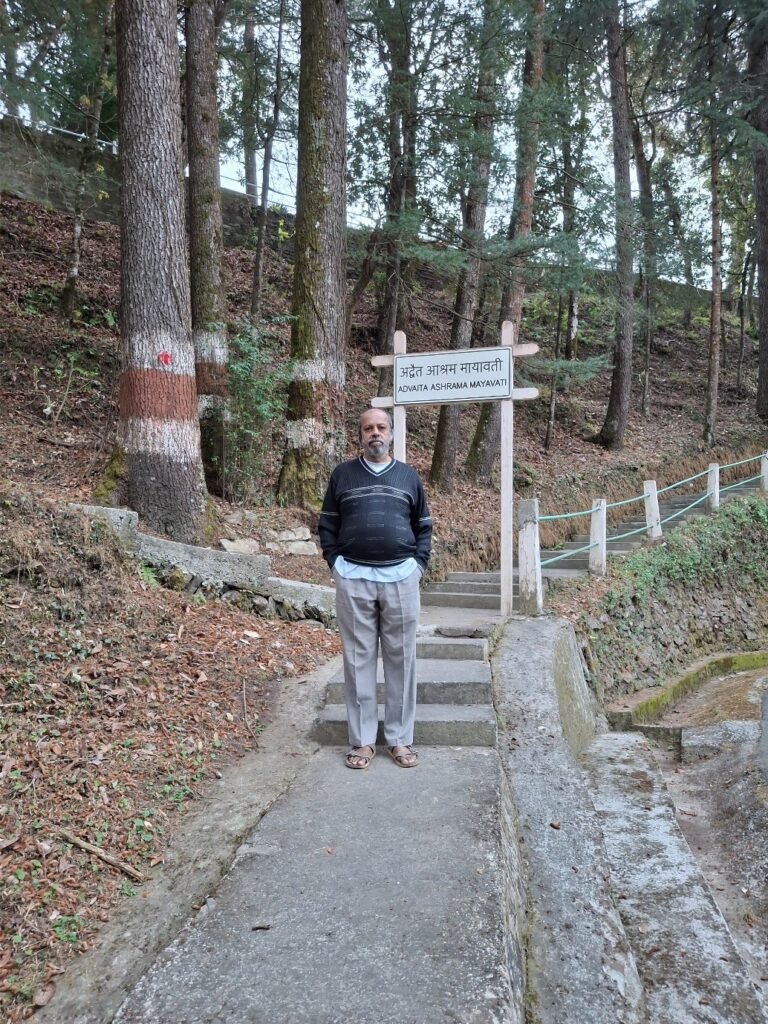
Pradeep Krishnan at one of the pathways leading to Advaita Ashrama, Mayavati
The day after our arrival, I devoted considerable time to exploring the historic sections of the Ashram. As I walked through the campus, I repeatedly reminded myself that these were the very grounds once traversed by Swami Vivekananda. The thought was deeply moving.
Few personalities have influenced modern India as profoundly as Swamiji. His message of strength, fearlessness, service, and spiritual realization continues to inspire millions. To stand where he had stood and walk where he had walked was a rare blessing.
One of the most sacred places in Mayavati is the room associated with Swami Vivekananda’s stay. Swamiji arrived at Mayavati on 3 January 1901 and remained there until 18 January. Although the visit was relatively brief, it left a lasting impact on the Ashram. During his stay he interacted with the monks, discussed important matters concerning the future of the Ramakrishna Movement, wrote articles, and spent time in contemplation.
Entering Swami Vivekananda’s room was a deeply moving experience. The room itself was remarkably simple and unadorned, yet it carried a spiritual aura that no grandeur could have matched. Sitting there quietly for a few moments, I found myself reflecting on Swamiji’s extraordinary life—his years as a wandering monk, his historic address at the Parliament of Religions in Chicago, his extensive travels across India and the West, his efforts to awaken national self-confidence, his emphasis on combining spirituality with service, and his tireless work despite failing health. The room seemed to preserve something of that inspiring legacy, making the visit an unforgettable experience.
Nearby stood several other buildings associated with the early history of Advaita Ashrama. At Mayavati, history is not merely preserved in books and records; it remains woven into the very landscape of the Ashram.
Home of Prabuddha Bharata
For me, one of the most meaningful aspects of the pilgrimage was Mayavati’s association with Prabuddha Bharata. Decades ago, it was through a copy of Prabuddha Bharata on the table of Parameswarji that I first came to know about Mayavati. In many ways, the magazine had planted the seed of this long-cherished pilgrimage.
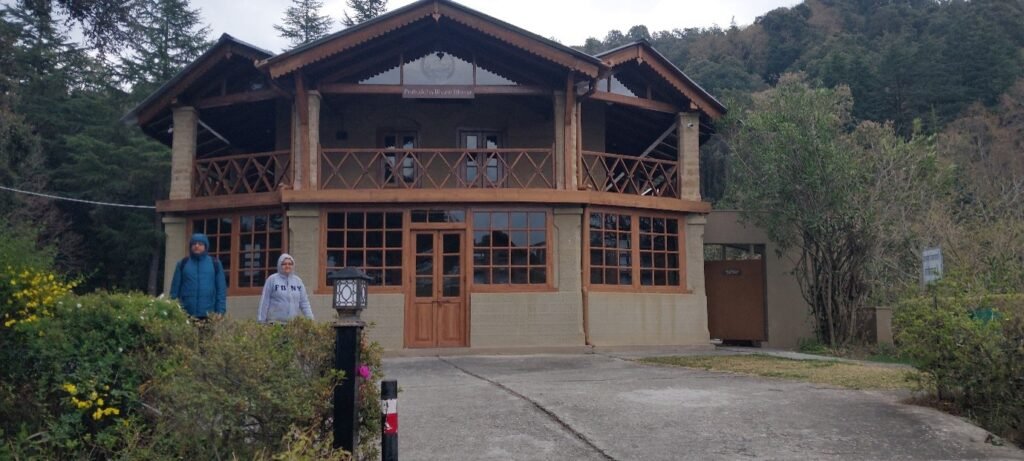
Prabuddha Bharata Building
The history of Prabuddha Bharata is inseparable from the history of modern Hindu thought. Founded in July 1896 in Madras (Chennai) under the inspiration of Swami Vivekananda, the journal quickly established itself as one of the most important intellectual and spiritual publications in India. Its future became uncertain following the untimely death of its editor, B. R. Rajam Iyer. At that critical juncture, under Swamiji’s guidance, the publication was revived and eventually shifted to the Himalayas, first to Almora and later to Mayavati.
From Mayavati, the journal entered a new phase of development. Over the decades, Prabuddha Bharata became a forum for some of the finest spiritual, philosophical, cultural, and intellectual writing in modern India. Since its inception, Prabuddha Bharata has carried the thoughts and writings of numerous monks, scholars, and spiritual seekers, playing a significant role in disseminating the ideals of the Ramakrishna-Vivekananda movement. Standing at the Ashram from where the journal was published for many years was a deeply meaningful and inspiring experience.
As I walked through the Ashram, memories associated with Prabuddha Bharata came flooding back—articles that had inspired me, ideas that had enriched my understanding of Hindu spirituality, and countless hours spent reading its book-review pages. At Mayavati, those long-standing memories suddenly acquired a tangible and deeply personal dimension.
The Ashram also housed the historic printing press that produced not only Prabuddha Bharata but also numerous books and publications of the Ramakrishna Order. Mayavati’s contribution to spiritual publishing has been immense. While many readers may never have the opportunity to visit this remote Himalayan Ashram, its publications have carried the message of Sri Ramakrishna, Holy Mother, and Swami Vivekananda into countless homes across India and around the world.
As I walked through the campus that evening, I reflected on the remarkable journey of a journal that was born on the shores of the southern seas of Bharat and found its enduring home amidst the lofty Himalayan heights. From the Bay of Bengal in Madras to the snow-clad peaks overlooking Mayavati, Prabuddha Bharata had carried the timeless message of Sanatan Dharma across Bharat, touching and inspiring generations of readers.
The story of Prabuddha Bharata is, in many ways, inseparable from Swami Vivekananda’s vision for the spiritual and cultural awakening of Bharat Mata. More than a century later, that vision continues to inspire seekers across the country and beyond. Nowhere is its presence felt more vividly than in the serene and contemplative atmosphere of Mayavati, where that vision took enduring institutional form.
Life at Mayavati
One of the greatest attractions of Mayavati is the unique rhythm of life that unfolds there every day. Modern life is often dominated by noise, speed, and constant distraction. At Mayavati, one encounters an entirely different way of living.
The day begins early. The cool Himalayan air, the silence of the forests, and the gradual awakening of nature create an atmosphere naturally conducive to meditation and prayer. Even before sunrise, one becomes aware of a profound stillness enveloping the Ashram.
During our stay, I discovered that the greatest gift Mayavati offered was peace and tranquillity. There was no pressure to rush from one activity to another. No loudspeakers disturbed the environment. No crowds demanded attention. The entire atmosphere encouraged one to slow down and become inwardly attentive.
The walk from the guest house to the main Ashram soon became one of the highlights of each day. The path wound gently through wooded areas and open spaces. Each morning unveiled a different facet of the Himalayan landscape. One day, a veil of mist shrouded the hills; on another, brilliant sunshine illuminated the forests. On yet another day, clouds drifted quietly through the valleys below, transforming the scenery with every passing hour.
Several devotees from different parts of India were staying at the Ashram during our visit. Most of them had come seeking peace, spiritual inspiration, or a brief respite from the pressures of daily life. Conversations were cordial but generally restrained, respecting the contemplative atmosphere of the place.
On the penultimate day of our stay, in the evening, heavy rain lashed the Ashram and the surrounding valleys, accompanied by biting cold. When the rain subsided for a short while, we stepped out for a walk. To our delight, the pathways and grounds were strewn with golden deodar blossoms, as though they had been scattered by the Divine. The sight transformed the entire area into a heavenly landscape.
The dining hall offered yet another glimpse into the disciplined yet simple life of the Ashram. The meals served were wholesome, nourishing, and uncomplicated, reflecting the spirit of simplicity that pervaded Mayavati. Though modest in preparation, they were served with warmth and care. The monks and staff went about their responsibilities quietly and efficiently, creating an atmosphere where order and serenity coexisted naturally. Everything seemed guided by an invisible spirit of discipline and dedication.
Among the most charming residents of Mayavati were three Bhotiya Himalayan breed dogs—Ramu, Shamu, and Chottu. Well-known and much loved by visitors, they added a touch of warmth and companionship to its serene environment. During our three-day stay, my wife and I spent some time with them every evening, playing with them, patting them, and enjoying their affectionate company. Though they did not understand our language, they seemed to understand the language of the heart. Their presence brought a special charm to our stay and added a delightful dimension to our Mayavati experience. Each evening, after our walk around the campus, quiet reflection, and time spent with these gentle companions, we returned to the guest house with a deep sense of fulfilment.
To a casual visitor, life at Mayavati may appear marked by simplicity and quiet routine. Yet beneath this outward simplicity lies a unique blend of contemplation and disciplined activity. It is this atmosphere of peace and spiritual harmony that many pilgrims carry back with them as one of Mayavati’s most cherished memories.
Sunrise Over the Eternal Himalayas
If someone were to ask me about the most unforgettable visual experience of my stay at Mayavati, my answer would be immediate—the Himalayan sunrise. No photograph, however skilfully composed, can truly capture the splendour of dawn in these mountains. Each morning, we awoke with eager anticipation and walked up to the Ashram Garden, hoping for a clear view of the distant peaks. Mountain weather is famously unpredictable, and clouds often conceal the Himalayan ranges for days at a stretch. Every unobstructed view is therefore a special blessing. Fortunately, nature was kind to us during our stay.
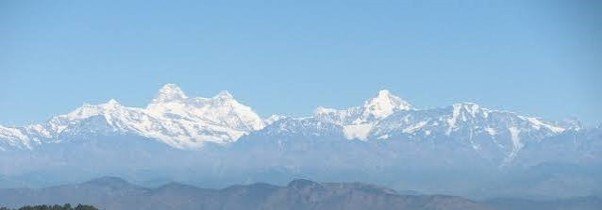
Himalayan peaks seen from the Mayawati Ashram
Before sunrise, the distant horizon remained shrouded in a soft bluish-grey light. The forests below were still half asleep. Gradually, as the eastern sky brightened, outlines of distant mountain ranges began emerging from the darkness.
Then came the moment that every visitor eagerly awaited. As the first rays of the rising sun touched the snow-clad peaks, the entire panorama underwent a dramatic transformation. The pale outlines visible moments earlier suddenly came alive in a dazzling display of colour. Shades of gold, pink, amber, and silver spread across the mountains, while peak after peak emerged in all its majestic splendour.
Around ten to fifteen visitors had gathered in the Ashram Garden to witness the spectacle. As the mountains lit up, a hush fell over the group. Some stood transfixed, others silently folded their hands in reverence, while a few instinctively reached for their cameras. Yet no photograph could truly capture what unfolded before our eyes. The expressions of wonder and admiration on the faces of the assembled visitors spoke eloquently of the profound impact of the moment. For several minutes, all conversation ceased as everyone remained absorbed in the grandeur of the Himalayan sunrise.
From Mayavati, visitors are treated to magnificent views of several celebrated Himalayan peaks, including Panchachuli, Nanda Devi, Nanda Kot, Trishul, Nanda Ghunti, Kamet, Nilkantha, Badrinath, and Kedarnath. One morning, as a group of visitors gathered in the Ashram Garden to witness the sunrise, a monk who had joined us, patiently pointed out the various peaks and explained their names and significance. The snow-clad summits stood resplendent in the morning light, making the experience both visually stunning and spiritually uplifting. However, despite our keen anticipation, Kedarnath remained elusive, its view obscured and not clearly visible from our vantage point that day.
For centuries, these majestic peaks have inspired saints, sages, pilgrims, poets, and travellers alike. Standing before them, it is easy to understand why. Gazing at these towering summits, one is filled simultaneously with wonder, humility, and reverence. In their presence, one becomes acutely aware of one’s own smallness, yet at the same time experiences a strange sense of elevation and inner upliftment.
As the sunlight spread gradually across the entire range, the peaks appeared like gigantic temples shaped by nature herself.
Sitting on a cement bench in the garden, I gazed at the snow-clad Himalayan ranges and found my thoughts returning to the same theme again and again. These were the very mountains that had inspired countless rishis and seekers through the ages. These were the Himalayas that had drawn Swami Vivekananda and many other spiritual luminaries in search of solitude and higher realization. Even today, they continue to attract pilgrims and seekers from across the world. Throughout India’s spiritual history, the Himalayas have symbolized the quest for transcendence. Rising majestically above the plains, they seem to inspire humanity to look beyond the ordinary and aspire towards higher ideals.
Perhaps that is why the Himalayas have always occupied a unique place in Bharat’s spiritual consciousness. Viewed from Mayavati, the sunrise was an experience that touched something deeper within. The mountains seemed to speak of permanence and eternity, gently drawing the mind away from the fleeting concerns of everyday life. Even today, long after the pilgrimage has ended, those Himalayan mornings remain among my most treasured memories.
The Living Spirit of Advaita
Among the many centres of the Ramakrishna Order, Mayavati occupies a distinctive place. Its uniqueness stems from the ideal upon which it was founded. Swami Vivekananda envisioned it as a centre dedicated exclusively to the study and practice of Advaita Vedanta—the philosophy that affirms the essential oneness of existence and the divinity inherent in every being. He wanted seekers to have an environment conducive to meditation, contemplation, and the realization of the highest truths of the Upanishads. Accordingly, unlike many Ashrams where ritual worship forms an important part of daily life, Mayavati was established with a special emphasis on meditation, spiritual inquiry, study, and direct inner experience.
During our stay, I often found myself reflecting on this ideal of Advaita. The natural surroundings of Mayavati seemed perfectly suited to such contemplation. The forests invited quietitude, the mountains inspired detachment, and the vast Himalayan landscape fostered a sense of humility. Everywhere, nature seemed to remind the visitor of the smallness of the individual ego in the larger scheme of creation.
My three-day stay at Mayavati deepened my understanding of the profound message of Advaita Vedanta—that beneath the apparent diversity of the world lies an underlying unity. It teaches us to rise above distinctions of caste, creed, nationality, language, and social status, and to recognize the same divine reality manifest in all beings. In today’s world, where conflicts and divisions frequently dominate public discourse, the message of Advaita appears more relevant than ever.
Mayavati stands as a living embodiment of that timeless message. One afternoon, while sitting quietly beneath a cluster of pine trees, I reflected on the remarkable journey that had brought me there. A lifelong aspiration, I had first heard the name Mayavati; now I was seated amidst the very Himalayan landscape that had inspired Swami Vivekananda’s vision. The experience filled me with a deep sense of gratitude to the late Sri Parameswarji, whose introduction to Mayavati many years ago had planted the seed of this long-cherished pilgrimage.
Service in the Shadow of the Himalayas
Although Mayavati is best known as a centre for meditation, spiritual study, and the publication of Prabuddha Bharata, it also reflects another ideal that Swami Vivekananda held dear—the ideal of selfless service. For him, spirituality was never divorced from practical compassion. The realization of the Divine in all beings, he taught, must naturally find expression in service to humanity.
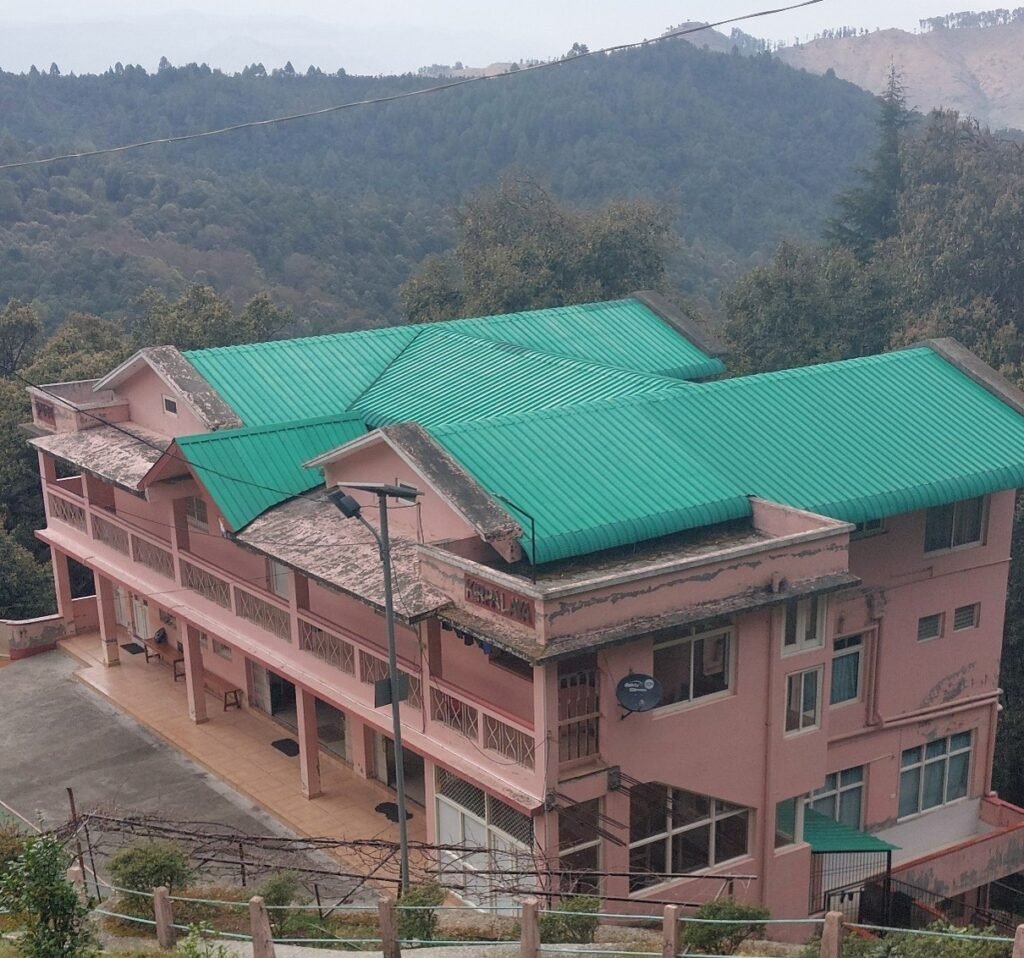
Mayawati Charitable Hospital
This ideal finds concrete expression at Mayavati through its various service activities, foremost among them the Mayavati Charitable Hospital, situated close to the Ashram. For decades, the hospital has been rendering invaluable medical service to the people of the surrounding Himalayan region. Serving nearly 1,400 villages spread across the remote hill areas, it provides medical care to thousands of patients every year and has become a vital lifeline for large sections of the local population.
During our stay, I learned more about the history and activities of this remarkable institution. The hospital owes much to the vision, compassion, and tireless efforts of Mother Sevier. While she was deeply committed to the spiritual and contemplative ideals of Advaita Ashrama, she was equally sensitive to the hardships faced by the people living in the surrounding Himalayan villages. Her concern for their welfare played a significant role in the growth of medical and welfare services in the region.
In many ways, the hospital reflects one of the central ideals of the Ramakrishna Movement—the harmonious blending of contemplation and service. Spiritual life is not seen as separate from concern for humanity; rather, service to the suffering is regarded as an expression of worship itself. The work carried out at Mayavati stands as a living example of this ideal.
At Mayavati, this harmony between contemplation and service is visible in a particularly inspiring form. On one side stands an Ashram dedicated to the highest ideals of Advaita Vedanta; on the other, a charitable hospital serving the healthcare needs of thousands of villagers from the surrounding Himalayan region. Far from being separate pursuits, the two complement and enrich one another. Advaita teaches the essential oneness of all existence, while service becomes the natural expression of that realization in daily life.
As I reflected upon this during our visit, I was reminded of Swami Vivekananda’s timeless message that service to humanity is service to God. In its own quiet and unobtrusive way, Mayavati continues to embody that ideal, demonstrating how spiritual realization and compassionate action can go hand in hand.
Far from the glare of public attention, amidst the quiet forests and mountains of the Himalayas, dedicated monks and staff continue to uphold a tradition of compassionate service that has touched countless lives over the decades. As our stay at Mayavati drew to a close, I realized that the Ashram was more than a scenic Himalayan retreat. It represented a harmonious blending of spiritual knowledge and selfless service. In many ways, it revealed the practical wisdom behind Swamiji’s conception in its fullest and most practical expression.
The Sevier Couple: Builders of a Dream
Every great institution has its pioneers, and dedicated builders. While Advaita Ashrama owes its origin to the far-sighted vision of Swami Vivekananda, its establishment and early growth were made possible through the extraordinary dedication of Captain James Henry Sevier and his wife, Charlotte Sevier, lovingly remembered as Mother Sevier. Their selfless commitment, sacrifice, and unwavering faith transformed Swamiji’s dream of a Himalayan centre for Advaita Vedanta into a living reality.

Captain James Henry Sevier and his wife, Charlotte Sevier
The story of their lives reads almost like a spiritual adventure. Born and raised in England, they enjoyed a comfortable and respectable life. Yet, like many thoughtful men and women of the late nineteenth century, they were searching for deeper answers to life’s fundamental questions. Their search eventually brought them into contact with Swami Vivekananda during his lectures in England.
The meeting transformed their lives. They quickly recognized in Swamiji not merely a brilliant philosopher but a spiritual giant whose vision transcended all barriers of race, nationality, and religion. From that moment onwards, they dedicated themselves wholeheartedly to his mission.
When Swamiji spoke of establishing a monastery in the Himalayas dedicated to Advaita Vedanta, they embraced the project as their own. They accompanied him during his travels in Europe and India, listening attentively to his ideas and helping convert those ideas into reality.
The search for a suitable site was neither easy nor quick. After extensive efforts, the Seviers finally discovered the Mayavati estate.
Their commitment involved enormous sacrifice. Life in the remote Himalayas at the turn of the twentieth century was far more difficult than it is today. Roads were primitive. Communication was limited. Medical facilities were scarce. Daily necessities often required considerable effort to obtain. Yet neither Captain Sevier nor Mother Sevier hesitated. They immersed themselves completely in the work.
Captain Sevier supervised the development of the Ashram, managed practical affairs, assisted in publication work, and supported the monks in numerous ways. His dedication was so complete that he spent the final years of his life at Mayavati. When he passed away in October 1900, he was cremated according to Hindu rites beside a mountain stream near the Ashram.
Captain Sevier’s passing deeply affected Swami Vivekananda, who visited Mayavati a few months later to console Mother Sevier and encourage the Ashram community. After her husband’s death, Mother Sevier devoted herself wholeheartedly to the growth of the Ashram, overseeing its publications, supporting educational and medical activities, and working for the welfare of the local people.
Walking through the Ashram grounds more than a century later, I often reflected on the extraordinary dedication and sacrifices of the Seviers. While many pilgrims come to Mayavati because of its association with Swami Vivekananda or its breathtaking Himalayan setting, the Ashram itself stands as a lasting tribute to the vision, service, and devotion of this remarkable couple. Their lives also illustrate one of the most inspiring features of Swamiji’s mission—the coming together of people from different cultures in the service of universal spiritual ideals.
A Visit to Shyamlatal
No pilgrimage to Kumaon Himalayas would be complete without a visit to Shyamlatal, another sacred centre of the Ramakrishna Order closely associated with Swami Virajanandaji Maharaj, a direct disciple of Sri Ramakrishna, and later President of the Ramakrishna Math and Ramakrishna Mission. After our memorable stay at Mayavati, we had the opportunity to visit this serene Ashram nestled amidst the Kumaon hills.
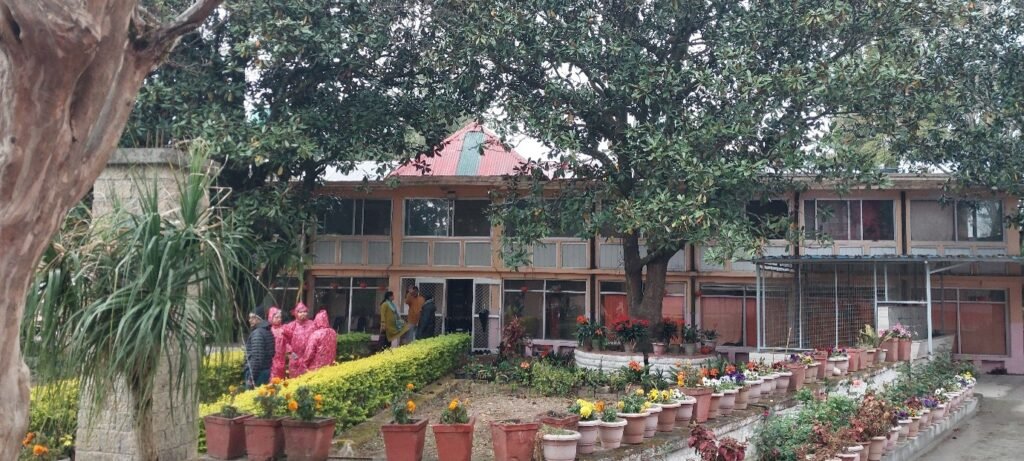
Sri Ramakrishna Ashram, Shyamlaltal
The drive to Shyamlatal was itself a delightful experience. As our vehicle wound its way through forested slopes and mountain roads, the Himalayan landscape unfolded in all its beauty. One can easily understand why these mountains have attracted sages and monks for centuries.
In due course, we arrived at Shyamlatal. Nestled beside a tranquil lake whose still waters reflected the surrounding hills and forests, the Ashram radiated an atmosphere of serenity and contemplation. Far removed from the bustle of urban life, Shyamlatal, like Mayavati, occupies a special place in the history of the Ramakrishna Order and continues to draw devotees and spiritual seekers from different parts of the country. We spent considerable time walking through the Ashram grounds, admiring its natural beauty and soaking in the peaceful surroundings. Though smaller in size than Mayavati, Shyamlatal possesses a charm and spiritual ambience entirely its own.
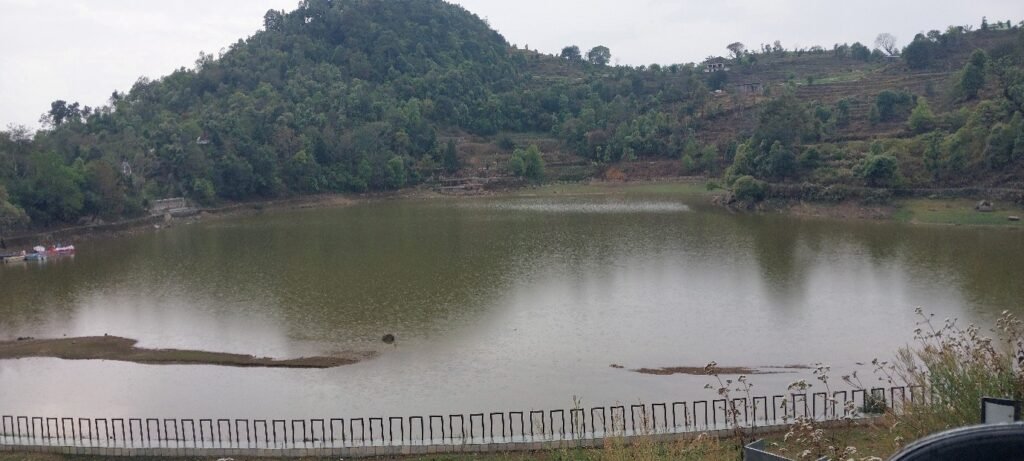
Shyamlaltal Lake
The Ramakrishna Ashrams at Mayavati, Shyamlatal, and Almora together form a sacred trinity of pilgrimage in the Kumaon Himalayas, each representing a distinct dimension of the spiritual legacy of Sri Ramakrishna and Swami Vivekananda. My wife and I had the privilege of visiting the Ashram at Almora nearly a decade ago and therefore did not include it in our present itinerary. While each of these Ashrams possesses its own unique character and spiritual atmosphere, all three are united by the same lofty ideals and embody the spirit of simplicity, authenticity, and dedication that characterizes the Ramakrishna Movement.
Farewell to the Himalayas
Every pilgrimage, however fulfilling, must eventually come to an end. There comes a time when one has to pack one’s belongings, bid farewell to a cherished place, and begin the journey home. For us, that moment arrived sooner than we would have liked. The three days we spent at Mayavati seemed to have passed in the blink of an eye.
On the morning of our departure, as the time to leave approached, I experienced a mixture of emotions. There was deep gratitude for the fulfilment of a dream nurtured since my youth and joy for the spiritual inspiration and inner peace we had received. At the same time, there was a touch of sadness, for in those few days Mayavati had become much more than a destination—it had begun to feel like a second home.
After offering our respects and bidding farewell to the monks and staff of the Ashram, we began our return journey. Once again, the road wound its way through forests of pine and majestic deodar trees. As we descended from the heights, the Himalayan landscape unfolded before us in all its beauty, as though offering a final blessing to departing pilgrims.
Our return journey took us once again through Lohaghat, the picturesque hill town surrounded by forests and rolling hills.Further ahead lay Champawat, the historic former capital of the Chand rulers of Kumaon, where traces of a rich and distinguished past can still be seen.
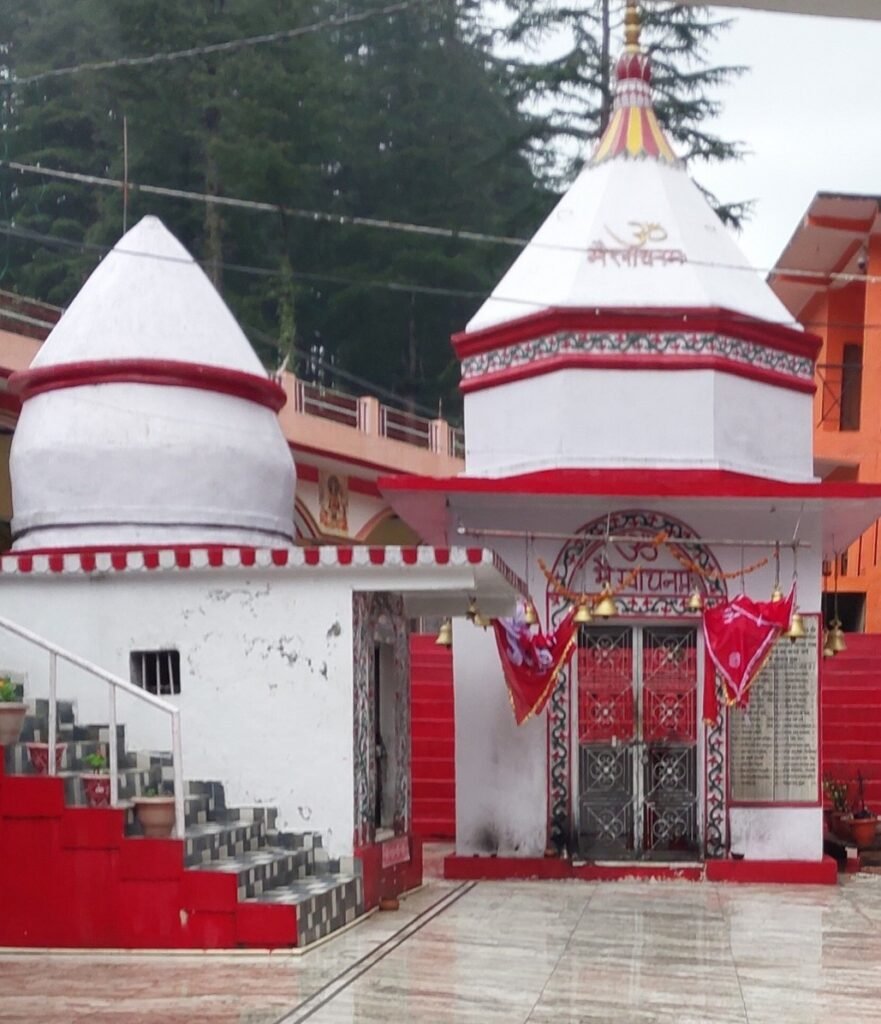
Shiv Mandir, Lohaghat
Along the way, we halted briefly to purchase some of the region’s famous locally grown apricots, renowned for their delightful flavour. Such simple experiences, though seemingly small, often become among the most cherished memories of a pilgrimage.
As the journey progressed, the Himalayan ranges gradually faded from view. Yet the Himalayas have a unique way of remaining with the traveller long after the mountains themselves are left behind. Their majestic images linger in memory, their serinity continues to echo within, and their inspiration endures long after the pilgrimage has ended.
By the time we reached Kathgodam, the railhead linking the Kumaon hills with the plains of North India, our Himalayan pilgrimage was drawing to a close. The train would soon carry us away from the mountains, but Mayavati had already become a part of us. We were leaving the Himalayas behind, yet the peace, inspiration, and spiritual enrichment we had received there would remain with us forever.
What Mayavati Gave Me
When people return from a pilgrimage, they are often asked a simple question: “What did you bring back?” Most travellers speak of photographs, souvenirs, or pleasant memories. My answer would be different. The most precious gifts that Mayavati bestowed cannot be carried in a suitcase or captured fully by a camera.
An aspiration carried through different stages of life, over the years, I had formed countless mental images of the Ashram and its surroundings. Yet the reality surpassed every expectation. The beauty of the forests, the splendour of the Himalayan peaks, the association with Swami Vivekananda, the legacy of Prabuddha Bharata, and the inspiring lives of Captain and Mother Sevier all left a deep impression on my mind.
Perhaps that is why Swami Vivekananda chose Mayavati as the home of an Ashram dedicated to Advaita Vedanta. Here, nature itself becomes a teacher. The forests encourage inward calm, the mountains inspire contemplation, and the entire environment gently turns the mind towards higher realities.
The pilgrimage deepened my admiration for Swami Vivekananda’s far-reaching vision, strengthened my appreciation of the dedication and sacrifices of the Seviers, and renewed my commitment to the spiritual ideals taught by Sri Ramakrishna, Holy Mother Sri Sarada Devi, and Swami Vivekananda.
As our train gradually carried us away from the Himalayas, my heart overflowed with gratitude—gratitude to the Divine Mother for making this long-cherished pilgrimage possible, gratitude to the monks and staff of Advaita Ashrama for their warmth and hospitality, gratitude to Sri Parameswarji who first introduced me to Mayavati, and gratitude to Swami Vivekananda for creating such a unique spiritual sanctuary in the Himalayas.
Among the many pilgrimages that I have undertaken across Bharat, my visit to Advaita Ashrama, Mayavati occupies a special place in my heart. Mayavati is not merely a place to be visited; it is an experience to be lived and inwardly absorbed.
P Parameshwar ji (19272020)
The pilgrimage dream that the late Sri P. Parameswarji had planted in my heart was finally fulfilled when I stood on the sacred soil of Mayavati.. The wait had been long, and the journey had taken me across many stages of life. Yet, standing amidst those forests and mountains, I felt that every year of waiting had been worthwhile. The pilgrimage ended, but the blessings it bestowed remain immeasurable and enduring.
Leave a Reply