
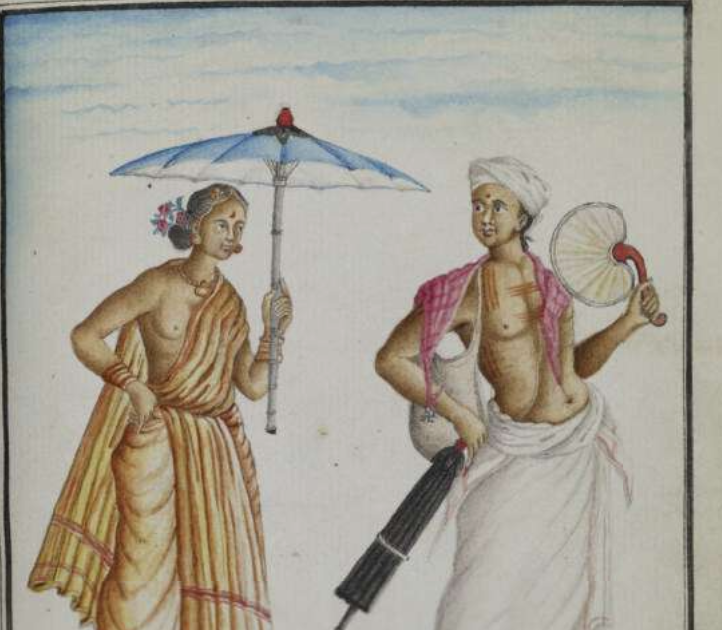
Languages do more than help us communicate. They carry memories, traditions, family histories, songs, food, customs and the identity of communities. Among India’s many languages, Konkani has a distinctive story. Its journey across the western coast of India has connected people and cultures from Goa to Karnataka, Kerala, Maharashtra and other parts of the country.
For many people, Konkani may appear to be a language associated primarily with Goa. But its story is much wider. Konkani-speaking communities have lived for generations in different parts of India, adapting to new surroundings while preserving important elements of their linguistic and cultural heritage.
Kerala has also been part of this story.
The coastal character of Kerala has historically brought different communities, languages and traditions into contact with one another. Among these communities are Konkani-speaking families, including members of the Gowda Saraswat Brahmin community. Over generations, they established their homes and institutions in Kerala while maintaining connections with their ancestral regions and language.
This makes Konkani not simply a language of a particular geographical territory, but also a language carried by people across generations and places.
One of the most important figures associated with the study and promotion of Konkani was N. Purushotham Mallya. He was known as a scholar, writer and historian whose work contributed to the understanding and preservation of Konkani language and heritage. His long engagement with the language made him an important name for those interested in Konkani literature and cultural history.
The story of Konkani also reminds us that languages can survive geographical movement. When families migrate, a language travels with them. It is spoken at home, preserved through religious and cultural practices, passed from parents to children and kept alive through literature and community institutions.
At the same time, language preservation is never automatic.
Modern migration, changing educational patterns, urbanisation and the increasing dominance of larger languages can affect the everyday use of smaller languages. Younger generations may understand a heritage language without speaking it regularly. In such circumstances, literature, historical documentation, cultural organisations and digital platforms can play an important role.
The recognition of Konkani in the Eighth Schedule of the Constitution of India in 1992 was an important milestone in the language’s public and constitutional journey. Goa also recognised Konkani as its official language. These developments gave the language an important institutional place, while the everyday responsibility of preserving it continues to belong to communities and individuals.
The wider Konkani world is especially interesting because of its diversity. Konkani has developed in different linguistic environments and is written in different scripts. Its literary and cultural traditions therefore reflect the histories of the regions where Konkani-speaking communities have lived.
This diversity should not necessarily be viewed as a weakness. It can also be understood as evidence of the language’s ability to travel, adapt and remain meaningful to different communities.
Kerala offers an interesting example of this living heritage.
In places where Konkani-speaking families have lived for generations, language is connected with food, festivals, religious traditions, family customs and community relationships. These are not merely historical subjects. They are part of the living cultural landscape of the region.
For a traveller interested in India beyond famous monuments and conventional tourist routes, such cultural histories can be particularly meaningful. A destination is not defined only by beaches, temples, forts or museums. It is also defined by the communities that have lived there and the traditions they have carried with them.
Konkani heritage therefore provides another way of understanding the western coast of India.
A journey through Goa, coastal Karnataka and Kerala can reveal different expressions of a shared linguistic and cultural history. The architecture may change, the food may acquire local influences and the language may appear in different scripts, but connections between communities can still be found through family histories, religious institutions, literature and oral traditions.
This is where the work of scholars such as N. Purushotham Mallya becomes significant. Recording language and cultural history helps future generations understand how communities evolved and how their traditions survived periods of migration and change.
Preserving such heritage does not mean keeping a culture frozen in the past. Languages naturally change. Communities change. People move from villages to cities and from one state to another. New generations develop new identities while retaining elements of older ones.
The challenge is to ensure that change does not result in complete disappearance.
Digital media can contribute to this effort. Websites, online archives, cultural platforms and social media can make regional histories accessible to people who may never encounter them through conventional textbooks. A young person living far away from an ancestral village can now read about the language, traditions and history of their community with just a few searches.
Travel platforms have a special role in this process because travel is increasingly about experiences rather than simply visiting famous attractions. Travellers want to understand local food, festivals, communities, stories and traditions. Documenting lesser-known cultural histories can therefore enrich the travel experience while also giving visibility to communities whose stories are not always part of mainstream tourism.
The story of Konkani is ultimately a story of continuity.
It is the story of a language that crossed geographical boundaries, adapted to different regions and continued to connect generations. It is also the story of communities that carried their memories with them while becoming part of the places where they settled.
From Goa to Karnataka and Kerala, Konkani’s journey demonstrates the remarkable relationship between language, migration and cultural memory.
Remembering scholars and cultural figures such as N. Purushotham Mallya is one part of preserving that memory. Encouraging young people to learn their heritage language, documenting local traditions and making regional histories available through modern media are equally important.
The future of Konkani will not depend only on what is preserved in books. It will also depend on whether the language continues to be spoken, read, written and valued in everyday life.
Perhaps that is the most important lesson that Konkani offers: a language can travel far from its historical homeland and still remain a home for the people who carry it.
Across the sea, across state boundaries and across generations, Konkani continues to tell the story of a living Indian heritage.
Leave a Reply