
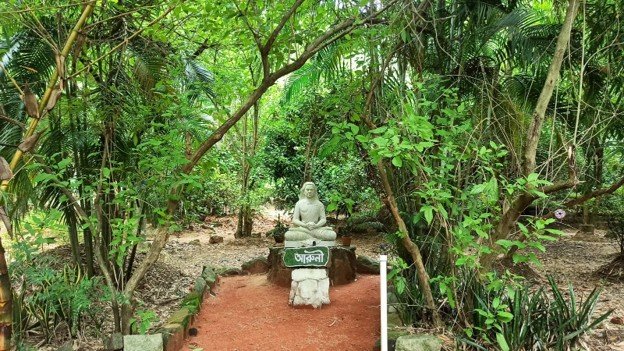
There are journeys whose meaning becomes visible only in retrospect. At the time they appear ordinary, almost accidental, as though one had merely chosen a destination from a map because it happened to fit conveniently within a few free days. It is only after returning, when memory begins arranging scattered moments into an unexpected order, that one realises the journey had another purpose all along. My visit to Aruni Ashram at Joydev Kenduli, West Bengal last month in July 2026 belongs to that category.
If someone had asked me then why I was going, I would have answered without hesitation that I wanted a brief escape from work, a few quiet days in rural Bengal before returning to the familiar rhythm of Ahmedabad. It was a truthful answer, yet it concealed something even from myself. Human beings are not always aware of what they are truly seeking. Sometimes the heart recognises a destination long before the mind discovers an explanation for it.
The reservation was for two days. I remember smiling while confirming the booking, convinced that the itinerary was sensible. Two days at the Ashram, visits to a few places associated with Birbhum’s spiritual history, some reading, some walking and then back to work. Looking at that plan now, I find in it the unmistakable confidence of modern life. We believe almost everything can be measured in advance…. We estimate how long a meeting should last, how many hours of sleep are sufficient, how many days are required for rest and even how much silence can be accommodated before it becomes an inconvenience. We seldom imagine that a place may quietly refuse the timetable we have prepared for it!!
The Black Diamond train of early morning from Howrah entered Durgapur under a sky still heavy with the memory of the monsoon. The fields wore that peculiar green which appears only after generous rain, when the earth seems to breathe with a fullness impossible during the harsher months of summer. Pools of water had gathered beside the tracks, reflecting fragments of cloud with such perfect stillness that one could no longer tell where the sky ended and the earth began. Palm trees stood scattered across the landscape with an ease that no landscape architect could have designed. Occasionally the train crossed small rivers whose names I did not know. They appeared and disappeared with the quiet confidence of old companions who never felt the need for introduction. Beyond the window, villages emerged almost shyly from clusters of bamboo and mango trees before slipping away again behind stretches of paddy fields. There was nothing spectacular before my eyes, nothing that demanded to be photographed immediately, yet I found myself unable to look away.
The bus journey from the station to Joydev Kenduli deepened that impression. The road curved gently through villages where everyday life unfolded without performance. Tea stalls leaned comfortably beneath old banyan trees. A bicycle laden with freshly cut grass moved ahead of us so slowly that overtaking it appeared almost discourteous. A herd of goats occupied the road for several minutes and no one seemed particularly troubled by the delay. The driver stopped the vehicle, lit a bidi, smiled faintly and waited until the animals passed of their own accord. In a city such a pause would have provoked impatient horns and visible irritation. Here it was accepted as naturally as waiting for rain to stop. I remember wondering whether impatience is really a consequence of necessity or merely a habit that civilisation mistakes for efficiency.
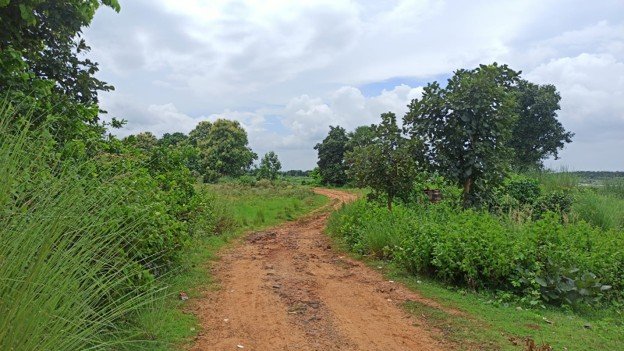
Joydev Kenduli carries many layers of memory. For generations it has been associated with Jayadeva, whose Gītagovinda transformed Sanskrit poetry into an enduring song of devotion. Every winter the village awakens into one of Bengal’s most remarkable gatherings, where Baul singers, wandering ascetics, pilgrims and curious travellers mingle almost without distinction. Yet I had arrived outside the season of celebration. The crowds had gone. What remained was the village itself, living according to its own rhythm rather than the expectations of visitors. I have often felt that places reveal their truest nature after the festivals end. Celebration shows us how people honour a place. Ordinary days reveal how they inhabit it.
Aruni Ashram did not announce itself with grandeur. There was no monumental gateway, no carefully cultivated aura of mystery, no architecture intended to persuade a visitor that something extraordinary awaited within- however, some directions on the underdeveloped road of village, as meant to be! Trees seemed to occupy more space than buildings. A narrow pathway disappeared beneath their shade before opening into a modest courtyard. Somewhere a bell rang softly, not to command attention but simply because evening worship had begun. Its sound travelled only a short distance before birdsong absorbed it once again. The Ashram seemed perfectly content not to impress anyone.
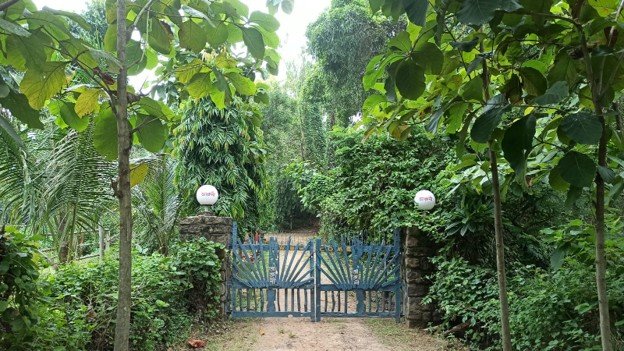
Perhaps that was the first thing that impressed me.
The person who welcomed me was Subhashish Poddar after the local staffs. Some meetings remain in memory because of the conversation they produce. Others remain because they immediately dissolve the distance that usually exists between strangers. He belonged to the second category. There was no elaborate formality in his manner, nor any eagerness to display knowledge. We exchanged the ordinary details that accompany every first meeting, yet within minutes the conversation had moved effortlessly towards books, travel, Bengal, work and the curious ways in which modern life teaches people to remain perpetually occupied. It was impossible not to notice that he listened with unusual attentiveness. Listening, I realised during those four days, is perhaps the rarest form of generosity left in an age where everyone is eager to speak.
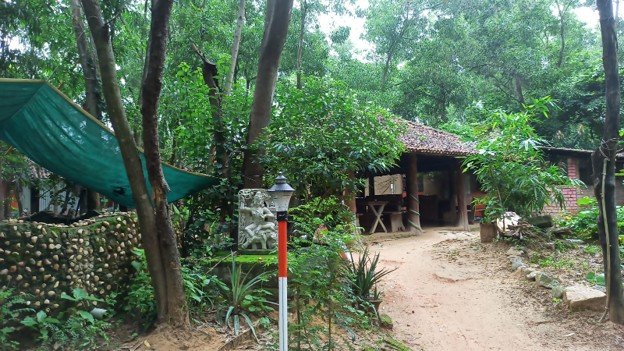
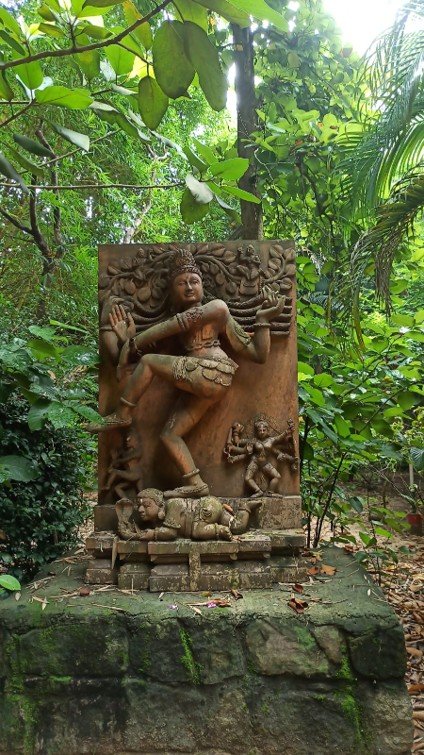
The secluded mud room allotted to me overlooked a small grove of trees. It contained very little: a bed, a wooden table, a chair, a cooler, a large nicely carved shelf, images of Tantra and Lahiri Mahasaya on the wall and small windows through which light entered without obstruction. At first glance it appeared almost austere. Yet as I unpacked my bag and sat by the window, the room slowly acquired another meaning. Nothing unnecessary demanded attention. There was enough space for inner retrospection, enough silence for thought and enough sky visible through the trees to remind one that walls need not imprison the imagination. It struck me that comfort and abundance are often mistaken for each other. One accumulates objects; the other creates ease. The room possessed the second without any obvious trace of the first and luckily the large idol of sage Aruni just in from of my door!
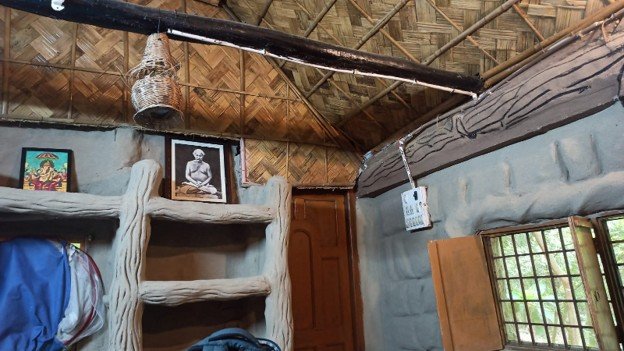
Lunch was served shortly afterwards. Rice, freshly harvested vegetables, lentils, fish prepared with remarkable restraint and a chutney and mishti whose flavour seemed inseparable from the surrounding countryside. During the following days there would be luchis, eggs, chicken and mutton one day, all cooked with the same unaffected care. It would be inaccurate to describe these meals as luxurious. Their excellence lay elsewhere. They tasted unmistakably of the place from which they came. The vegetables had not travelled across states inside refrigerated trucks. The rice still carried the fragrance of nearby fields. Even the spices appeared less interested in displaying themselves than in allowing each ingredient to remain recognisable. Somewhere between the first and last mouthful I realised how thoroughly urban life separates us from the geography of our own food. We consume without remembering the soil, the rain or the hands that make nourishment possible. Here, every meal quietly restored that forgotten connection.
That first afternoon I wandered aimlessly through the Ashram grounds. There was a hidden intention of meditation, however with no expectation of discovering hidden wisdom and certainly no desire to accumulate stories that could later be narrated as unusual experiences. I simply walked. A narrow path curved around an old pond where dragonflies hovered above the water with astonishing precision. Bamboo swayed almost imperceptibly in the afternoon breeze. Somewhere beyond the trees came the rhythmic sound of someone splitting firewood. The Ashram was not silent in the literal sense. It was filled with small sounds that never competed with one another. For the first time in many months I became aware of how aggressively the city trains us to expect interruption. Here nothing interrupted anything else. Sound itself seemed to know its proper place.
As evening descended, the light changed so gradually that one hardly noticed the moment day surrendered to dusk. Lamps were lit one after another inside the Ashram. Their glow did not attempt to conquer the darkness gathering beneath the trees; it merely accompanied it. Standing there, watching the first stars appear above the quiet outlines of bamboo and neem, I realised that villages and cities understand night very differently. The city wages a continuous battle against darkness, illuminating every corner as though light alone could banish uncertainty. The village accepts night as naturally as it accepts morning. There is no conflict between the two. One gives way to the other with the ease of an old conversation.
When I returned to my room that night, I still believed I would leave after another day.
The Ashram, though I did not yet know it, had already begun altering that decision.
The following morning began without an alarm. I awoke to the sound of birds long before the Ashram had fully stirred into the day. Their calls came not from a single direction but from every corner of the trees surrounding the Ashram, each answering another with an ease that no conductor could have arranged. A light rain had passed during the night and the earth still held its fragrance. When I opened the window, cool air entered the room carrying with it the scent of wet leaves and bamboo. For several minutes I remained standing there without thinking of tea, newspapers or the mobile phone lying untouched upon the table. In the city, mornings are usually occupied before they begin. One wakes already remembering unfinished work, unread messages and appointments waiting patiently inside the calendar. Here the morning existed independently of my plans. It neither demanded attention nor offered distraction. It simply arrived, complete in itself. I cannot say precisely when I noticed the difference, but I realised that I had not looked at my phone since the previous evening. It was not an act of discipline. I had simply forgotten that it existed.
After breakfast, Subhashish Poddar asked what I intended to see that day. I mentioned a few names I had written in my notebook before leaving Ahmedabad: Medhas Ṛṣi Ashram, Garh Jangal, Bakreshwar and, if time permitted, Mama Bhagne Pahar. He listened quietly and nodded. Then, after a brief pause, he said something so ordinary that I almost overlooked it. “Don’t try to finish the places,” he smiled. “Let the places finish their conversation with you.” At that moment I accepted it merely as a pleasant way of speaking. Only much later did I understand that it contained a deeper wisdom than many elaborate lectures on pilgrimage. We have become accustomed to treating journeys as achievements. We count the temples visited, the photographs taken and the kilometres travelled, believing that movement itself guarantees experience. Yet no place reveals itself simply because one has arrived there. A landscape opens only when one stops insisting upon seeing everything it has to offer.
The road to the Ashram associated with Medhas Ṛṣi passed through villages where life seemed to unfold according to a rhythm older than memory itself. Women were drawing water from ponds whose stone steps had grown smooth under generations of footsteps. Farmers, already at work in the fields, moved with an economy of motion that only long familiarity with the land can produce. There was an absence of spectacle in everything I saw. Nothing appeared arranged for a visitor. It was precisely this absence of performance that made the journey memorable. Modern tourism often transforms places into exhibitions. Here, life continued with complete indifference to the traveller. For the first time in many years I experienced the strange pleasure of becoming insignificant. The village did not need my admiration in order to exist. The trees had no interest in being photographed. Even the old temples seemed content with their own silence. There was a quiet freedom in discovering that the world does not become meaningful only when it notices us.
The Ashram itself possessed an atmosphere difficult to describe without diminishing it. The buildings were modest, the courtyard unassuming, the trees perhaps older than any of the structures standing beneath them. Yet there are places where the visible architecture is only a small part of what one experiences. The greater architecture is made of memory. Standing there, it was impossible not to recall the narrative preserved in the Devī Māhātmya, where King Suratha and the merchant Samādhi arrive before the sage Medhas, both defeated in different ways, both unable to understand why the mind continues clinging to what has already been lost. It is one of the most remarkable beginnings in Indian literature. A king who has lost his kingdom and a merchant abandoned by his own family do not seek wealth or power. They seek understanding. Their questions are psychological before they are theological. Why does the mind continue to love that which causes it suffering? Why does attachment survive even after reason has recognised its futility? Standing beneath those trees, I felt that the story had never truly become ancient. The costumes had changed, the kingdoms had disappeared, but the bewilderment remained unmistakably modern. Every age has its own forms of attachment. Every age believes its anxieties are unique. Yet the human heart continues asking the same questions through different languages.
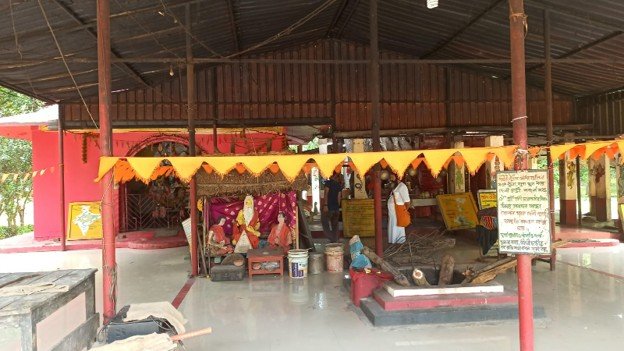
I remained there much longer than I had intended. No one hurried me. My toto driver and guide appeared to explain the significance of every corner. A priest moved quietly about his duties, offering flowers before the deity with the concentration of someone performing an act repeated thousands of times yet never reduced to mechanical habit. That sight lingered with me. Repetition, I realised, need not produce monotony. When joined with awareness, repetition becomes practice. Perhaps this is true not only of worship but of life itself. We often imagine that meaning lies in extraordinary experiences while overlooking the quiet dignity hidden within ordinary acts performed wholeheartedly. A farmer sowing seeds, a monk lighting a lamp, a mother preparing a meal, a musician practising the same note each morning. The world survives less because of rare moments than because countless unnoticed actions continue faithfully every day.
As I left the Ashram, the sky had begun to clear. Sunlight filtered through the clouds and settled gently upon the wet leaves, making them appear brighter than they had in the morning. The road ahead led towards Garh Jangal. I had expected to see another historical site. Instead, without knowing it, I was moving towards the place where the journey would slowly cease to be about history at all. The forest was waiting, not as a destination upon a map, but as the beginning of a conversation whose language I had not yet learned.
The road from the Ashram of Medhas Ṛṣi to Garh Jangal gradually shed every sign of urgency. The villages became fewer, the houses more widely scattered and the trees began drawing closer to one another until the road itself seemed less an intrusion than a guest passing quietly through an older world. Birbhum has a peculiar way of altering one’s sense of distance. A journey that might appear insignificant on a map acquires another dimension when travelled slowly. The landscape refuses to remain a backdrop. It insists on becoming part of the traveller’s thought. Every bend in the road suggested another story, every pond reflected not merely the sky above it but centuries of human life lived beside its banks. One understands, while travelling through such places, why ancient India rarely separated philosophy from geography. Rivers, forests and mountains were not merely settings for revelation. They were participants in it.
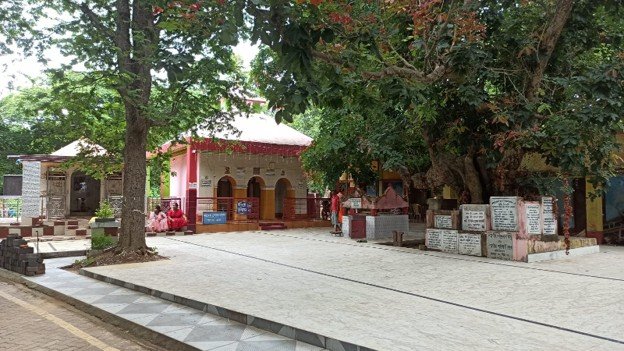
Garh Jangal appeared almost without warning. Unlike celebrated monuments that announce themselves through towering gates or crowded parking lots, the forest preserved an older courtesy. It allowed one to arrive gradually. The first impression was not of ruins but of trees. Tall sal and bamboo stood in quiet companionship, their branches filtering the afternoon sunlight into shifting patterns upon the earth. Somewhere unseen a woodpecker tapped steadily against bark. Fallen leaves, still damp from the previous night’s rain, softened every footstep. Even the air seemed different. It carried the scent of moist earth, wild grass and decaying wood, a fragrance impossible to bottle because it belongs not to any single thing but to the patient work of seasons.
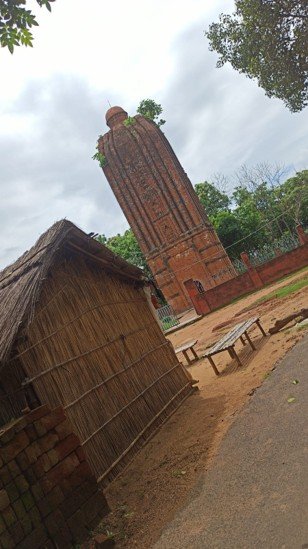
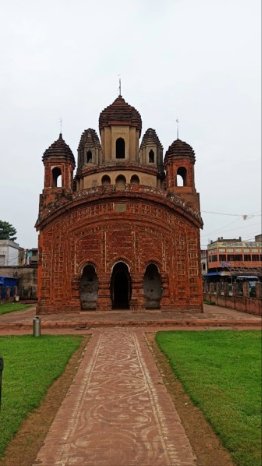
Ichhai Ghosher Temple
The return journey to the Ashram that afternoon was unusually quiet. I found myself speaking very little, even to the driver. It was not silence born of fatigue. Rather, words seemed unnecessary. Certain places continue accompanying us long after we have left them and conversation feels almost like an interruption. As the vehicle passed once again through the villages of Birbhum, I looked more carefully than I had the previous day. Smoke rose from kitchen fires as dusk gathered over the fields. It occurred to me that spirituality in India has survived not merely through monasteries or scriptures, but through countless gestures so ordinary that history rarely records them. Civilisations endure as much through habit as through heroism.
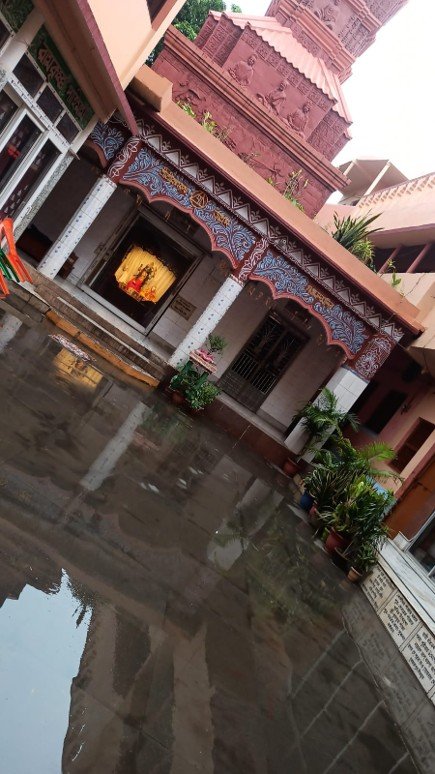
In the evening that day at Aruni Ashram, Subhashish Sir was sitting on the dining area with a cup of tea. He looked up, smiled and asked only one question.
“Did you stay for a while?”
I nodded.
He seemed satisfied with the answer. He did not ask what I had seen or what I had felt. Instead, he poured another cup of tea and placed it before me. We sat together for several minutes without speaking. Looking back now, I think that silence was itself a continuation of the day’s journey. Some conversations become deeper precisely because they are not carried by words.
After tea, our discussion turned naturally towards Kriyā Yoga. I had been curious from the beginning and over the previous two days our conversations had touched upon it only briefly. That evening, however, there was no sense of formal instruction. He spoke neither as a preacher nor as someone eager to convince another person of a particular path. He spoke instead as one shares something that has become part of one’s own life. Kriyā, he said, is often misunderstood because people approach it expecting unusual experiences. They become fascinated by visions, powers or extraordinary states of mind. Yet the real discipline begins elsewhere. It begins with learning to inhabit one’s own breath without impatience, to remain attentive without strain and to allow the mind to settle rather than forcing it into silence. “People want the fruit,” he said quietly, “but every tree asks first for seasons.”
That sentence stayed with me throughout the night. It seemed less like advice than an observation drawn from life itself. Later, before going to my room, I wandered into the Ashram library. The shelves were modest but carefully arranged, containing works on Yoga, Vedānta, Indian philosophy, saints and meditation. Many of the books bore the unmistakable signs of repeated reading. Their pages had softened with use, corners folded by unknown readers, margins carrying faint pencil marks left by hands I would never know. Books on Kriya Yoga, I realised, possess their own pilgrimage. They travel silently from one consciousness to another, changing each reader a little while remaining outwardly the same.
As I left the library, the night had settled completely over the Ashram. Beyond the last lamp, the forest stood as a dark, unbroken silhouette against the sky. During the day it had seemed welcoming. At night it appeared almost unknowable. I stood looking towards it for a long time.
Without quite deciding, I knew that the following evening I would walk into that darkness alone. It was not curiosity that drew me.
It was recognition!
Now, the next evening arrived almost unplanned. After local side-seeing, I spent the afternoon reading in the library, speaking occasionally with Subhashish Poddar and walking around the Ashram without any particular purpose. The simplicity of those hours now seems significant. Life often prepares us for its deeper moments not through dramatic anticipation but through ordinary routines. Had someone asked me then whether I expected anything unusual from the evening, I would probably have smiled and said no. My intention was modest. I wished only to spend some time in the forest after sunset, sit quietly for a while and return. It seemed less an act of spiritual seeking than an experiment in solitude.
I mentioned my plan to Subhashish Sir. He looked at me thoughtfully for a moment and then said, “Do not expect the forest to give you anything. Sit there as you would sit beside an old friend. If you keep asking questions, you may hear only your own voice.” There was no mystery in the advice, no attempt to surround the experience with unnecessary solemnity. It reflected something I had begun noticing during my stay. The deepest spiritual traditions rarely encourage expectation. They encourage attention. Expectation always looks ahead, searching for an experience yet to come. Attention remains completely with what is already present. The difference appears subtle, but it alters the entire direction of the mind.
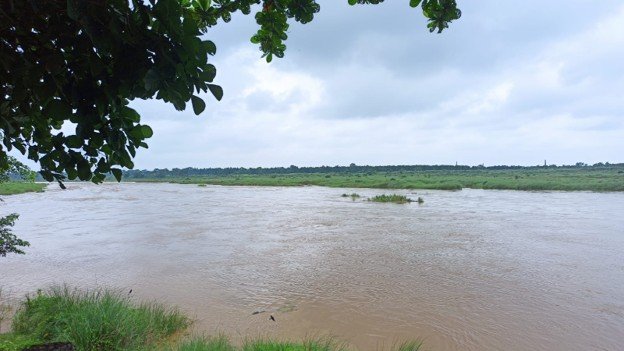
Twilight had begun spreading across the landscape and I planned to finish my dinner early. The narrow path within the Ashram area leading towards Ajay river was still visible, though the colours of the day had already begun withdrawing into softer shades of grey and blue. Birds were returning to their nests, their evening calls gradually becoming fewer until silence gathered almost naturally between them. The wind carried the fragrance of damp earth and somewhere in the distance a cowbell rang with slow, irregular intervals before disappearing altogether. As I walked, I became aware that my pace had unconsciously slowed. There was no reason to hurry. The forest had waited for centuries. It would not become impatient because I arrived a few minutes later.
I found and chose a place beneath a large sal tree where the ground was dry enough to sit for Kriya Yoga, comfortably after dinner.
Now, after 12 o’ clock at night, I entered the area again and from there the Ashram lights were no longer visible. Above me the sky opened between the branches, revealing more stars than I had seen in many months. I closed my eyes and began practising the breathing exercises that had been explained to me during the previous days. For the first few minutes, however, nothing resembled meditation. The body had become still, but the mind behaved as though it had only just discovered movement. Thoughts arrived with astonishing persistence. Memories from work, unfinished conversations, forgotten incidents from childhood, plans for the weeks ahead, fragments of songs, faces of people I had not met in years. It was as if the mind, suddenly deprived of its usual distractions, had decided to produce its own.
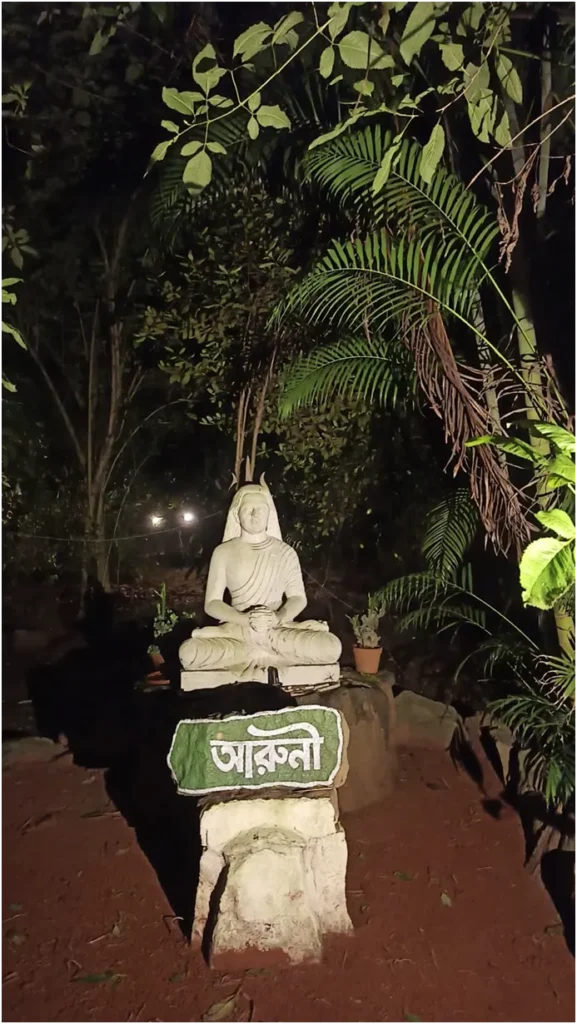
Many people imagine that silence begins when thoughts disappear. My experience suggested something rather different. Silence begins when one stops arguing with them. The thoughts continued to come, but gradually I found myself watching them instead of following them. They resembled clouds passing across the night sky. Some remained longer than others. A few returned repeatedly, as though reluctant to depart. Yet none possessed the permanence I had unconsciously attributed to them during ordinary life. They arose, lingered briefly and dissolved. The forest did not participate in this inner movement… The wind continued passing through the branches with the same unhurried rhythm. Insects continued their invisible music. Somewhere an owl announced its presence with a single call before allowing silence to gather once more around it. Nature seemed entirely unconcerned with the drama unfolding inside the human mind!!
As the minutes passed, something subtle began to change. I cannot honestly describe it as an extraordinary experience. There were no visions, no voices, no sudden revelations. Had another person been watching from a distance, he would have seen nothing except a solitary figure sitting beneath a tree. Yet inwardly the urgency with which the mind usually pursued every thought had begun to weaken. Breathing settled into an effortless rhythm. The body seemed less separate from the earth upon which it rested… The sounds of the forest no longer appeared as interruptions to silence. They had become expressions of it. It occurred to me then that silence is not the absence of sound. It is the absence of conflict!
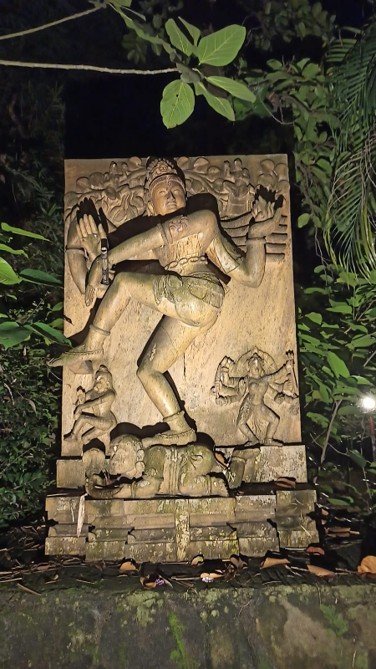
When I finally opened my eyes, the moon that had risen above the trees is approaching to fall beyond the horizon. Its light fell upon the forest floor in scattered patches, leaving wide spaces between brightness and shadow. Nothing around me had changed. The same trees stood where they had stood before. The same path led back towards my room. The transformation, if there had been one, belonged entirely to the person who now walked back through the night.
That night, rather, quite mid night before early morning, before going to sleep, I mentally prepared to extend my stay by another two days!
Outwardly it was a practical decision… Inwardly, I knew that I was not yet ready to leave. Some places do not merely offer hospitality. They quietly alter the rhythm by which one inhabits oneself. Aruni Ashram had begun doing precisely that. It had given me no miracle to narrate, no dramatic vision to proclaim. It had offered something far less spectacular and infinitely more enduring: the rediscovery of an inner stillness that modern life so easily persuades us to forget.
Leave a Reply