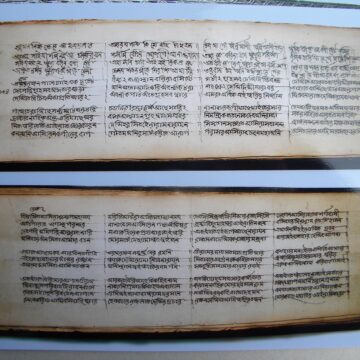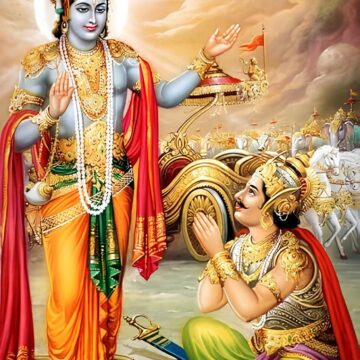
The Mahabharata is not merely an epic or religious text but a civilizational framework through which Indian society has long understood power, morality, and human conflict. Rather than offering rigid moral binaries, it presents dharma as contextual and relational, shaped by responsibility and awareness. Through complex characters and difficult choices, the epic explores the burdens of power, the psychology of action, and the consequences of ethical failure. In doing so, it functions as a living guide to navigating moral ambiguity within society.
Category: COMMENTARY
An Air of Social Doom: Political Propaganda Passed off as Moral Messaging
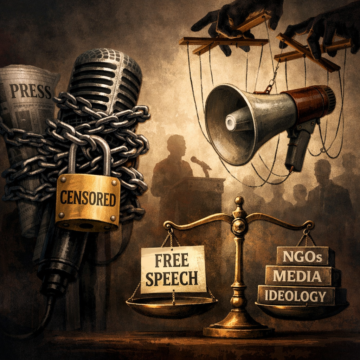
This article by Sriram Chellapilla, the fifth in a series of essays on the subject, argues that celebrity anguish over press freedom, NGOs, and society functions less as moral concern and more as selective political signaling. Using Naseeruddin Shah’s statements as a framing device, the author exposes how unelected NGOs, opaque media ownership, and celebrity activism often mask ideological agendas behind the language of freedom. Chellapilla contends that scrutiny of NGOs and media is neither new nor authoritarian, having been pursued by successive governments. What is troubling, he argues, is the hypocrisy of invoking free speech only when aligned with preferred politics, while remaining silent on censorship and intimidation by “secular” regimes.
Communal Echoes in ‘Secular’ Discourse : Tropes and Themes in Naseeruddin Shah’s ‘Secular’ Rants
In the next essay of the series of articles on minority-progressive celebrities, Sriram Chellapilla dissects Naseeruddin Shah’s polemics to expose a familiar pattern in India’s “secular” discourse: the distortion of arguments, selective outrage, and the reflexive defense of Mughal icons like Aurangzeb. Through close textual analysis and historical context, the essay shows how misrepresentation, straw-manning, and moral asymmetry function as tools of what the author terms the Minority-Progressive Celebrity (MPC) narrative. At its core, the piece interrogates how Hinduphobia is normalized under the guise of liberalism while minority fundamentalism is minimized or denied.
Citta-Vṛtti-Nirodhaḥ: The Discipline of Stillness in Pātañjala Yoga
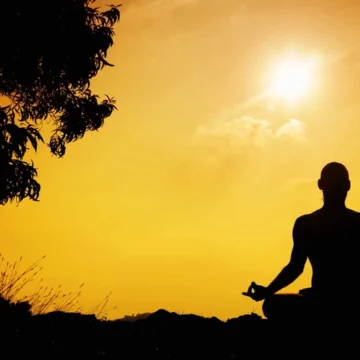
The author explains that Yoga is not a technique of suppression but a disciplined process of stilling the mind’s fluctuations - Citta-Vṛtti-Nirodhaḥ. Drawing on Vyāsa’s Bhāṣya, nirodhaḥ is presented as a progressive settling of mental modifications back into their unmanifest source. As the vṛttis dissolve, puruṣa is no longer obscured by reflection in citta and abides in its own svarūpa. Yoga thus culminates not in transformation, but in the revelation of the seer’s ever-present clarity.
Naseeruddin Shah’s ‘Shahi’ Film Censorship Code
Naseeruddin Shah’s public interventions reveal a pattern - a demand for self-censorship that shields minorities from critique while freely vilifying the Hindu majority. His outbursts against films like Dev and A Wednesday were not about artistic principles but about enforcing an unspoken “purge agenda” that polices how minorities may be portrayed. Shah and other minority-progressive celebrities present this as secularism, yet their selective outrage exposes a deeper communal and political bias. The result is a moral narrative that gaslights Hindus while granting ideological immunity to the groups they favour.
Minority-Progressive Celebrities: Part 2 Changing Landscape
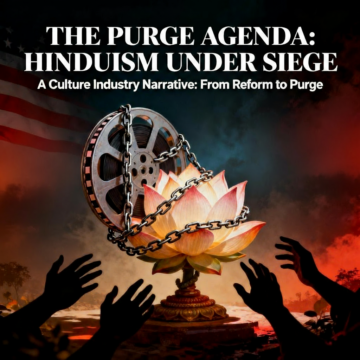
In post-Independence India, a subtle yet systematic ‘purge agenda’ took root. One that equated Hinduism with regressiveness, glorified Western ideologies, and sanctified minority identities. This framework shaped India’s cultural narrative for decades, legitimized by Nehruvian socialism, in the name of secularism, and propagated through the film industry and its so-called ‘Minority Progressive Celebrities’ (MPCs). Today, however, Hindus are awakening to this manipulation and are reclaiming their cultural voice and civilizational heritage.
Minority-Progressive Celebrities: Part 1 ‘The Reform Agenda’
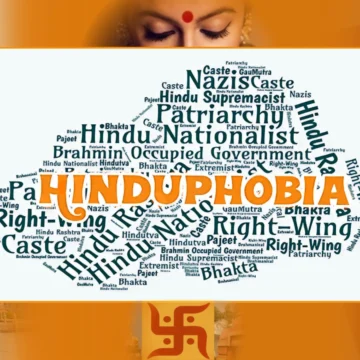
Once hailed as voices of modern, inclusive thought, minority-progressive celebrities like Naseeruddin Shah and Javed Akhtar now face growing skepticism. Their politics, once seen as secular and reformist, appear increasingly selective, critiquing Hinduism while sparing other faiths. The essay traces how celebrity activism and the so-called ‘reform agenda,’ rooted in colonial biases,evolved into a quiet but persistent Hinduphobia shaping India’s cultural and political discourse.
S. L. Bhyrappa: A Tribute to The Man, His Life, and His Stories that Keep Flowing…
S.L. Bhyrappa’s life was a dialogue between art and existence, where suffering became insight and truth found voice through story. From a childhood scarred by loss to a literary career of rare depth, he turned pain into philosophy and realism into revelation. Even in his final words, he taught us that death too can be an act of grace, and meaning, the highest form of art.
Stree Dharma & Why the Bharatiya Naari is Revered
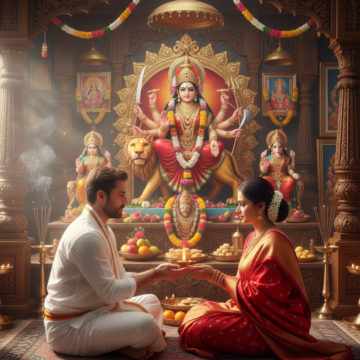
Hindu Dharma envisions men and women as two halves of a whole, each essential in fulfilling the four Purusharthas, Dharma, Artha, Kama, Moksha. A wife is not a bystander but a Sahayogi, without whom even Yajnas lose their merit. While our Shastras elevate a virtuous Bharatiya Naari to the same position of reverence as a Teertha, they also bind men with strict codes of Dharma. Together, such men and women uphold a society rooted in balance, respect, and true Shakti that arises out of virtuous living.
Bhārat’s Flag, Anthem and Name
In this article, Dr. Koenraad Elst reflects on how India's national symbols—its flag, anthem, and the very name Bharat—are deeply rooted in Hindu tradition. Elst argues that despite the secularist intentions of Nehruvian India, the Dharma Cakra in the flag, the reference to Ma Durga in the anthem, and the nation taking its name from King Bharata, reveal a cultural continuity that cannot be denied: that India, by heritage and spirit, remains a Hindu Rāṣṭra.