What does “secularism” really mean, and does the concept fit India’s civilizational experience? In this essay, Kshiteesh Sharma traces the origins of secularism to specific Christian conflicts in Europe and argues that the term was later transplanted into India without regard for its distinct dharmic traditions. Examining the history of the 42nd Amendment, temple administration, and differing state approaches to religious communities, the article questions whether India’s current model is truly neutral or a legacy of colonial categories. Ultimately, it calls for a re-examination of governance through indigenous concepts such as Dharma and Rajadharma rather than imported frameworks.
Tag: Civilizational Framework
Home
Civilizational Framework
Post
March 15, 2026March 15, 2026COMMENTARY
The Mahabharata as an Indic Civilizational Framework: Dharma, Power, and Human Consciousness
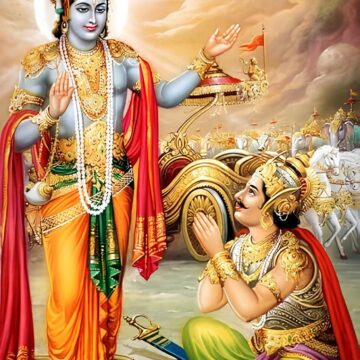
The Mahabharata is not merely an epic or religious text but a civilizational framework through which Indian society has long understood power, morality, and human conflict. Rather than offering rigid moral binaries, it presents dharma as contextual and relational, shaped by responsibility and awareness. Through complex characters and difficult choices, the epic explores the burdens of power, the psychology of action, and the consequences of ethical failure. In doing so, it functions as a living guide to navigating moral ambiguity within society.