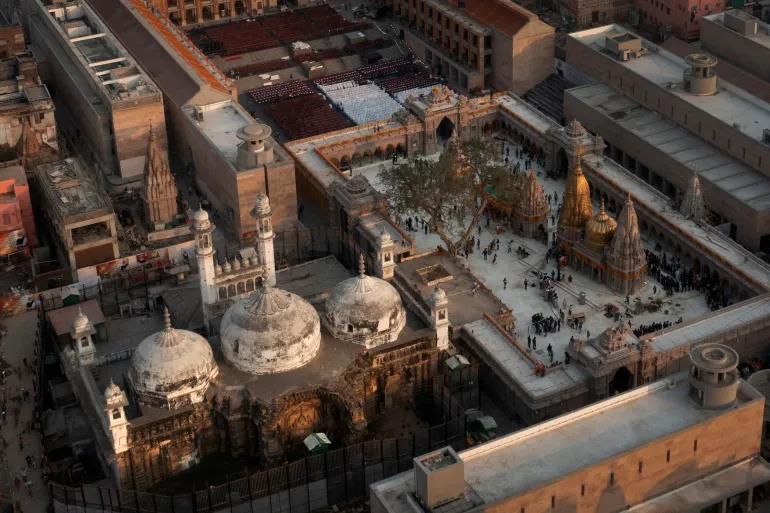
In this paper, D Shrinivas uses the Maasir-i-Alamgiri of Saqi Mustad Khan to determine the dates on which the order for the destruction was given and the time it took for the destruction to actually be carried out. Based upon the above he hypothesizes about the resistance that Aurangzeb’s military likely faced from the local Hindu populace while carrying out the orders to destroy this Hindu temple.


Excerpts From History Of The Freedom Movement In India By R. C. Mazumdar – The Ruthless English: Attitudes, Second World War, Churchill, and Mountbatten – Part 4
Dr Pingali Gopal uses R. C. Mazumdar's book "History of the Freedom Movement in India" as reference to evoke interest in the truth behind the popularised version of the history of India's independence.
Part 4 deals with the naked reality of the Raj in India - the avarice, the ruthlessness, and the cunning of the British in bleeding India dry; and ultimately their reluctance to exit or even to contain the spread of the wildfire that was religious hatred and crimes that ensued.

Excerpts From History Of The Freedom Movement In India By R. C. Mazumdar – The Muslim Politics – Part 3
The point Mazumdar repeatedly makes in his book is that the Muslim leaders were extremely clear on what they wanted. The Hindu leaders remained clouded and romantic, dreaming of a unity not simply existing in the minds and hearts of their Islamic counterparts.
The central idea of all the proposed alternatives was that the treatment of Muslims should not be as a minority community in Hindu India but as a separate nation with a distinct culture.
During this great metamorphosis of Muslim politics in India, neither the Congress nor the Hindu public men gave it the serious attention it deserved. They angrily opposed the idea of vivisection of India in any form and took their stand on the twin ideas of Indian nationality and Indian unity—the ideas that the Muslims rejected in almost one voice.
The Hindu leadership never belonged to the Hindus, and the Muslim leadership was devoted to nothing except Muslims and Islam.
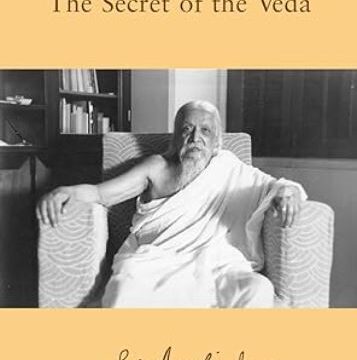
“The Secret of The Veda” by Sri Aurobindo – A Review
"The Secret of The Veda" by Sri Aurobindo is a collection of Sri Aurobindo’s various writings on the Veda and his translations of some of the hymns, originally published in the monthly review 'Arya' between August 1914 and 1920.

Ayurveda: Tradition, Science, and Recognition in a Globalised World
Ayurveda, despite being a system as ancient as, and deeper and more effective than, the Traditional Chinese Medicine (TCM), does not yet enjoy the same reverential status accorded to TCM. Does the cause lie in its inability to fit into the modern lifestyle, or with us for failing to find and project pride in our own cultural heritage and treasures?

Excerpts From History Of The Freedom Movement in India By R.C. Mazumdar – The Politics Of The Book – Part 2
Dr Pingali Gopal explores the goings on that led to the birth of R.C. Mazumdar's book "History of the Freedom Movement in India" as the author tries to bring to light the truth behind India's independence and tries to redefine what "foreign occupation" means.
The rest of this series is a summary and paraphrasing of the works of RC Mazumdar. The essays are directly from the book, without indication as such in all cases. The first-person component of the essays also belongs to Mazumdar. There are no extra elements or comments added to the text of Mazumdar except for some editing and slight additions to give clarity to the background context and to give a smoother flow to the topic under discussion. The aim is to give an overview of the freedom struggle from a different perspective.p
History Of Freedom Movement: The View Of R.C. Mazumdar – Part 1
Dr Pingali Gopal uses R. C. Mazumdar's book "History of the Freedom Movement in India" as reference to evoke interest in the truth behind the popularised version of the history of India's independence.

Śaṅkara Charitam – a retelling – Chapter 15 – Guru Parampara
Chapter 15 of Śaṅkara Charitam, titled Guru Parampara, takes us through the experience of Śaṅkara taking his leave from his Guru Govinda Bhagavatpāda and embarking on his journey to Kasi. The Guru Parampara, the lineage of the Gurus who preceeded Śaṅkara, is explored.

Ambedkarism: A Malediction Upon Indian Society — A Critical Evaluation of the Ideals of Equality, Affirmative Action, and the Pursuit of Social Justice
The elusive dream of ‘Equality’, whether in the form of ‘Opportunity’ or ‘Outcomes’, tantalises many, yet evaporates like a mirage in the real drama of human society. Do social justice, equality, and reforms reign supreme as transcendent values? Do religion, culture, tradition, and civilization solely encompass oppression and backwardness, or do they extend beyond the horizons of the contemporary cultural Marxist worldview we’ve embraced?
Harsh Sharma explores the effects of Ambedkarism on the above in the Indian context.

The Root of All Ideological Conflicts: Cultural Marxism
Jahnavi Naik explores the penetration of Marxism in society and culture, and delves deep into the phenomenon that is 'Cultural Marxism' - its definition, its reach, its methods; and examples from recent happenings in the country.