Month: August 2023

Home 2023 August
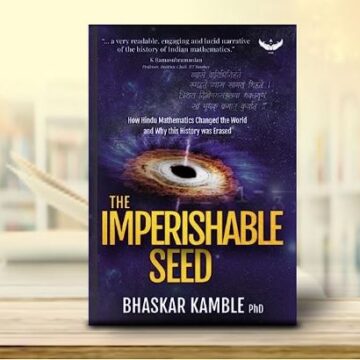
The Imperishable Seed
Post

‘The Imperishable Seed’ By Bhaskar Kamble – A Summary Review

Dr. Pingali Gopal reviews 'The Imperishable Seed' By Bhaskar Kamble, a theoretical physicist from IIT Kanpur and presently a data scientist in Germany.
The linear progression of history from a primitive past to an advanced future, deeply entrenched in western philosophy, embeds itself in Indians even today as a classic case of ‘colonial consciousness’. Bhaskar has done a brilliant job of describing the history of mathematics, a much ignored subject in our educational systems,  and tracing the roots of many subjects to the genius mathematicians of ancient and mediaeval India.
Saraswati's Intelligence
Post

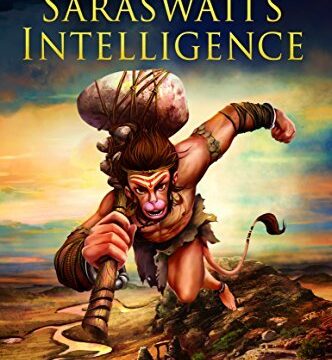
‘Saraswati’s Intelligence’ by Vamsee Juluri – A Review

Vamsee Juluri's book is a page-turner, a great example of creative reimagining done right.
It cannot easily be categorised as per conventional genres. Depending on individual inclination, it can be classified as spiritual, based on passages dealing with the questioning of the nature of Dharma; action-packed thriller, given the battle scene depictions and wars waged; or 'mythological', since despite being based on living Devatas, it is a fictional representation of them; and very different from the stories we were raised on.

Ancient Indian Economy relied on mercantile activity
Post

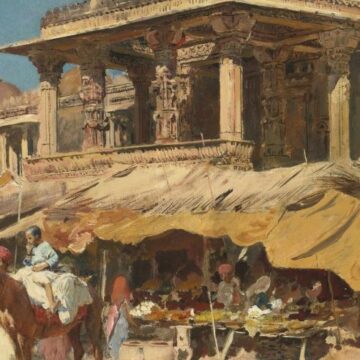
Dharma, Dhanda, Digital: Examining the Suppression of India’s Commercial Ethos Through the Ages

Ancient and mediaeval Indian kingdoms relied heavily on active commerce, both domestic and international. Indian economy has come full circle, after a long period of colonial suppression followed by oppressive socialist policies post-Independence, rediscovering its identity as a capitalist economy built on the industriousness and innovation of small producers and merchants.

Oppenheimer
Post

“Oppenheimer”, the Gita, and Dharma

Imbibing the spirit of true Dharma, one achieves communion with nature, the cosmos, and eventually the Supreme being. The eternal fight therefore, is not between good and evil, or between believers and non-believers, but between Dharma and Adharma.

Hindu Love Stories by Aditi Banerjee
Post

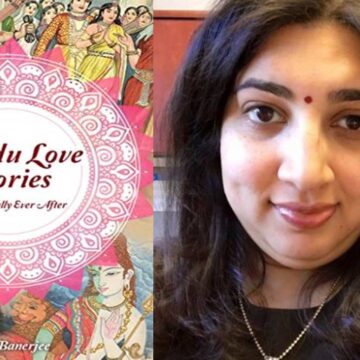
Hindu Love Stories by Aditi Banerjee – A Review

In this review of "Hindu Love Stories" by Aditi Banerjee, we learn about the author's motivation behind writing the book; and her treatment of her characters. She brings forth the popular tales, as well as some lesser known ones; and shows us that some of the lore known to us as tales of duty and surrender can also be viewed from the Hindu view of love, which is very different from the single-hued romantic love marketed by the West.

48 Laws of Power by Robert Greene
Post

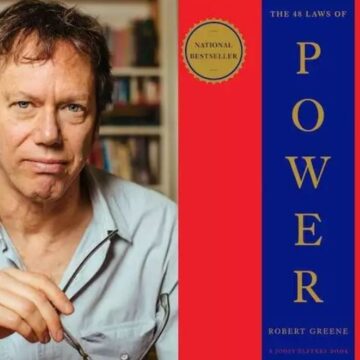
48 Laws of Power by Robert Greene – A Review

In this review of the book "48 Laws of Power" by Robert Greene, Rohan Raghav Sharma reviews the relevance, appropriateness, and applicability of individual rules mentioned in the book; along with the writing style and historical research needed for the examples and allegories mentioned to illustrate practical implementation of the rules by historical figures.

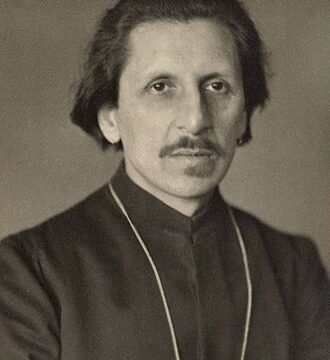
Ananda K. Coomaraswamy
Post

Ananda K. Coomaraswamy on Education in India

This article is a summary and paraphrasing of three of the important essays by Ananda K. Coomaraswamy on the English education of those times (Education in India; Memory in Education; and Music and Education in India).
These three brilliant essays appear in the book Essays in National Idealism. He wrote on an overwhelming variety of topics, which perhaps would require a lifetime of study for any individual.
The aim of this article is to stimulate readers to undertake a serious journey to the writings of Coomaraswamy, a person whose rediscovery means a lot to present India, confused by a mass of rhetoric eulogising the notions of "modernity" and progress.
The reality of a hundred years ago, that he highlights in these essays, is unambiguously still relevant to India, with its acceptance of both the English language as the major medium of instruction and secularism as the guiding principle of our curricula.