
Aryan Anand argues that the debate around the recent UGC guidelines has remained confined to immediate political reactions, ignoring the deeper intellectual frameworks shaping such policies. Drawing on strands of critical social theory, he contends that contemporary policy increasingly operates through rigid oppressor–oppressed binaries. Applied mechanically to the Indian context, this framework risks misreading the complex realities of caste and society. Anand suggests that policies built on such assumptions may ultimately deepen social divisions rather than address them.

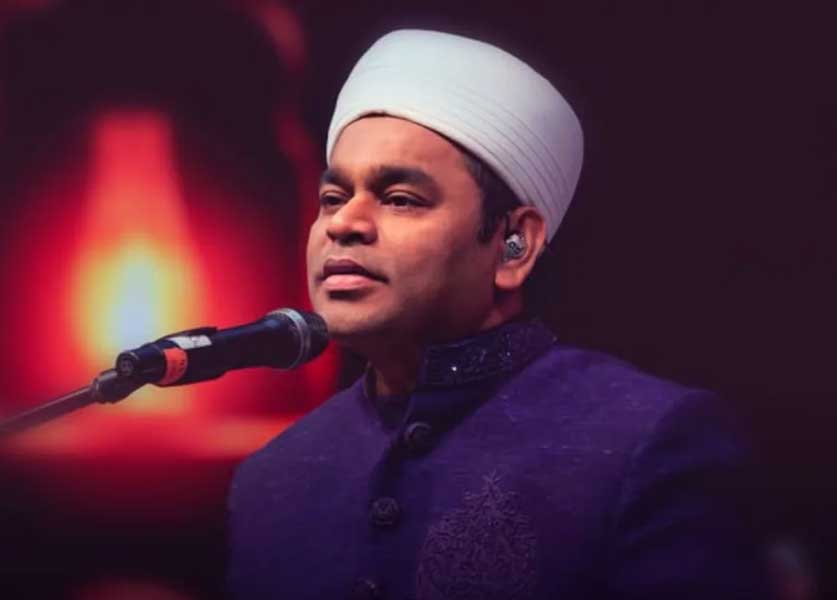
Gaffe or Gambit – Did A R Rahman Cross a Line While Keeping Within Others?
Was A.R. Rahman’s reference to a “communal thing” in Bollywood a careless gaffe—or a calibrated signal within a larger minority-progressive discourse? Situating his remarks within a broader pattern of celebrity secularism, this essay argues that selective invocations of intolerance often coexist with studied evasions on questions of history, identity, and civilizational memory. Rahman’s diplomatic silences—on Aurangzeb, on cultural politics, on ideological alignments—appear less accidental than strategic. The result is a familiar cycle: grievance, outrage, clarification, and international amplification. At stake is not merely celebrity speech, but the narrative framing of Hindu-majority India itself.
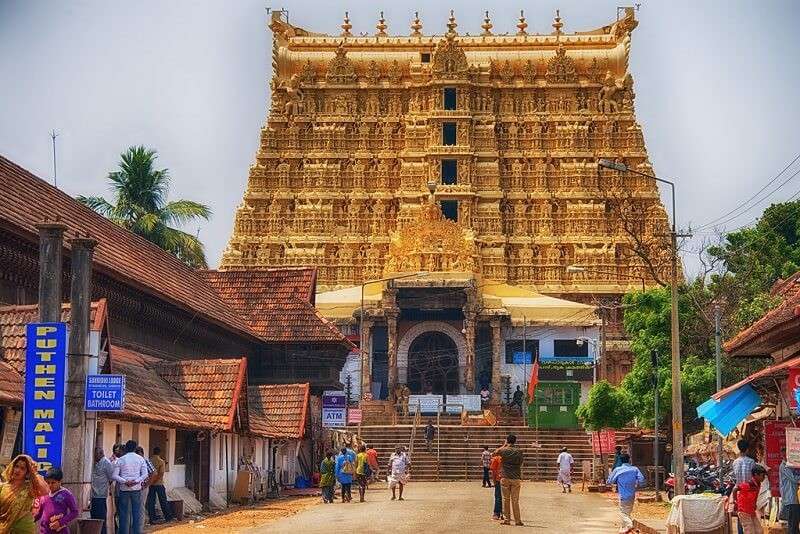
Inside the Temple Crisis: Governance and Preservation Challenges
Across India’s temple towns, rising tourist footfall, evolving governance structures, and new revenue models are reshaping how sacred sites are administered and preserved. Temples, once self-sustaining civilizational institutions, are increasingly treated as revenue-generating assets, with properties sold, offerings monetized, and darshan commodified. Rema Raghavan writes that this commercialization displaces local communities, erodes ritual continuity, and weakens the organic moral oversight once provided by resident devotees. As temples transform from living centers of worship into tourist spectacles, the intimate bond between deity, devotee, and community frays. Restoring temples as civilizational epicenters, she argues, requires accountable governance, empowered local participation, and an uncompromising commitment to ritual and heritage preservation.

An Air of Social Doom: Political Propaganda Passed off as Moral Messaging
This article by Sriram Chellapilla, the fifth in a series of essays on the subject, argues that celebrity anguish over press freedom, NGOs, and society functions less as moral concern and more as selective political signaling. Using Naseeruddin Shah’s statements as a framing device, the author exposes how unelected NGOs, opaque media ownership, and celebrity activism often mask ideological agendas behind the language of freedom. Chellapilla contends that scrutiny of NGOs and media is neither new nor authoritarian, having been pursued by successive governments. What is troubling, he argues, is the hypocrisy of invoking free speech only when aligned with preferred politics, while remaining silent on censorship and intimidation by “secular” regimes.
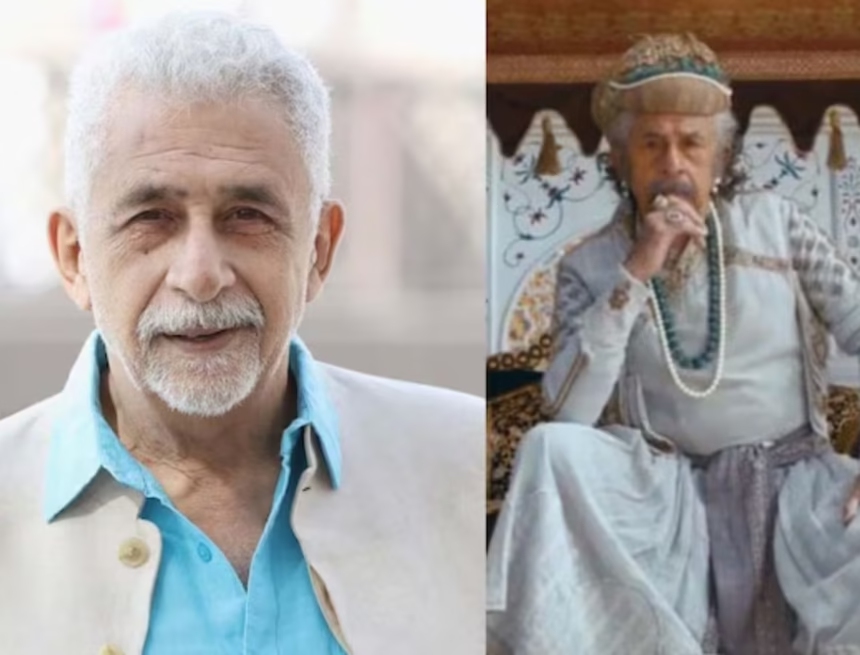
Communal Echoes in ‘Secular’ Discourse : Tropes and Themes in Naseeruddin Shah’s ‘Secular’ Rants
In the next essay of the series of articles on minority-progressive celebrities, Sriram Chellapilla dissects Naseeruddin Shah’s polemics to expose a familiar pattern in India’s “secular” discourse: the distortion of arguments, selective outrage, and the reflexive defense of Mughal icons like Aurangzeb. Through close textual analysis and historical context, the essay shows how misrepresentation, straw-manning, and moral asymmetry function as tools of what the author terms the Minority-Progressive Celebrity (MPC) narrative. At its core, the piece interrogates how Hinduphobia is normalized under the guise of liberalism while minority fundamentalism is minimized or denied.

Citta-Vṛtti-Nirodhaḥ: The Discipline of Stillness in Pātañjala Yoga
The author explains that Yoga is not a technique of suppression but a disciplined process of stilling the mind’s fluctuations - Citta-Vṛtti-Nirodhaḥ. Drawing on Vyāsa’s Bhāṣya, nirodhaḥ is presented as a progressive settling of mental modifications back into their unmanifest source. As the vṛttis dissolve, puruṣa is no longer obscured by reflection in citta and abides in its own svarūpa. Yoga thus culminates not in transformation, but in the revelation of the seer’s ever-present clarity.
Explorations of Quantum Physics and Its Weave into Advaita Vedanta Tenets
In this article, the author Priyavrat Gadhvi argues that what we perceive as solid matter is not fundamental reality, but an effect generated by deeper, unseen quantum fields. At the most basic level, humans, objects, and even space itself are excitations within an all-pervasive field rather than independent substances. This understanding blurs the boundaries between physics, metaphysics, and philosophy, revealing reality as relational and emergent. Gadhvi contends that modern quantum field theory echoes Advaita Vedanta’s insight - that multiplicity is apparent, while the underlying essence of existence is singular and indivisible.
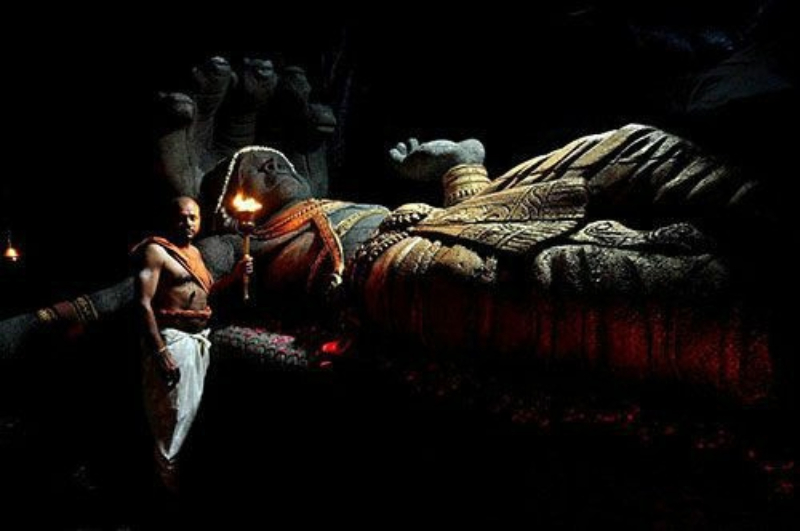
Kadusarkara Yogam – The Ancient Technique of Vigraha Making
This article by Rema Raghavan explains the ancient tradition of vigraha-making as prescribed in the Shilpa Shastra, where every step, from skeleton to skin, is crafted with precision, sacred materials, and ritual discipline. The author describes how Kadusarkara Yogam, a uniquely Kerala method, builds the deity stage by stage inside the Garbhagriha itself. Drawing parallels with the human body, the process develops skeletal, muscular, and nāḍi systems before the final form emerges. This painstaking art, the author notes, demands exceptional shilpis and over a hundred pure ingredients, resulting in living embodiments of divinity rather than mere idols.
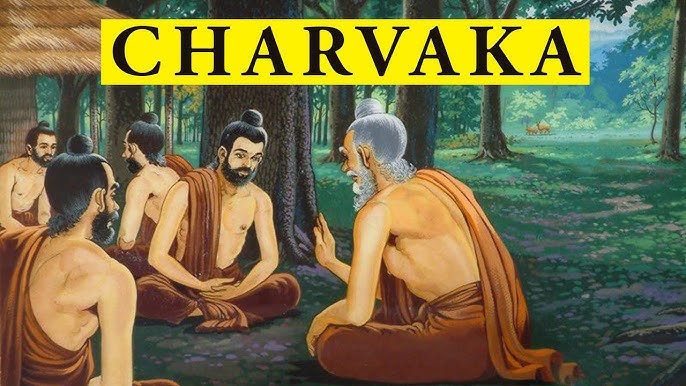
Tyranny of Asceticism: Case of the Charvaka
Charvaka has long been dismissed as a philosophy of excess, yet this caricature stems from an ascetic worldview that treats pleasure as inherently suspect. When perception alone is accepted as truth, morality need not depend on divine command but on an intrinsic human compass. The author contends that the Charvaka tradition reminds us that seeking material pleasure is not a fall from grace, but a legitimate way of living without forfeiting moral sense.

Naseeruddin Shah’s ‘Shahi’ Film Censorship Code
Naseeruddin Shah’s public interventions reveal a pattern - a demand for self-censorship that shields minorities from critique while freely vilifying the Hindu majority. His outbursts against films like Dev and A Wednesday were not about artistic principles but about enforcing an unspoken “purge agenda” that polices how minorities may be portrayed. Shah and other minority-progressive celebrities present this as secularism, yet their selective outrage exposes a deeper communal and political bias. The result is a moral narrative that gaslights Hindus while granting ideological immunity to the groups they favour.