Year: 2025

Home 2025
Kadusarkara Yogam – The Ancient Technique of Vigraha Making  
Post

Kadusarkara Yogam – The Ancient Technique of Vigraha Making  

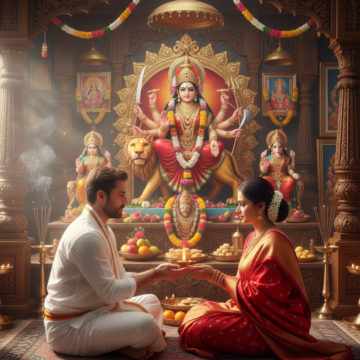
This article by Rema Raghavan explains the ancient tradition of vigraha-making as prescribed in the Shilpa Shastra, where every step, from skeleton to skin, is crafted with precision, sacred materials, and ritual discipline. The author describes how Kadusarkara Yogam, a uniquely Kerala method, builds the deity stage by stage inside the Garbhagriha itself. Drawing parallels with the human body, the process develops skeletal, muscular, and nāḍi systems before the final form emerges. This painstaking art, the author notes, demands exceptional shilpis and over a hundred pure ingredients, resulting in living embodiments of divinity rather than mere idols.

Tyranny of Asceticism: Case of the Charvaka
Post

Tyranny of Asceticism: Case of the Charvaka

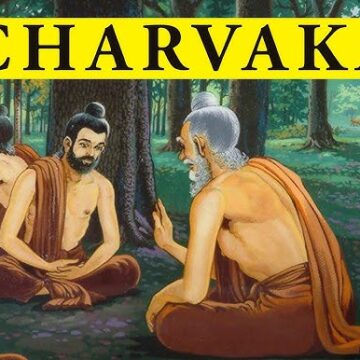
Charvaka has long been dismissed as a philosophy of excess, yet this caricature stems from an ascetic worldview that treats pleasure as inherently suspect. When perception alone is accepted as truth, morality need not depend on divine command but on an intrinsic human compass. The author contends that the Charvaka tradition reminds us that seeking material pleasure is not a fall from grace, but a legitimate way of living without forfeiting moral sense.

Naseeruddin Shah’s ‘Shahi’ Film Censorship Code
Post

Naseeruddin Shah’s ‘Shahi’ Film Censorship Code

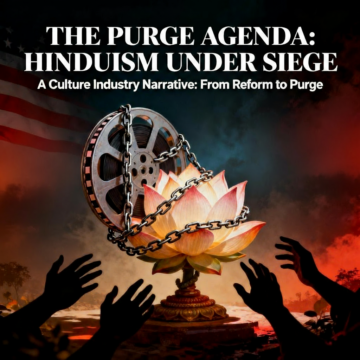
Naseeruddin Shah’s public interventions reveal a pattern - a demand for self-censorship that shields minorities from critique while freely vilifying the Hindu majority. His outbursts against films like Dev and A Wednesday were not about artistic principles but about enforcing an unspoken “purge agenda” that polices how minorities may be portrayed. Shah and other minority-progressive celebrities present this as secularism, yet their selective outrage exposes a deeper communal and political bias. The result is a moral narrative that gaslights Hindus while granting ideological immunity to the groups they favour.

Khan Abdul Ghaffar Khan: Liberal or fanatic?
Post

Khan Abdul Ghaffar Khan: Liberal or fanatic?

Was Khan Abdul Ghaffar Khan truly the “Frontier Gandhi”, a liberal humanist wronged by history, or a devout fanatic disguised in Gandhian robes? This essay revisits that question through forgotten records, overlooked testimonies, and Sita Ram Goel’s sharp insights. From Pashto pride to Pakistan’s politics, the story unravels a man far more complex and perhaps less idealistic than the hagiographies suggest.

Minority-Progressive Celebrities: Part 2 Changing Landscape
Post

Minority-Progressive Celebrities: Part 2 Changing Landscape

In post-Independence India, a subtle yet systematic ‘purge agenda’ took root. One that equated Hinduism with regressiveness, glorified Western ideologies, and sanctified minority identities. This framework shaped India’s cultural narrative for decades, legitimized by Nehruvian socialism, in the name of secularism, and propagated through the film industry and its so-called ‘Minority Progressive Celebrities’ (MPCs). Today, however, Hindus are awakening to this manipulation and are reclaiming their cultural voice and civilizational heritage.

Minority-Progressive Celebrities: Part 1 ‘The Reform Agenda’
Post

Minority-Progressive Celebrities: Part 1 ‘The Reform Agenda’

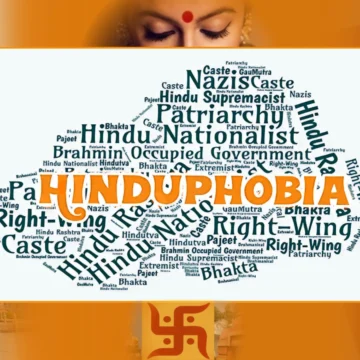
Once hailed as voices of modern, inclusive thought, minority-progressive celebrities like Naseeruddin Shah and Javed Akhtar now face growing skepticism. Their politics, once seen as secular and reformist, appear increasingly selective, critiquing Hinduism while sparing other faiths. The essay traces how celebrity activism and the so-called ‘reform agenda,’ rooted in colonial biases,evolved into a quiet but persistent Hinduphobia shaping India’s cultural and political discourse.

Justice Beyond Colonial Laws: The Case for Dharmic Judiciary
Post

Justice Beyond Colonial Laws: The Case for Dharmic Judiciary

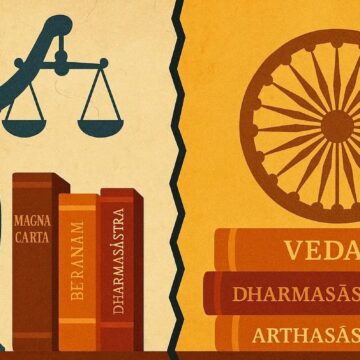
India’s judicial system, still anchored in colonial frameworks, often appears disconnected from the spirit of Dharma when adjudicating on matters of faith, family, and tradition. Judges with little understanding of Hindu philosophy or scriptures frequently issue rulings on matters of Dharma. From casual remarks on our deities to misguided interpretations of temple customs, such decisions reveal a deep cultural disconnect. It’s time to restore balance by establishing Dharmic courts, grounded in our own civilizational wisdom and moral vision, to decide on matters of Dharma, culture and family.

S. L. Bhyrappa: A Tribute to The Man, His Life, and His Stories that Keep Flowing…
Post

S. L. Bhyrappa: A Tribute to The Man, His Life, and His Stories that Keep Flowing…

S.L. Bhyrappa’s life was a dialogue between art and existence, where suffering became insight and truth found voice through story. From a childhood scarred by loss to a literary career of rare depth, he turned pain into philosophy and realism into revelation. Even in his final words, he taught us that death too can be an act of grace, and meaning, the highest form of art.

Stree Dharma & Why the Bharatiya Naari is Revered
Post

Stree Dharma & Why the Bharatiya Naari is Revered

Hindu Dharma envisions men and women as two halves of a whole, each essential in fulfilling the four Purusharthas, Dharma, Artha, Kama, Moksha. A wife is not a bystander but a Sahayogi, without whom even Yajnas lose their merit. While our Shastras elevate a virtuous Bharatiya Naari to the same position of reverence as a Teertha, they also bind men with strict codes of Dharma. Together, such men and women uphold a society rooted in balance, respect, and true Shakti that arises out of virtuous living.