In the next essay of the series of articles on minority-progressive celebrities, Sriram Chellapilla dissects Naseeruddin Shah’s polemics to expose a familiar pattern in India’s “secular” discourse: the distortion of arguments, selective outrage, and the reflexive defense of Mughal icons like Aurangzeb. Through close textual analysis and historical context, the essay shows how misrepresentation, straw-manning, and moral asymmetry function as tools of what the author terms the Minority-Progressive Celebrity (MPC) narrative. At its core, the piece interrogates how Hinduphobia is normalized under the guise of liberalism while minority fundamentalism is minimized or denied.
Tag: <span>hinduphobia</span>
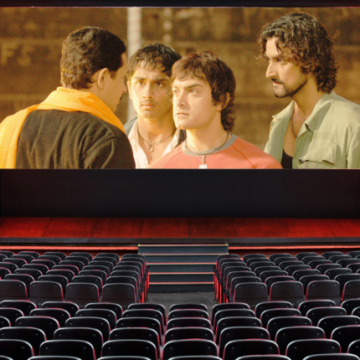
Naseeruddin Shah’s ‘Shahi’ Film Censorship Code
Naseeruddin Shah’s public interventions reveal a pattern - a demand for self-censorship that shields minorities from critique while freely vilifying the Hindu majority. His outbursts against films like Dev and A Wednesday were not about artistic principles but about enforcing an unspoken “purge agenda” that polices how minorities may be portrayed. Shah and other minority-progressive celebrities present this as secularism, yet their selective outrage exposes a deeper communal and political bias. The result is a moral narrative that gaslights Hindus while granting ideological immunity to the groups they favour.
Minority-Progressive Celebrities: Part 2 Changing Landscape
In post-Independence India, a subtle yet systematic ‘purge agenda’ took root. One that equated Hinduism with regressiveness, glorified Western ideologies, and sanctified minority identities. This framework shaped India’s cultural narrative for decades, legitimized by Nehruvian socialism, in the name of secularism, and propagated through the film industry and its so-called ‘Minority Progressive Celebrities’ (MPCs). Today, however, Hindus are awakening to this manipulation and are reclaiming their cultural voice and civilizational heritage.
Minority-Progressive Celebrities: Part 1 ‘The Reform Agenda’
Once hailed as voices of modern, inclusive thought, minority-progressive celebrities like Naseeruddin Shah and Javed Akhtar now face growing skepticism. Their politics, once seen as secular and reformist, appear increasingly selective, critiquing Hinduism while sparing other faiths. The essay traces how celebrity activism and the so-called ‘reform agenda,’ rooted in colonial biases,evolved into a quiet but persistent Hinduphobia shaping India’s cultural and political discourse.
How did the Longest Resisters to Inter-Civilizational Propaganda in History Become Cluelessly Coopted in Just 2-3 Generations?
The article traces Hinduism's resistance to propaganda, from historical conquests to modern challenges, urging parents to engage critically with changing narratives and preserve cultural identity amidst global shifts.
Why I became a Dharma Slacktivist
The overall campaign from various fronts targetting Hindus is massive but that should only make us fight harder.
Boorish Baaboos
The bureaucrats are just an extension of the imperial service from colonial times which treats Hindus in the same high-handed grotesque manner.
An Analysis of NPR’s Depiction of Hindus in 2019
Even though it was recently unmasked and forced to apologise, NPR has had Hinduphobic views for quite some time.
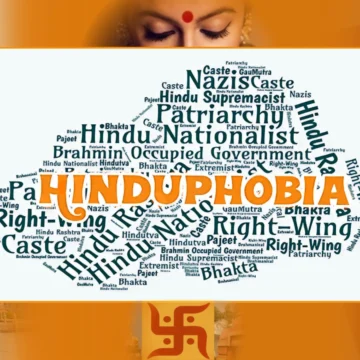
Dissecting Hinduphobia
The West's categories have been force-fitted on India making our civilisation seem crude and archaic.
Analysis of the Representation of Hindus in Western News Coverage during the 2019 Indian Elections
The media coverage of events in India have a heavy tilt where they repeatedly show Hindus in a bad light.