
As we pass the 2025 Oscars, Charu Uppal recalls the grand success of the movie Oppenheimer in the 2024 Oscars. In this open letter to the director Christopher Nolan, she points out how the movie conspicuously avoids showing the suffering of the Japanese people, barely mentioning the names Hiroshima and Nagasaki. Even more troubling is the decision to juxtapose the sacred Bhagavad Gita with an intimate scene — a choice that was neither accidental nor faithful to historical context. In an industry that does not shy away from showing violence, the film omits the human cost of the bomb while including a scene that offended millions. Creative freedom is vital, but so is cultural responsibility.


The Ghent School : Promoting a Better Understanding of India
The Ghent School, led by Prof. Balagangadhara, challenges colonial narratives that have shaped India's understanding of religion, caste, and culture. It argues that India's traditions differ fundamentally from Western religious frameworks, emphasizing rituals over doctrinal beliefs. The school advocates for decolonizing Indian social sciences by rediscovering indigenous perspectives and rejecting imposed categorizations. By understanding India's traditions on their own terms, it proposes a more nuanced approach to multiculturalism and identity.

The Number 12 – An Exploration across Cultures
In this essay, Dr. Koenraad Elst explores the profound symbolic importance of the number 12 across cultures, from the 12 Ādityas in the Vedas to the Olympian gods and the 12-starred EU flag. In ancient India, it represented cosmic order, as seen in the Ṛg-Vedic 'Riddle Hymn' describing a twelve-spoked wheel of Ṛta. Mathematically and geometrically unique, the twelvefold division underlies the structure of the Zodiac and the ancient Yajur-Vedic seasonal cycle.

Mahadev Shambhu – The Story of a Gram-Devata
This story by Rati Hegde, about Mahadev Shambhu, a Gram-Devata, captures the the reality of many such deities and their temples in India. It traces the socio-economic and cultural shifts that have shaped the ecosystem of these temples through the decades. The author paints a poignant picture of how duty and devotion have given way to reluctant obligation even as these deities continue to remain central to the Hindu faith.

A Scientific Perspective on Mahakumbh
At the Triveni Sangam in Prayagraj, where the Ganga, Yamuna, and the mystical Saraswati converge, the Kumbh Mela unfolds as a grand experiment in collective consciousness. This ancient gathering, rooted in Hindu lore, integrates sophisticated scientific principles, from astronomical cycles to fluid dynamics. The 2025 Mahakumbh Mela exemplifies this blend, with AI-powered crowd management and real-time navigation tools enhancing the experience for millions of pilgrims. This convergence of science and spirituality not only preserves cultural heritage but also fosters a sense of unity and shared purpose, inviting both spiritual seekers and scientific minds to explore its depths.
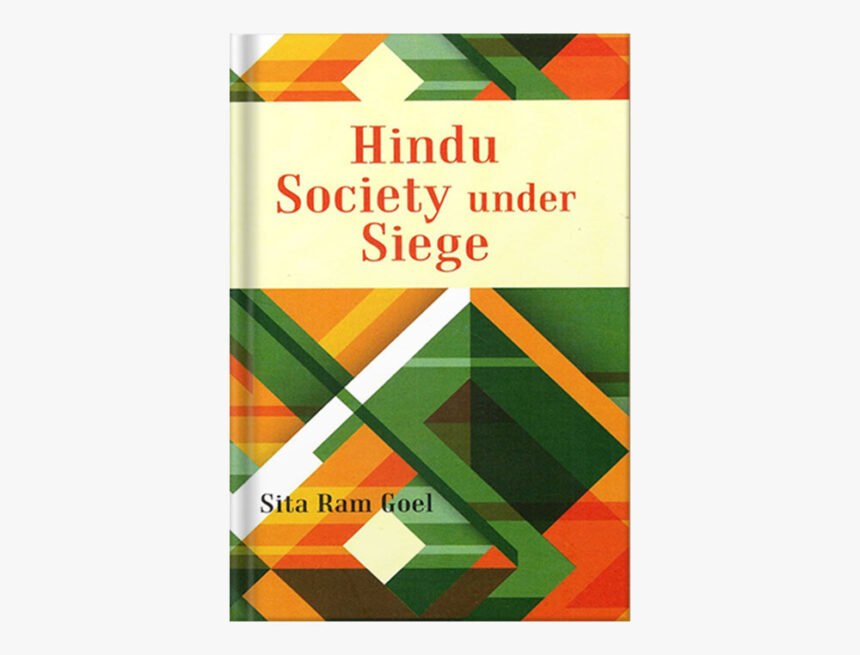
“Hindu Society under Siege” by Sitaram Goel : A Review
Sita Ram Goel’s "Hindu Society Under Siege" is a compelling analysis of the historical, cultural, and ideological challenges confronting Hindu society. Shri Goel examines how residues from foreign invasions—Islamic, British, and colonial ideologies—continue to undermine Hindu unity and cultural revival. A profound exploration of India’s civilizational ethos, the book calls for Hindus to unite and reclaim their heritage.
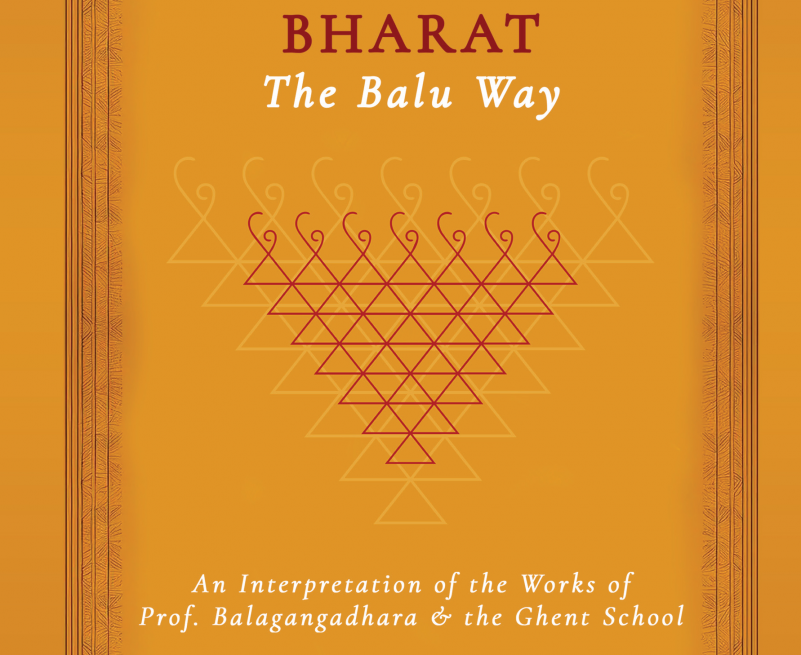
An Introduction to ‘Decolonizing Bharat, The Balu Way’
Murali Vadavalli pens a review of "Decolonizing Bharat The Balu Way" by Dr. Pingali Gopal. The book unpacks the deep cultural disconnect between Sanatani traditions and Western frameworks imposed during colonial rule. Dr. Pingali Gopal lucidly introduces S.N. Balagangadhara’s pioneering ideas, urging readers to rethink Bharat’s identity through indigenous conceptual tools. A rigorous and essential read for anyone seeking to understand India's cultural revival.
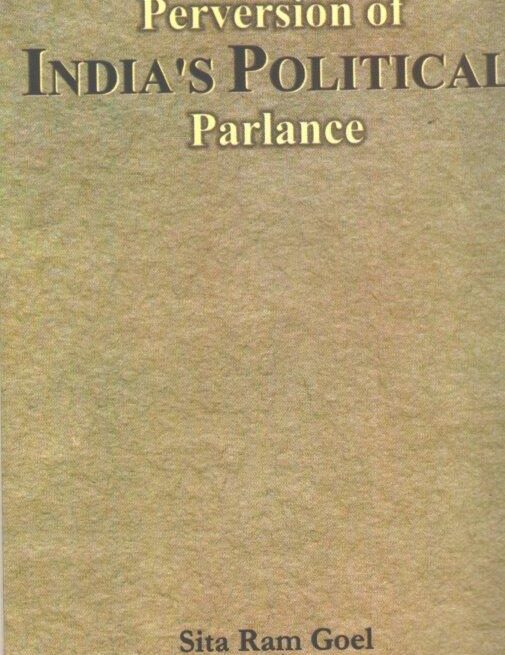
“Perversion of India’s Political Parlance” – Sita Ram Goel’s Critique of India’s Political Language
Sita Ram Goel's "Perversion of India’s Political Parlance" is an in-depth analysis of how political language in India has been twisted to serve ideological agendas. Goel critiques the selective use of terms like "secularism" to marginalize Hindu cultural identity while elevating leftist and Islamic narratives. By unraveling these linguistic distortions, the book challenges readers to reflect on the profound impact of words in shaping national identity and political discourse.

Bharat’s Festivals: A Celebration of Timeless Devotion
The last few days have seen a wave of videos celebrating Chhath Puja emerge, showcasing a devotion that transcends the ordinary. As an exiled Kashmiri Pandit longing for an authentic experience of her traditions, this prompted Shradha Dhar to reconnect with her roots. As she explores the diverse traditions of Bharat from Thaipusam of Tamilnadu to the Tulmulla festival of Kashmir, she emphasizes the importance of preserving these rituals and traditions that form the core of our identity and connect us to the divine.

Prasad Defilement in Tirupati: Hindu Sentiments and Public Response
The alleged defilement of prasad at the Tirupati temple has sent shockwaves through the Hindu community, striking at the heart of religious sentiments and sacred traditions. The use of impure substances in the prasad violates the spiritual and cultural sanctity of one of Hinduism’s most revered pilgrimage sites. Such an act challenges the very principles of purity and Dharma that define Hindu worship. Restoring the sanctity of the temple and ensuring accountability is now of paramount importance.