
People often ask my wife Sreelakshmi and me why we choose pilgrimages over conventional tourist destinations. Our answer is simple: while scenic landscapes also delight us, pilgrimages nourish both the mind and the soul. More importantly, they offer a unique window into the civilisational heritage of Sanatana Dharma. The countless temples, ancient muttss, sacred rivers, mountains and ashrams spread across the length and breadth of Bharat are not merely places of worship; they are living repositories of history, philosophy, art, culture, and spirituality. Every pilgrimage deepens our understanding of a civilisation that has withstood countless brutal attacks and evolved over millennia while remaining rooted in eternal values.
Our recent journey through the spiritual heartland of Karnataka—covering the sacred centres of Kudli Sharada Kshetram, Sri Kshetra Sakthapuram, Sri Mutt Hariharapura, and the timeless Sringeri Sharada Peetham—was far more than a pilgrimage. It was a journey into the living traditions of Sanatana Dharma. At every stop, we encountered not only temples and institutions of great antiquity but also the enduring presence of the Divine Mother in her many manifestations—as Shakti, as Saraswati, as Sharada, and as the silent wisdom transmitted through an unbroken lineage of Gurus. The experience left us spiritually enriched and offered yet another glimpse into the profound depth of India’s sacred heritage.
The Confluence of Rivers and Knowledge

Our pilgrimage began at Kudli Sharada Kshetram, situated about 18 kilometres from Shivamogga in Karnataka. For centuries, this tranquil settlement has drawn saints, scholars, pilgrims, and seekers to one of South India’s most beautiful and spiritually significant river confluences.
The very name “Kudli” means “meeting point” or “confluence” in Kannada, an apt description for the place where the rivers Tunga and Bhadra unite to form the mighty Tungabhadra River. Yet Kudli is far more than a geographical landmark, a meeting place of philosophies, cultures, and spiritual aspirations.
The approach to the sangama at daybreak was nothing short of enchanting. A light drizzle kissed the waters, sending gentle ripples across the river’s surface, while the first rays of the rising sun filtered through the riverside trees, slowly awakening the landscape from its slumber. The interplay of rain, mist, and early morning light transformed the confluence into a scene of rare beauty. Standing on the riverbank, we could clearly see the distinct currents of the Tunga and Bhadra gradually merging into a single majestic flow. Descending the stone steps that led to the water, we stood ankle-deep in the sacred river. Scooping the cool water into our palms, we reverentially chanted the ancient invocation:
“Gange cha Yamune chaiva, Godavari Saraswati,
Narmade Sindhu Kaveri,
Jalesmin sannidhim kuru.”
For a Hindu, every river is a sacred manifestation of the Divine, carrying within it the spiritual presence of the holy rivers of Bharat. Such rituals are not mere acts of tradition; they symbolize inner purification, gratitude, and mental renewal. Standing at the confluence of the Tunga and Bhadra, we felt connected not only to the sacred geography of India but also to an unbroken spiritual tradition that has flowed through the ages.
A Sacred Centre Since Ancient Times
Kudli has been a renowned pilgrimage centre for many centuries. Historical evidence suggests that it flourished during the rule of the Western Chalukyas, Hoysalas, and later the Vijayanagara Empire. Its strategic location along important trade routes and riverine networks made it not only a spiritual centre but also an important cultural and intellectual hub. The region became a meeting place for scholars, ascetics, temple architects, musicians, and philosophers. The patronage extended by successive Hindu dynasties enabled the construction of temples, mutts, educational centres, and facilities for pilgrims.
Unlike many sacred sites that have become heavily commercialized, Kudli still retains much of its original simplicity and sanctity. The atmosphere remains contemplative, allowing visitors to experience the spiritual essence of the place without distraction.
The Ancient Rameshwara Temple
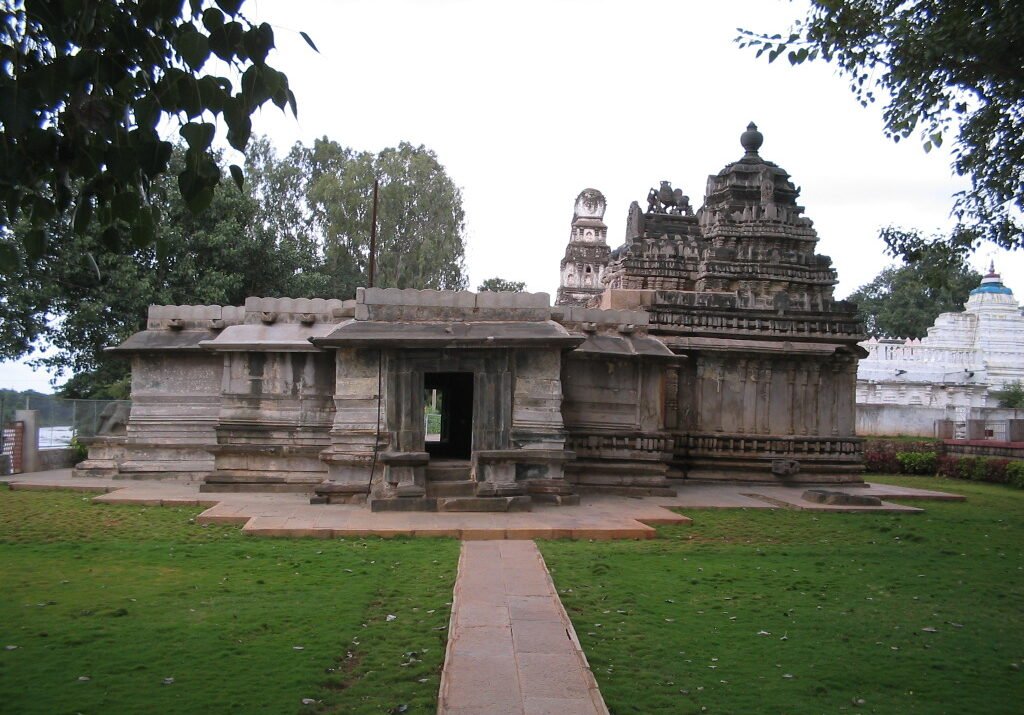
One of the most important monuments at Kudli is the ancient Rameshwara Temple, believed to have been constructed during the twelfth century under Hoysala patronage. For a visitor unfamiliar with Karnataka’s temple architecture, the temple presents an excellent example of medieval South Indian craftsmanship. Built primarily of stone, the structure stands on a raised platform and features intricately carved pillars, beautifully sculpted doorways, and elegant decorative motifs. Every carved pillar and sculpted stone reflect the extraordinary skill of craftsmen who viewed their work as an offering to the Divine.
The sanctum sanctorum houses Lord Shiva in the form of a sacred linga, worshipped as Sri Rameshwara. The stone walls bear witness to centuries of worship. Their weathered surfaces seem to narrate silent stories of kings, saints, scholars, and ordinary devotees who have visited this sacred place over generations.
Entering the sanctum, one immediately senses a cooling stillness. The dimly lit interior encourages silence and introspection. As I offered my prayers before the ancient linga for a fleeting moment, I felt mysteriously connected to the eternal Shiva of Mount Kailasa, the supreme ascetic who has inspired seekers across the ages.
Chintamani Narasimha Swamy Temple
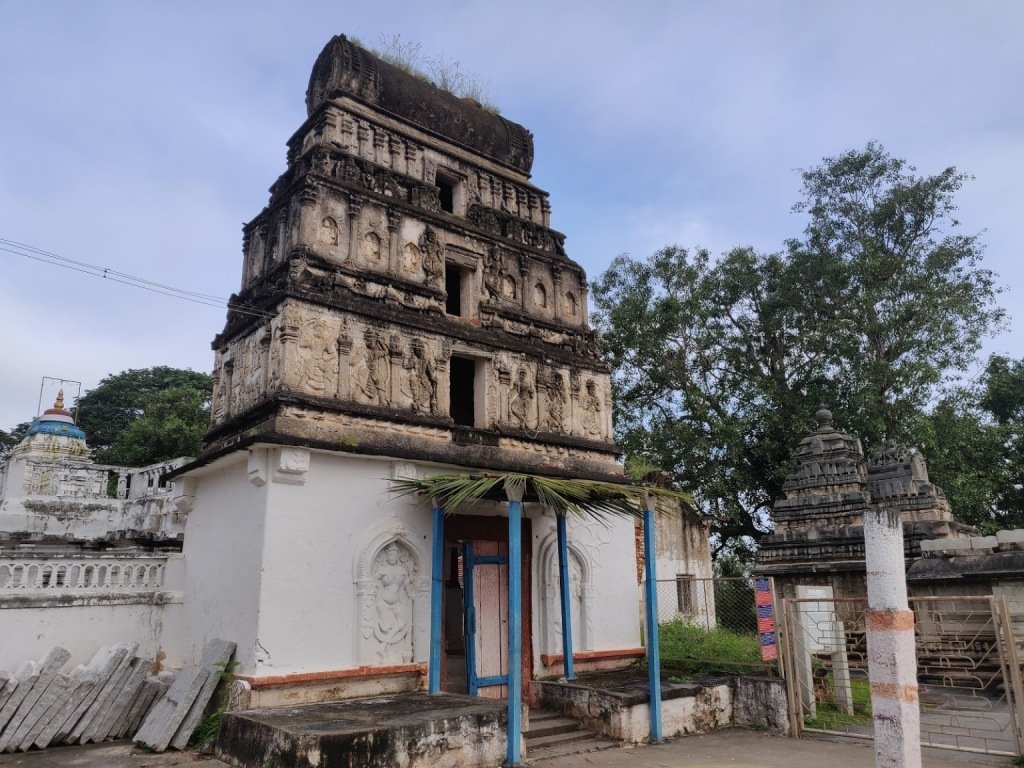
Adjacent to the Shiva shrine stands the Sri Chintamani Narasimha Swamy Temple, dedicated to Lord Narasimha, the fourth incarnation of Lord Vishnu. The temple beautifully exemplifies the harmonious coexistence of Shaiva and Vaishnava traditions within a single sacred precinct, reflecting the inclusive and accommodative spirit of Sanatana Dharma.
The name “Chintamani” literally means “the wish-fulfilling jewel” or “that which removes worries.” Devotees believe that sincere prayers offered to Lord Narasimha at this temple help alleviate mental anxieties and obstacles. The architecture of the temple complements that of the neighbouring shrines. The image of Narasimha inspires both reverence and reassurance.
Kudli Sharada Temple and the Shankara Mutt
At the spiritual heart of Kudli stands the temple dedicated to Goddess Sharadamba, the embodiment of wisdom, learning, and divine knowledge. The temple is associated with the spiritual lineage of Jagadguru Adi Shankaracharya and the tradition of the Sringeri Sharada Peetham. Historical traditions maintain that when Adi Shankaracharya established the great Sharada Peetham at Sringeri, Kudli too emerged as an important centre for Vedic learning because of its sacred geography and accessibility.
This Temple and the Shankara Mutt too became centres where scholars gathered to study the Vedas, Upanishads, Advaita Vedanta, Sanskrit grammar, logic, and philosophy. Religious discourses, scriptural debates, and spiritual practices flourished here for centuries. The mutt continues to preserve this legacy of learning and contemplation. Within the complex is a shrine dedicated to Adi Shankaracharya, commemorating the traditional belief that the Acharya visited and meditated at this sacred confluence. On the day of our visit to the Shankara Mutt, we were fortunate to have the darshan of the present 72nd Peetadhipathi, Pujya Sri Abhinava Shankara Bharati Swamiji. We offered fruits and flowers at his holy feet and performed sashtanga namaskara. With a benign smile, Swamiji blessed us by gently touching our heads. The moment was deeply moving, and we felt as though we had received the blessings of Jagadguru Adi Shankaracharya himself through his revered successor. Even today, visitors can experience an atmosphere that naturally encourages study, reflection, and inner growth.
Here, devotees arrive quietly throughout the day to offer prayers, perform special pujas, seek blessings for their families, or simply spend time in contemplation. Festivals dedicated to Lord Shiva, Lord Narasimha, and Goddess Sharada draw larger gatherings, transforming the otherwise quiet complex into a vibrant centre of devotion and cultural activity. The temple also serves as a place where traditional values, rituals, and spiritual practices are transmitted from one generation to the next.
Social Significance
Historically, temples such as those at Kudli functioned as far more than places of worship. They were centres of education, culture, charity, music, and social organization. Vedic learning, Sanskrit scholarship, classical music, religious discourse, and artistic traditions were nurtured within these sacred institutions. Pilgrims travelling across southern India found shelter, food, and spiritual guidance here.
The temples contributed significantly to the local economy by supporting artisans, sculptors, priests, musicians, farmers, and traders. Even today, pilgrimage continues to sustain local livelihoods while preserving traditional crafts and customs.
Our Experience of Divine Grace
At the Sharada Temple, we were warmly received by the priest, who graciously allowed us to participate in the alankara and deeparadhana of Goddess Sharada. Adorned with flowers and traditional ornaments, the Goddess radiated serenity, compassion, and wisdom.
Standing before her, one instinctively understands why Sharada has long been revered as the presiding deity of learning and enlightenment. As the rituals came to a close and we found ourselves with some unhurried moments, Sreelakshmi, with the gracious permission of the temple priest, stood before the Goddess and softly rendered the Carnatic kirtana, “Pahimam Sri Raja Rajeswari…” Her melodious voice mingled harmoniously with the gentle ringing of temple bells and the murmur of sacred chants. Drawn by the devotional atmosphere, a few devotees quietly gathered nearby and sat in silence, listening with rapt attention. For those precious moments, the sanctum seemed enveloped in a profound serenity, as her soulful singing transformed the temple into a space of shared devotion and inner stillness.
A Living Sanctuary of Peace
One of Kudli’s greatest blessings is its freedom from excessive commercialization. There are no noisy crowds, aggressive vendors, or distractions that often accompany popular pilgrimage centres. Instead, visitors encounter silence and simplicity. After completing our darshan, we sat quietly beside the sangama, watching the waters continue their eternal journey. The rivers flowed steadily onward, indifferent to human concerns.
Before leaving, we collected a small bottle of tirtha from the confluence. More than a souvenir, it became a sacred reminder of a day when rivers, history and devotion converged in our hearts. While departing Kudli, we carried with us memories of temples and rituals and a profound realization that true spirituality is a confluence—a harmonious union of knowledge, devotion, tradition, nature and the Divine.
Sakthapuram: A Hidden Sanctuary on the Banks of the Tunga
Leaving behind the sacred confluence at Kudli, we journeyed deeper into Karnataka’s picturesque Malnad region towards Sri Kshetra Sakthapuram, a spiritually vibrant yet little-known centre nestled on the tranquil banks of the River Tunga in Shivamogga district. The journey itself felt like a retreat from the distractions of modern life. Winding roads passed through dense greenery, areca nut plantations, coconut groves, and rolling hills, creating an atmosphere of peace and anticipation. Unlike many celebrated pilgrimage centres that attract large crowds, Sakthapuram remains a hidden gem, known primarily to devotees of the Divine Mother and practitioners of the Sri Vidya tradition.
Yet beneath its quiet exterior lies a remarkable history spanning nearly seven centuries. Around 1338 CE, during a period of political upheaval and foreign invasions in northern India, Jagadguru Sri Satyatheertha Mahamuni, the then Pontiff of Jyotishpeetha at Badarinath, travelled south in search of a peaceful place to continue his Dharmic mission. Drawn by the sanctity of the Tunga’s banks, he established his Peetha Parampara at Sakthapuram—a lineage that continues unbroken to this day.
The sacredness of the site reaches even further back in time. According to the Brahmanda Purana, Shakata Maharishi attained liberation here through intense tapas, making the region a revered centre of spiritual pursuit long before the establishment of the Mutt.
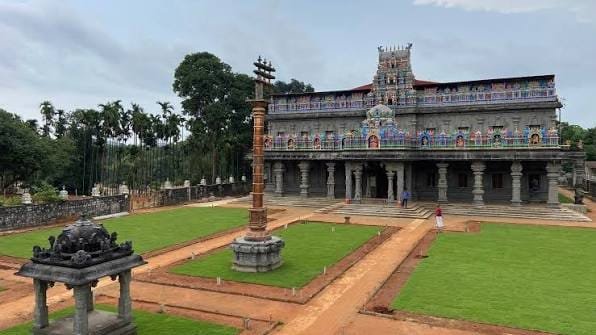
Situated beside the gently flowing Tunga, the Sri Mutt blends harmoniously with its natural surroundings. Rather than impressing visitors with grandeur, Sakthapuram captivates through its simplicity, serenity, and spiritual atmosphere. Ancient trees, flowering plants, shaded pathways, and the fragrance of flowers, sandalwood, incense, and oil lamps create an ambience conducive to prayer and contemplation.
At the heart of the complex are shrines dedicated to Sri Vidya Rajarajeswari, Sri Santhana Venugopala Krishna, and Sri Lakshmi Narasimha. The premises also house a shrine to Sri Adi Shankara Bhagavadpada and the Adhishtanams of earlier Acharyas, symbolising an unbroken Guru Parampara that has preserved the wisdom of Sanatana Dharma across generations.
Sakthapuram’s greatest significance lies in its close association with Sri Vidya, one of the most profound spiritual traditions within Sanatana Dharma. Here, the Divine Mother is worshipped not merely as an external deity but as the very source of consciousness itself. Worship follows the traditional Shakta Agamic system involving mantra, yantra, tantra, and ritual practices, while emphasising meditation, scriptural study, self-discipline, and inner transformation.
The daily rhythm of the kshetra revolves around worship and sadhana. Before sunrise, the temple awakens with rituals dedicated to the Goddess, followed by abhishekam, alankaram, arati, and the chanting of sacred hymns. Throughout the day, devotees participate in prayers, Lalitha Sahasranama recitation, archana, and silent meditation.
Fridays, Pournami days, and Navaratri attract devotees from Karnataka, Kerala, Tamil Nadu, and Andhra Pradesh. During Navaratri, the entire kshetra becomes a vibrant centre of devotion, culture, and spiritual learning. Like many traditional Hindu Mutts, Sakthapuram too serves as a guardian of Sanskrit learning, sacred chants, devotional music, scriptural teachings, and ancient ritual traditions. Discourses on the Devi Mahatmyam, Lalitha Sahasranama, and Vedantic philosophy continue to inspire generations of seekers.
As we walked through the peaceful temple grounds, accompanied by the distant ringing of bells and the gentle rustling of leaves, Sakthapuram revealed itself as far more than a pilgrimage destination. In an age of constant noise and activity, it offers something increasingly rare—a sanctuary of silence and a deeper encounter with the Divine Mother.
Sri Mutt, Hariharapura
From the serene environs of Sri Kshetra Sakthapuram, our pilgrimage led us to another jewel of Karnataka’s spiritual heritage—Sri Mutt Hariharapura, a revered centre of learning, devotion, and contemplation on the sacred banks of the Tunga River.
Located about 70 kilometres from Sringeri Sharada Peetham, Hariharapura occupies a distinctive place in South India’s spiritual landscape. Unlike crowded pilgrimage centres, it retains an atmosphere of quiet dignity and timeless sanctity. Here, one does not merely visit a temple or monastery; one encounters a living spiritual tradition that has nurtured seekers for generations.
Our journey through the lush Malnad region, with its paddy fields, areca nut plantations, coconut groves, and forested hills, gradually prepared the mind for the experience ahead. As we approached the village, the Tunga flowed beside us with a serene grace befitting a sacred land long associated with saints and sages.
Crossing the Bridge Between Two Worlds
One of Hariharapura’s most memorable landmarks is the suspension bridge across the Tunga. Walking across the gently swaying structure felt like leaving behind the anxieties of daily life and entering a realm of spiritual tranquillity. Below, the river flowed like a ribbon of silver.
From the middle of the bridge, we enjoyed a panoramic view of the Mutt nestled amid coconut groves and rolling hills. The scene seemed to belong to another era—an India where nature, spirituality, and human life existed in harmonious balance.
Historical Roots
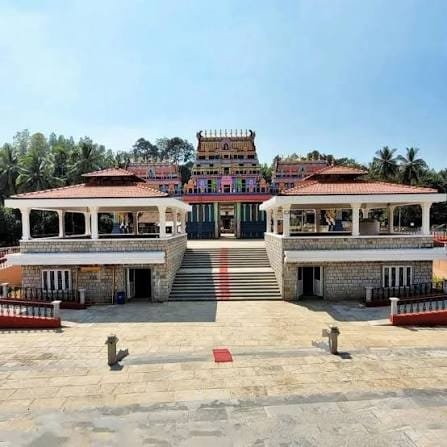
Sri Mutt Hariharapura traces its origins to the Advaita Vedanta tradition established by Jagadguru Adi Shankaracharya in the eighth century. Situated within the spiritual sphere of Sringeri Sharada Peetham, it evolved into an important centre of Vedic learning, scriptural study, meditation, and Advaitic teaching.
Tradition holds that Adi Shankaracharya visited this region during his travels across Bharat to revive Vedic wisdom and establish Advaita Vedanta. Recognising its spiritual significance, he consecrated the sacred Sri Chakra Yantra and invoked the blessings of Goddess Sri Sharada Parameshwari, transforming the area into a centre of knowledge and devotion.
The site is also associated with Sri Swayamprakasha Krishna Yogeendra Mahaswamiji, who is believed to have received Mantra Deeksha from Adi Shankaracharya here and later became the first Peethadhipathi of the Dharmapeetham. An unbroken Guru Parampara has since preserved and propagated Advaita Vedanta, Vedic learning, and the worship of Sri Sharada Parameshwari.
Successive Acharyas chose this peaceful riverside location for tapas, meditation, teaching, and spiritual practice. Through their scholarship and service, Hariharapura became revered as both a Tapo Bhumi and a Jnana Bhumi—a land sanctified by austerity and illumined by wisdom.
Sacred Simplicity
Unlike the towering temple complexes of Tamil Nadu or the elaborate Hoysala monuments of Karnataka, Sri Mutt Hariharapura is marked by simplicity, serenity, and spiritual purpose. At its heart stands the Sri Lakshmi Narasimha Swamy Temple, the presiding shrine of the institution. The complex also houses the Sri Sharada Parameswari Temple and the Sri Guru Dattatreya Temple established by the present Acharya. The pillared halls and traditional structures create an atmosphere conducive to prayer, meditation, and reflection rather than architectural display. Adjacent to the temples stands the Guru Peetham, symbolising the unbroken Guru Parampara that continues to guide the institution.
The Living Guru Parampara
One of the Mutt’s greatest strengths is its uninterrupted lineage of spiritual teachers. Within the complex are the sacred Brindavanas and Samadhis of earlier pontiffs who dedicated their lives to preserving Advaita Vedanta. These shrines attract devotees seeking blessings and inspiration.
The institution is presently guided by Sri Sri Swayamprakasha Sachidananda Saraswati Mahaswamiji, widely respected for his scholarship, humility, and dedication to Sanatana Dharma. Under his leadership, the Mutt has strengthened its educational, cultural, and spiritual activities while remaining rooted in tradition and responsive to contemporary needs.
The Mutt’s Veda Patashala students undergo rigorous training in the Vedas, Sanskrit grammar, ritual sciences, and traditional disciplines under learned teachers. Visitors often find the atmosphere reminiscent of the ancient gurukulams described in India’s sacred literature.
The influence of Sri Mutt Hariharapura extends far beyond its temple precincts. Reflecting the Hindu ideal that spirituality and social responsibility are inseparable, the institution supports educational initiatives, cultural programmes, healthcare activities, annadana, and various community outreach projects. These efforts contribute significantly to the social and cultural life of the region while helping preserve India’s ancient intellectual and spiritual traditions.
Among the most memorable moments of our visit was hearing students of the Veda Patashala chanting in perfect unison. Their voices rose and fell with remarkable precision, filling the campus with sacred resonance. The chanting transported us mentally to the great centres of learning such as Takshashila, Nalanda, Sringeri, and Kanchi. Here, knowledge is not treated as a mere academic pursuit but as a sacred trust to be lived, practised, and transmitted.
The remote geography of the Malnad region helped protect many of its spiritual institutions from the disruptions that affected other parts of India. Shielded by forests, rivers, and the devotion of local communities, centres such as Hariharapura continued their educational and spiritual work through changing political eras.
As a result, much of the traditional culture, ritual practice, and Vedic learning associated with the Advaita tradition remains vibrantly alive. The Mutt serves as a living bridge connecting contemporary India with its ancient civilizational heritage.
Advaita Vedanta is often viewed as a highly philosophical system. Yet at Hariharapura, Advaita felt tangible and immediate. The river, temples, Acharyas, students, devotees, and surrounding landscape all appeared as expressions of a single underlying reality. Oneness was not merely a doctrine—it was an experience.
We departed carrying not merely photographs and memories but the quiet strength of a land sanctified by centuries of tapas, illumined by wisdom, and sustained by an unbroken Guru Parampara. On the sacred banks of the Tunga, Sri Mutt Hariharapura continues to stand as a beacon of Sanatana Dharma—a true Tapo Bhumi and Jnana Bhumi for our times.
Sringeri: The Eternal Seat of Wisdom
No pilgrimage through the sacred landscapes of South Karnataka is complete without a visit to Sringeri, situated on the banks of Tunga, one of the holiest centres of Sanatana Dharma and the first of the four cardinal Peethams established by Jagadguru Adi Shankaracharya more than twelve centuries ago. For my wife Sreelakshmi and me, Sringeri is far more than a pilgrimage destination. It is a spiritual home to which we return repeatedly. Every visit, despite our familiarity with the place, brings a renewed sense of wonder, peace, and inner transformation.
Nestled amidst the lush hills of Karnataka’s Malnad region and embraced by the sacred Tunga River, Sringeri remains a rare place where spirituality, scholarship, philosophy, architecture, and nature continue to flourish in harmonious coexistence.
The Journey Through the Western Ghats
The approach to Sringeri is itself an integral part of the pilgrimage experience. As we travelled in bus from Shimoga through the Western Ghats, mist-covered mountains, coffee plantations, cascading waterfalls, and dense forests unfolded before us in breathtaking succession. The air became noticeably cooler and purer as we drew closer to the temple town.
With every kilometre, I found myself becoming increasingly attuned to the spiritual aura of a town that embodies the glorious heritage of Sanatana Dharma. Images of Vedic scholars immersed in study and teaching, preserving and transmitting India’s timeless wisdom, naturally came to mind. Even before reaching Sringeri, one senses a subtle spiritual presence. The atmosphere grows noticeably quieter and more contemplative, as though the very landscape is preparing the pilgrim’s mind for darshan.
Then came the first glimpse of the sacred town. As our bus crossed the narrow bridge spanning the gently flowing Tunga River, a sense of joy and anticipation filled our hearts. Along the riverbanks, small temples nestled among ancient trees, while the surrounding hills provided a picturesque backdrop, creating a scene of remarkable beauty and serenity. Rising gracefully beside the river stood the revered Sharadamba Temple, an unforgettable sight that remains etched in memory long after the pilgrimage has ended.
The Sacred Vision of Adi Shankaracharya
The origins of Sringeri are linked to one of the most celebrated episodes in India’s spiritual history. According to tradition, Adi Shankaracharya was travelling through this region during his mission to revive and unify Sanatana Dharma when he witnessed an extraordinary sight on the banks of the Tunga—a cobra spreading its hood to protect a pregnant frog from the scorching sun.
Deeply moved by this display of compassion between natural enemies, the Acharya recognised the place as spiritually charged and ideally suited for contemplation, learning, and the pursuit of higher knowledge. Inspired by this vision, the Acharya established a Mutt here in the eighth century CE, appointing his principal disciple, Sureswaracharya, as its first head. He dedicated the institution to Goddess Sharada, the embodiment of wisdom, learning, and divine knowledge. From these beginnings, the Sharada Peetham at Sringeri evolved into one of India’s foremost centres of spiritual learning, philosophical inquiry, and cultural preservation.
A Living Institution
Administered by the Dakshinamnaya Sri Sharada Peetham, Sringeri remains a vibrant and active institution rather than a mere historical monument. For more than twelve centuries, an unbroken succession of Jagadgurus has preserved and propagated the teachings of Advaita Vedanta while guiding society through changing historical circumstances. Today, the Peetham oversees Veda Pathashalas, Sanskrit schools, educational institutions, temples, publications, healthcare initiatives, charitable activities, and dharmic outreach programmes across India. The institution continues to fulfil Adi Shankaracharya’s vision by harmonising spiritual wisdom with social responsibility.
The Magnificent Sharadamba Temple
The spiritual heart of Sringeri is the revered Sharadamba Temple. The original deity installed by Adi Shankaracharya is believed to have been a Sphatika (crystal) image. Over time, worship evolved, and today devotees offer prayers before the magnificent golden idol of Goddess Sharadamba seated majestically on a lotus.
To countless devotees, Sharadamba is not merely Saraswati, the Goddess of learning, but the Universal Mother who embodies wisdom, compassion, grace, and protective strength.
The temple combines traditional South Indian architecture with elegance and spiritual symbolism. Intricately carved pillars, sculpted ceilings, and beautifully proportioned halls create an atmosphere of sacred beauty without excessive ornamentation.
Standing before the Divine Mother, we were completely captivated by her presence. Her radiant face, resplendent ornaments, silk attire, and compassionate expression seemed to emanate a living grace. For several minutes, neither Sreelakshmi nor I could take our eyes away from Sharadamba. It was one of those rare moments in pilgrimage when devotion transcends words.
A priest noticed our absorption and gently directed us to sit before the sanctum. There, in the sacred ambience of the temple, we chanted the Lalita Sahasranama to our heart’s content. As the sacred 1,008 names of the Divine Mother flowed from our lips, an overwhelming sense of peace, devotion, and spiritual fulfilment descended upon us.
Perhaps moved by our devotion, the priest approached us once again and suggested that we return for the evening Deeparadhana. We readily agreed, exchanging grateful glances. To us, the invitation felt less like a casual suggestion and more like a special blessing from the Divine Mother herself—a further opportunity to bask in her grace and experience the spiritual splendour of Sringeri.
The Evening Deeparadhana
We were fortunate to be allotted a place directly in front of the sanctum to witness the evening Deeparadhana, one of the most captivating rituals performed at the Sharadamba Temple. As dusk gently descended over the Tunga, priests emerged carrying lamps while the resonant chanting of Vedic hymns filled the temple halls. The fragrance of fresh flowers, sandalwood, camphor, and incense permeated the sacred atmosphere.
As the ritual progressed, the flickering lamps illuminated the Divine Mother’s form from different angles, each offering revealing a new dimension of her beauty and majesty. Hundreds of devotees sat with folded hands and closed eyes, immersed in silent prayer. For those precious moments, the outside world seemed to fade into oblivion. There remained only the Divine Mother, the sacred chants, and an overwhelming sense of divine presence.
Gazing upon Sharadamba in her resplendent adornment—draped in silk, bedecked with glittering ornaments, and radiating compassion and grace—I felt as though Saraswati herself had descended to bless her devotees. The experience was both deeply moving and spiritually elevating.
When the Deeparadhana concluded, an unexpected blessing awaited us. A priest beckoned us to his side and personally handed over a collection of prasadam—sacred flowers, kumkum, glass bangles, a blouse piece, and a small portion of the garland that had adorned the Goddess. Receiving these tokens of grace, we felt profoundly blessed, as though the Divine Mother herself had acknowledged our pilgrimage and showered her blessings upon us.
Crossing the Tunga to the Mutt
After darshan at the Sharadamba Temple, we crossed the Tunga River to visit the main Mutt complex, the residence of the Jagadguru. The river is inseparable from Sringeri’s spiritual identity. Pilgrims sit along its banks feeding fish, meditating, or quietly observing its tranquil flow. The Mutt complex reflects the values that have defined Sringeri for centuries—discipline, simplicity and scholarship. Unlike many contemporary religious centres that emphasise grandeur, Sringeri derives its strength from quiet dignity and spiritual depth.
Witnessing the Panchayatana Puja
The Panchayatana Puja performed by the Acharya of the mutt is one of the most significant rituals of the Advaita tradition. It involves the worship of five principal Hindu deities—Shiva, Vishnu, Devi, Ganesha, and Surya—arranged in a prescribed pattern and revered as different manifestations of the same Supreme Reality. Popularised by Bhagwan Sri Adi Shankaracharya, the system reflects the fundamental Advaitic principle that all forms of worship ultimately lead to the one indivisible Brahman. The term Panchayatana literally means “five shrines” or “abode of five deities.”
At all principal Sankara mutts (Sringeri, Puri, Dwarka and Joshimutt) this form of worship remains an integral part of monastic life. For the Jagadgurus of these mutts, the ritual symbolises the essential unity underlying all manifestations of the Divine and reaffirms the oneness of creation. At Sringeri, the Panchayatana Puja is performed daily by the Jagadguru, alongside the traditional Chandramouleeshwara Puja and Sri Chakra Puja, for loka kalyana—the welfare of humanity and the harmony of the universe.
One of the most memorable experiences of our visit was witnessing this unique Puja performed by Jagadguru Sri Vidhushekhara Bharati Mahaswamiji. Around two hundred devotees, dressed in traditional attire, sat in complete silence as the Acharya conducted the ancient ritual. The soft glow of oil lamps illuminated the hall, while every movement of the Jagadguru reflected extraordinary concentration, grace, and devotion.
As the ritual unfolded, my thoughts travelled back more than a thousand years. I imagined Adi Shankaracharya seated on the banks of the Tunga, imparting the wisdom of Vedanta to his disciples amidst the forests of ancient Bharat. In that deeply spiritual atmosphere, history no longer seemed distant. Past and present appeared to merge seamlessly, reminding us of the continuity of a tradition that has endured for over twelve centuries.
The Architectural Wonder of Vidyashankara Temple
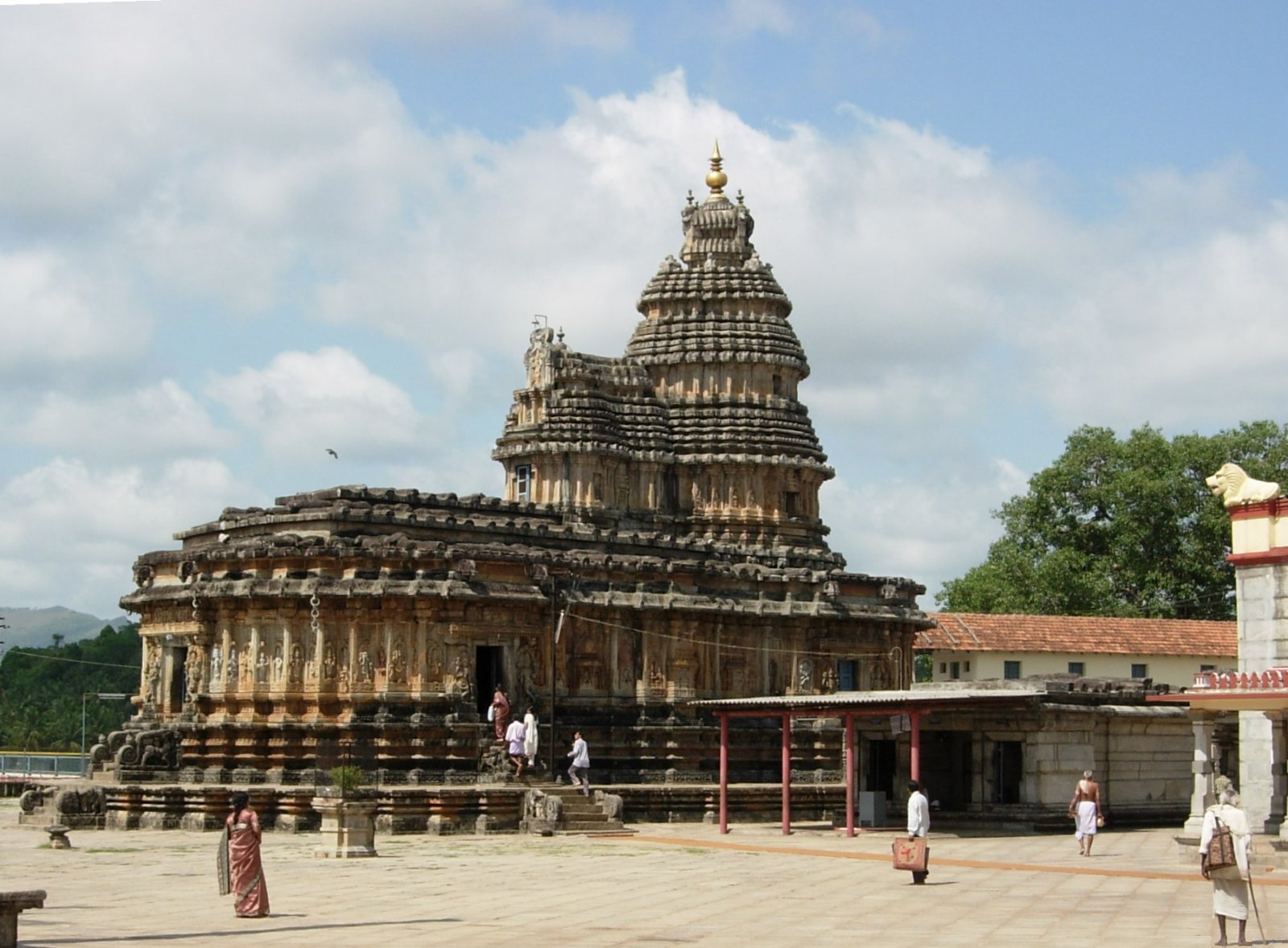
No visit to Sringeri is complete without exploring the magnificent Vidyashankara Temple, widely regarded as one of India’s finest examples of medieval temple architecture. Built in the fourteenth century in honour of Jagadguru Vidyatirtha, the temple represents a harmonious fusion of Hoysala, Chalukyan, Vijayanagara, and Dravidian architectural traditions. Such is its architectural grandeur and historical significance that the temple invariably features in books, posters, travel brochures, and other visual representations of Sringeri, serving as one of the most enduring symbols of this sacred town.
Constructed entirely of granite, it represents a remarkable synthesis of spirituality, mathematics, astronomy, science, and artistic excellence. Its most celebrated feature is the twelve zodiac pillars. Each pillar corresponds to a zodiac sign, and sunlight falls upon the appropriate pillar according to the sun’s movement through the zodiac during different months of the year. The temple stands as a powerful reminder of the intellectual and scientific achievements of Indian civilisation. More than a place of worship, it is a stone manuscript preserving knowledge across centuries.
A Centre of Learning and Cultural Preservation
For over twelve centuries, Sringeri has functioned as one of India’s foremost centres of spiritual and philosophical learning. Students from across the country come here to study the Vedas, Upanishads, Mimamsa, Nyaya, Sanskrit grammar, and Advaita Vedanta under accomplished teachers. The Peetham continues to nurture Vedic education, Sanskrit scholarship, scriptural research, traditional arts, music, philosophy, and dharmic studies.
It has also played a significant role in preserving classical music, ritual traditions, temple arts, manuscript collections, and indigenous knowledge systems. Numerous scholars, saints, poets, philosophers, and reformers have emerged from or been influenced by the Sringeri tradition.
Social and Economic Contributions
The influence of Sringeri extends far beyond the spiritual sphere. Through educational institutions, healthcare initiatives, scholarships, annadana (feeding), rural development projects, and charitable activities, the Peetham makes significant contributions to society. It has also shaped the local economy by supporting traditional occupations, artisans, temple workers, scholars, farmers, and businesses connected to pilgrimage. Despite welcoming thousands of pilgrims annually, Sringeri has retained its distinctive spiritual character.
Our Experience
Among all the sacred places we visited during our journey, the Sharadamba Temple left the deepest impression on both of us. As a bhajan singer, Sreelakshmi has always revered Sharadamba as Maha Saraswathi—the Goddess of learning, music, and the fine arts. During our stay, she spent nearly an hour every morning from around six o’clock seated before the Divine Mother, singing devotional keertans to her heart’s content. Later, she told me that sitting before Sharadamba felt like entering a powerful field of divine energy. Long after we left the temple, the experience continued to resonate within her.
For me, an ardent devotee of the Divine Mother, the moments spent before Sharadamba were equally profound. Sitting quietly before the sanctum with closed eyes, I prayed for greater wisdom, spiritual clarity, and the strength to pursue my writing and journalistic endeavours in the service of Sanatana Dharma. As I gazed upon the serene and smiling face of the Goddess, I felt as though she was showering her boundless grace upon every aspect of my life. It was a deeply personal and reassuring experience—one that strengthened my faith in her unseen guidance, protection, and blessings.
As we reflected on our time at Sringeri, a feeling of gratitude naturally arose for Bhagwan Sri Adi Shankaracharya. More than twelve centuries after he established this sacred seat of learning on the banks of the Tunga, countless seekers continue to draw inspiration, wisdom, and spiritual solace from the institution he founded. Indeed, the spiritual and cultural debt that Bharat owes to the great Acharya is immeasurable.
A Pilgrimage Beyond Tourism
As we bid farewell to Sringeri and boarded a mini-bus bound for Udupi, our journey wound through the majestic Agumbe Ghats, often described as one of the most picturesque stretches of the Western Ghats. The narrow road snaked through dense rainforests, mist-covered valleys, and towering trees that seemed to touch the sky. Gurgling streams and sweeping views of emerald hills unfolded at every turn. Bathed in the soft glow of the setting sun, the landscape possessed a mystical beauty.
As the bus negotiated the countless hairpin bends of the Agumbe Ghats, I found myself reflecting on why Sringeri continues to inspire millions across generations. Sringeri is not merely a temple town or the headquarters of a religious institution. It is a living embodiment of India’s civilisational continuity. For more than twelve centuries, it has preserved wisdom, tradition and spirituality without distancing itself from the needs of society.
We had arrived at Sringeri as pilgrims seeking the blessings, grace, and guidance of the Divine Mother. Though we carried away no material treasure, we felt enriched beyond measure. The sacred Tunga continued its timeless journey beside the temples, just as it had in the days of Adi Shankaracharya. The lamps would continue to glow before the deities, the Vedas would continue to resonate through the halls of learning, and the unbroken Guru Parampara would continue to guide generations of seekers.
As twilight settled over the hills and the sacred town gradually disappeared from view, a deeper realization dawned upon me. Temples and Mutts such as Sringeri are far more than places of worship. They are living repositories of a civilisation’s memory, preserving its wisdom, values, and spiritual heritage while inspiring devotion, inner silence, and ultimately the quest for self-realisation.
As the bus continued its journey through the hills, closing my eyes I mentally offered pranams to the innumerable saints, sages, Acharyas, scholars, and countless anonymous sevaks who, through their sacrifice, devotion, and tireless service, have kept the flame of Sanatana Dharma burning brightly through the centuries. Their efforts have ensured that sacred centres such as Sringeri continue to inspire and guide seekers even today.
My prayer was simple: may more and more people find their way to Sringeri and the countless other sacred kshetras of Bharat and, in doing so, discover for themselves the timeless culture of an ancient civilisation that still remains vibrant and eternally awake.
Leave a Reply