Year: 2025

Home 2025
‘The Battle for Sanskrit’ by Rajiv Malhotra – A Review
Post

‘The Battle for Sanskrit’ by Rajiv Malhotra – A Review

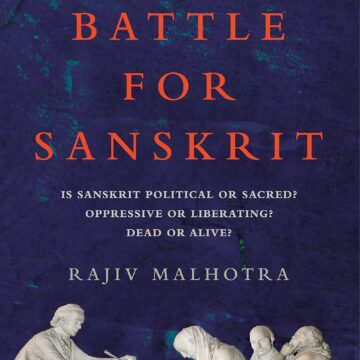
First published in 2016, Rajiv Malhotra's 'The Battle for Sanskrit' is as relevant today as it was then. In the book, the author challenges dominant Western narratives that seek to desacralize Sanskrit by stripping it of its religious and cultural significance. Written in an easy-to-read style with scholarly insights, the book urges both traditional and modern readers to engage in an honest dialogue. The book is an important one that defends heritage and also seeks to de-westernise Indology.
Concerns of the Colonized – Freedom for Temples
Post

Concerns of the Colonized – Freedom for Temples

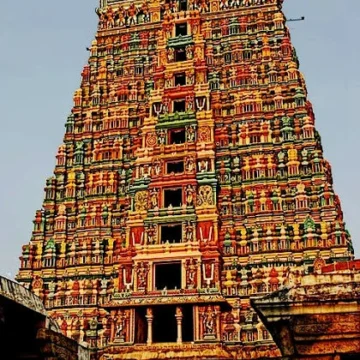
For centuries, Hindu temples thrived as autonomous centers of faith, culture, and community life. However, today, the secular state treats temples as mere public property and exploits them, subjecting them to to excessive taxation, mismanagement, and neglect. Unlike religious institutions of other faiths, Hindu temples remain uniquely burdened by government interference, highlighting a systemic inequality. In this call to liberate Hindu temples, Raghu Bhaskaran addresses the concerns of corruption and mismanagement if temples are freed and asserts that freeing temples is a key step towards Hindus owning their narrative.

No Waqf, No Fawq, Just some FAQs on Hindu Temple Properties
Post

No Waqf, No Fawq, Just some FAQs on Hindu Temple Properties

A Hindu temple and its properties do not belong to the government, the public or even the Hindu community — they belong solely to the residing deity, the Pradhana Devata. Historical arguments about coercion in temple land donations ignore the broader reality that all land ownership has evolved under different rulers. While institutions like the Waqf Board retain vast properties, temples face state control and encroachment, reducing them to mere revenue sources. This neglect betrays both the faith of past donors and the cultural heritage temples embody.

Oppenheimer – An Open Letter to Christopher Nolan
Post

Oppenheimer – An Open Letter to Christopher Nolan

As we pass the 2025 Oscars, Charu Uppal recalls the grand success of the movie Oppenheimer in the 2024 Oscars. In this open letter to the director Christopher Nolan, she points out how the movie conspicuously avoids showing the suffering of the Japanese people, barely mentioning the names Hiroshima and Nagasaki. Even more troubling is the decision to juxtapose the sacred Bhagavad Gita with an intimate scene — a choice that was neither accidental nor faithful to historical context. In an industry that does not shy away from showing violence, the film omits the human cost of the bomb while including a scene that offended millions. Creative freedom is vital, but so is cultural responsibility.

The Ghent School : Promoting a Better Understanding of India
Post

The Ghent School : Promoting a Better Understanding of India

The Ghent School, led by Prof. Balagangadhara, challenges colonial narratives that have shaped India's understanding of religion, caste, and culture. It argues that India's traditions differ fundamentally from Western religious frameworks, emphasizing rituals over doctrinal beliefs. The school advocates for decolonizing Indian social sciences by rediscovering indigenous perspectives and rejecting imposed categorizations. By understanding India's traditions on their own terms, it proposes a more nuanced approach to multiculturalism and identity.

The Number 12 – An Exploration across Cultures
Post

The Number 12 – An Exploration across Cultures

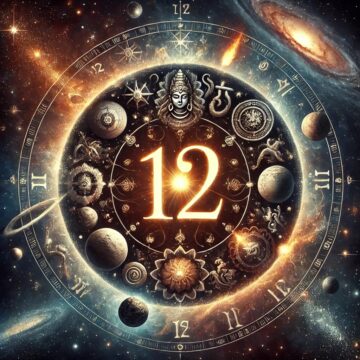
In this essay, Dr. Koenraad Elst explores the profound symbolic importance of the number 12 across cultures, from the 12 Ādityas in the Vedas to the Olympian gods and the 12-starred EU flag. In ancient India, it represented cosmic order, as seen in the Ṛg-Vedic 'Riddle Hymn' describing a twelve-spoked wheel of Ṛta. Mathematically and geometrically unique, the twelvefold division underlies the structure of the Zodiac and the ancient Yajur-Vedic seasonal cycle.

Mahadev Shambhu – The Story of a Gram-Devata
Post

Mahadev Shambhu – The Story of a Gram-Devata

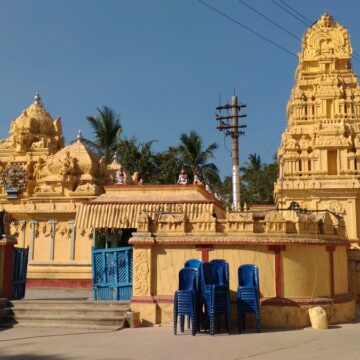
This story by Rati Hegde, about Mahadev Shambhu, a Gram-Devata, captures the the reality of many such deities and their temples in India. It traces the socio-economic and cultural shifts that have shaped the ecosystem of these temples through the decades. The author paints a poignant picture of how duty and devotion have given way to reluctant obligation even as these deities continue to remain central to the Hindu faith.

A Scientific Perspective on Mahakumbh
Post

A Scientific Perspective on Mahakumbh

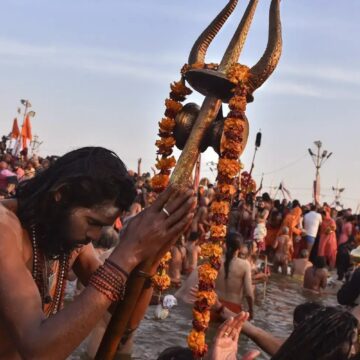
At the Triveni Sangam in Prayagraj, where the Ganga, Yamuna, and the mystical Saraswati converge, the Kumbh Mela unfolds as a grand experiment in collective consciousness. This ancient gathering, rooted in Hindu lore, integrates sophisticated scientific principles, from astronomical cycles to fluid dynamics. The 2025 Mahakumbh Mela exemplifies this blend, with AI-powered crowd management and real-time navigation tools enhancing the experience for millions of pilgrims. This convergence of science and spirituality not only preserves cultural heritage but also fosters a sense of unity and shared purpose, inviting both spiritual seekers and scientific minds to explore its depths.

“Hindu Society under Siege” by Sitaram Goel : A Review
Post

“Hindu Society under Siege” by Sitaram Goel : A Review

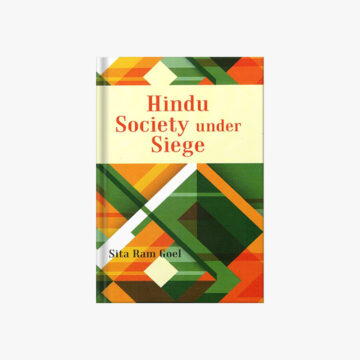
Sita Ram Goel’s "Hindu Society Under Siege" is a compelling analysis of the historical, cultural, and ideological challenges confronting Hindu society. Shri Goel examines how residues from foreign invasions—Islamic, British, and colonial ideologies—continue to undermine Hindu unity and cultural revival. A profound exploration of India’s civilizational ethos, the book calls for Hindus to unite and reclaim their heritage.